




Risk Management Basics for New Prop Traders
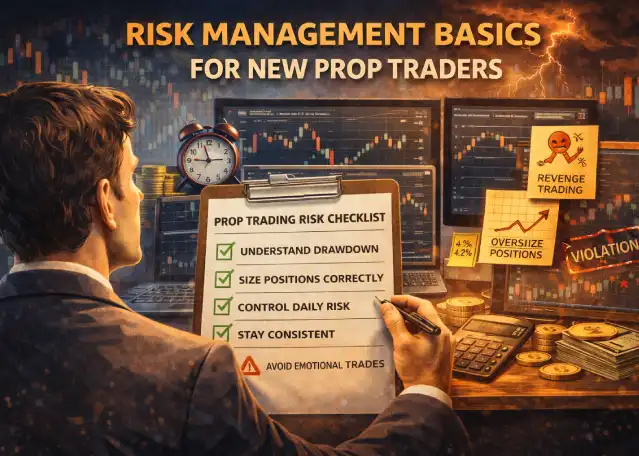
Risk management is the single most important skill for any new prop trader. In proprietary trading, you are not rewarded for taking risk—you are rewarded for controlling it.
Many traders with profitable strategies fail prop firm accounts simply because their risk management does not align with strict rules. This guide covers the core risk management principles every new prop trader must understand.
Why risk management matters more in prop trading
In prop trading, losses are capped by firm rules, not by your own comfort level. Daily drawdown limits, maximum loss rules, and consistency requirements leave very little room for error.
A single oversized trade can end an account—even if your strategy is statistically profitable. That’s why risk management is not optional; it is the foundation of survival.
Understand drawdown before placing your first trade
Every prop trader must clearly understand how drawdown works. This includes daily loss limits, maximum drawdown, and whether rules are based on balance or equity.
If drawdown mechanics are not crystal clear to you, review daily drawdown vs max drawdown before trading live.
Most failed prop accounts are not the result of bad strategies, but of traders accidentally violating drawdown rules.
Position sizing: the core of risk control
Position sizing determines how much damage a single trade can do. New prop traders often size positions based on potential profit instead of maximum acceptable loss.
Your position size should be small enough that even a losing streak cannot threaten your daily or total drawdown. If you’re unsure how to calculate this properly, review position sizing basics.
Consistent, controlled risk beats aggressive sizing every time in prop trading.
Risk per trade: less is more
New prop traders often underestimate how little risk is actually required. Risking too much per trade increases emotional pressure and accelerates mistakes.
Many successful prop traders risk a fraction of what they used on personal accounts. This allows them to survive drawdowns, stay calm, and trade objectively.
Avoid emotional risk escalation
One of the biggest threats to risk management is emotional decision-making. After a loss, traders often increase position size to “make it back,” which usually leads to rule violations.
These behaviors are extremely common in failed prop accounts. If you want to recognize and avoid them early, read Risky Behaviors That Lead to Violations.
Good risk management means accepting losses without changing behavior.
Plan for losing days before they happen
Losing days are part of trading. The problem is not the loss—it’s how you respond to it. New prop traders should define a personal “stop trading” point that is stricter than the firm’s maximum.
Walking away early protects both your account and your mindset. Discipline is easier to maintain when losses are controlled proactively.
Risk consistency matters as much as risk size
Many prop firms monitor consistency, not just profitability. Large swings in position size or daily risk can trigger reviews or violations.
Keeping risk stable across trades and days demonstrates control and professionalism— two qualities prop firms value highly.
Final risk management checklist for new prop traders
- I fully understand all drawdown rules
- My position size cannot violate limits in one trade
- I risk less than I think I need to
- I do not increase risk after losses
- I stop trading before emotional decisions start
Bottom line
Risk management is what keeps you in the game long enough for skill to matter. In prop trading, survival always comes before profits.
Master risk control first—everything else comes after.
Related Articles
Apa aturan manajemen risiko terbaik bagi trader prop pemula?
Pastikan risiko Anda cukup kecil sehingga satu transaksi tidak dapat mengancam batas kerugian harian Anda. Jika satu kesalahan saja dapat mengakhiri tantangan Anda, ukuran posisi Anda terlalu besar.
Berapa besar risiko yang sebaiknya saya ambil per trade di perusahaan prop?
Tidak ada angka yang berlaku secara universal, tetapi trader prop pemula biasanya lebih baik memulai dengan risiko yang sangat kecil. Tujuan Anda adalah bertahan dari rangkaian kerugian yang normal tanpa mendekati batas drawdown. Jika satu transaksi saja membuat Anda merasa tertekan secara emosional, berarti risiko yang Anda ambil terlalu besar.
Mengapa sebagian besar trader prop gagal meskipun memiliki strategi yang cukup baik?
Karena mereka melanggar aturan. Penyebab yang paling umum adalah membuka posisi terlalu besar, melakukan revenge trading, dan berusaha memulihkan kerugian dengan cepat setelah mengalami kerugian.
Bagaimana cara menghindari pelanggaran batas drawdown harian?
Tetapkan batas kerugian harian pribadi yang lebih ketat daripada aturan perusahaan, lalu berhenti trading ketika batas tersebut tercapai. Hal ini mencegah keputusan emosional dan menjauhkan Anda dari risiko pelanggaran aturan.
Haruskah saya meningkatkan risiko saat hampir mencapai target keuntungan?
Tidak. Meningkatkan risiko menjelang akhir tantangan adalah salah satu cara paling umum yang menyebabkan trader gagal. Lulus secara perlahan lebih baik daripada gagal dengan cepat.
Apa saja kebiasaan paling berbahaya bagi trader prop pemula?
Menggunakan leverage secara berlebihan, mengubah ukuran posisi secara acak, memaksakan trade ketika tidak ada setup, dan trading secara emosional setelah mengalami serangkaian kerugian. Jika Anda ingin melihat penjelasan terperinci tentang pola-pola ini, baca Perilaku Berisiko yang Menyebabkan Pelanggaran.
Apakah saya memerlukan strategi yang berbeda untuk trading prop
Belum tentu. Banyak strategi yang dapat digunakan, tetapi pengaturan risiko Anda sering kali perlu disesuaikan. Trading prop lebih mengutamakan eksekusi yang terkontrol dan konsisten daripada mengejar imbal hasil secara agresif.