




What Is Prop Trading? A Beginner-Friendly Guide
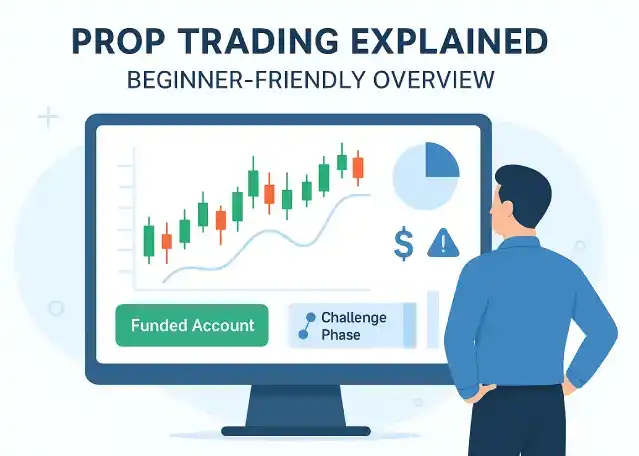
Prop trading, short for proprietary trading, has exploded in popularity over the past few years. Many traders now use prop firms to access larger trading capital without risking a big personal account. If you are completely new to the concept, the whole idea can feel a little confusing at first.
You might wonder whether prop firms are legitimate, how they actually make money, and what a trader needs to do to get funded. These questions are normal and very common among beginners and even among intermediate traders. In this guide, we will walk through everything step by step so that you can see how prop trading really works in practice.
By the end of this article, you will understand what prop trading is, why prop firms exist, how the business model works, and whether this path might be suitable for your own trading journey. The goal is not to sell you on prop trading, but to give you enough clarity to make an informed decision. You can treat this as your starting point before moving on to more advanced topics about prop firms, challenges, and risk management.
What Is Prop Trading? (Simple Definition)
Prop trading is a model where a company, called a prop firm, allows traders to use the company’s capital to trade financial markets. In this arrangement, you do not trade your own large personal account but instead operate with access to a funded account provided by the firm. The firm defines conditions and rules, and you focus on trading execution within those boundaries.
Prop traders can work across different financial markets, and that flexibility is one of the big attractions. Each market has its own volatility, session times, and risk characteristics, but the basic prop model stays the same regardless of what you trade. Here are some of the most common markets offered by modern prop firms:
- Forex (currency pairs)
- Indices (such as S&P 500, NASDAQ, DAX)
- Commodities and metals (gold, oil, silver)
- Crypto (Bitcoin, Ethereum, and others, depending on the firm)
- Futures (in some specialized prop firms)
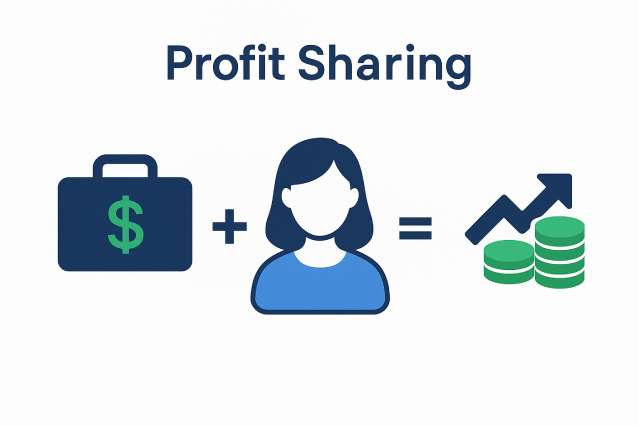
If the trader makes money, the profits are split between the trader and the firm. The exact split depends on the firm and the specific account type, but it is usually very favorable for the trader. If the trader loses money, losses are limited by predefined rules such as daily drawdown and maximum drawdown, and the firm absorbs those losses up to the allowed thresholds.
You can think of it as a partnership where the prop firm provides capital and structure while the trader provides skill, discipline, and strategy. This structure allows traders to potentially earn meaningful payouts without needing to risk a large personal balance. It is also attractive for traders who want to grow faster than they could with a small retail account.
Why Do Prop Firms Exist?
Prop firms exist because there is demand on both sides: traders want capital and firms want profitable traders. The arrangement creates a business model where firms can monetize trader performance while limiting risk through strict rules and evaluation steps. When it works well, both sides have a clear incentive to cooperate and maintain discipline.
From the trader’s perspective, prop firms act as an accelerator by providing capital that might otherwise take years to build. From the firm’s perspective, structured challenges and evaluation phases filter out high-risk or undisciplined traders. The table below shows how the value looks from both sides of the relationship.
| Why traders like prop firms | Why firms like traders |
|---|---|
|
• They do not need a large starting balance. |
• Profitable traders generate consistent returns for the firm. |
In short, traders gain access to capital and structure, while firms gain a scalable way to monetize skilled trading. The key ingredient is risk control, which is why prop firms focus heavily on drawdown limits, consistency rules, and strict trading conditions. Without these elements, the model would quickly become unstable for both sides.
How Prop Firms Work (The Simple Version)
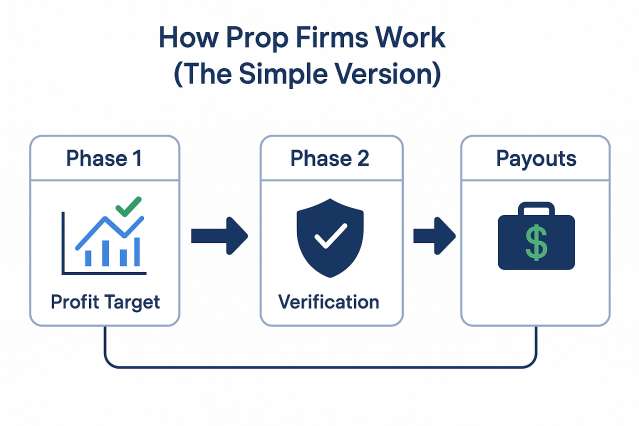
Although every prop firm has its own rules and branding, most of them follow a similar basic structure. First, there is usually an evaluation or challenge phase that tests your ability to trade responsibly and profitably. Second, there is a funded phase where successful traders gain access to a larger account and receive payouts based on performance.
To make this easier to visualize, you can think of the journey in three main stages: challenge, funding, and payouts. The challenge stage filters out reckless behaviour, the funded stage is where you earn, and the payout stage is where you finally see the financial benefit. The table below summarizes how a typical two-step challenge works.
| Step | Goal |
|---|---|
| Phase 1 | Reach the profit target (for example 8%) without breaking any rules such as daily drawdown or maximum drawdown. |
| Phase 2 | Reach a smaller profit target (for example 5%) while again staying inside all risk and consistency rules. |
| Funded account | Receive a funded account and trade the firm’s capital while earning regular payouts when you generate profits. |
Once you have passed the evaluation, you start trading a funded account under a strict rule set. You are allowed to trade within those parameters and share in the profits as long as you do not violate risk limits or other conditions. If you break a major rule, such as exceeding maximum drawdown, the account is typically closed.
Most prop firms pay traders on a regular schedule, often every 14 or 30 days. Some firms offer faster payout options for experienced or consistent traders. Profit splits usually range between 70% and 90% in favor of the trader, which is one of the reasons why prop trading is so attractive to active market participants.
The Two Main Types of Prop Firms
As a beginner, you will mostly encounter two categories of prop firms. The first category uses a challenge-based model with one or more evaluation phases. The second category focuses on instant funding, where you pay for access to a funded account without passing a traditional challenge.
Both models can work, but they have different costs, risks, and long-term implications. It is important to understand the structure of each model before you commit to any particular firm so that you are not surprised by fees, rules, or payout conditions later.
Challenge-Based Prop Firms
Challenge-based prop firms are currently the dominant model in the retail prop industry. They require you to prove your skill over a series of trades before granting you a funded account. This helps the firm filter for traders who can follow rules and manage risk over time instead of relying on luck.
From a trader’s point of view, these firms often offer better long-term economics: lower upfront cost, higher profit splits, and more capital at scale. From the firm’s point of view, the challenge acts as both a risk filter and a revenue source that supports the whole infrastructure. The table below shows the typical pros and cons of challenge-based prop firms.
| Pros | Cons |
|---|---|
|
• Lower entry cost compared to large personal accounts. |
• Pressure to reach profit targets within limited time or trading days. |
Instant Funding Prop Firms
Instant funding prop firms allow traders to start trading funded accounts without passing a traditional challenge. You usually pay a larger upfront fee and receive immediate access to a live or simulated account with defined risk limits. This structure is appealing to traders who dislike evaluation phases or who want to skip straight to the funded stage.
However, the trade-off is that instant funding often comes with higher costs and less favorable conditions. You might see lower profit splits, smaller account sizes for the same price, or stricter rules. The following table outlines the main pros and cons of instant funding firms.
| Pros | Cons |
|---|---|
|
• No need to pass a multi-phase challenge before trading funded capital. |
• Higher fees compared to challenge-based prop firms. |
When you compare challenge-based and instant funding models, try not to focus only on the speed of getting funded. Instead, look at long-term sustainability, total cost, profit splits, and firm reputation. For many serious traders, a well-structured challenge is still the better option over time.
How Prop Firms Make Money
For the prop trading ecosystem to function, prop firms must operate as sustainable businesses. They cannot simply give out capital and hope that traders are profitable. Instead, they combine several revenue sources and risk controls to keep the model stable over many traders and many accounts.
The most visible revenue source is challenge fees, which traders pay to enter evaluations. However, that is not the only component. Firms also earn from profit splits on successful funded traders and benefit from economies of scale in technology and risk management. This combination allows them to service large numbers of traders while keeping risk acceptable.
Typical prop firm revenue components include:
Challenge and evaluation fees that help cover operating costs such as servers, staff, platforms, and customer support. Profit sharing from funded traders who trade successfully and generate returns for the firm over long periods of time. Risk control methods that limit maximum loss per trader so that the firm remains stable even when some traders perform poorly.
Because of this blended model, a prop firm does not depend on any single trader. Instead, the business is built on many small edges: a percentage of successful traders, a constant flow of evaluation fees, and strong risk controls. When combined properly, this makes the model profitable and scalable.
Why So Many Traders Use Prop Firms
Prop firms are not just a trend; they solve real structural problems for individual traders. One of the biggest challenges for a retail trader is the gap between their skill level and the size of their trading capital. A strategy that works well on a small account may not scale easily, and building capital organically can take years.
By giving access to larger funded accounts, prop firms allow traders to use their skills in a more meaningful way. They also enforce rules that many traders struggle to impose on themselves, such as fixed risk limits and daily loss caps. This combination of capital and structure is very powerful when used correctly.
Lack of Capital
Many traders know how to analyze charts and manage trades but simply do not have enough personal capital to make the effort worthwhile. Trading a $500 or $1,000 account can be a good learning stage but rarely produces meaningful income. Prop firms bridge this gap by offering access to larger accounts once a trader proves their consistency.
This access allows traders to apply conservative risk while still targeting reasonable dollar profits. Instead of risking 10% on a small personal account, a trader can risk 0.5–1% on a larger funded account. The psychological experience is also very different when you trade with a safety net of defined rules.
High Emotional Pressure
Trading personal savings can create intense emotional pressure, especially when the account size is meaningful relative to your life expenses. Fear of loss and fear of missing out often lead to impulsive decisions and revenge trading. Over time, this destroys accounts and confidence.
With prop trading, the capital technically belongs to the firm, even though you benefit from the profits you generate. This distance can help some traders stay more objective and less emotionally attached to each individual trade. It does not remove emotion completely, but it can reduce the feeling that every pip movement threatens your personal savings.
Lack of Structure
A large number of retail traders operate with no clear structure. They enter trades randomly, change strategies weekly, and often ignore risk limits. In that environment, even a skilled trader can struggle to stay consistent. Prop firms introduce external structure in the form of dashboards, rules, and payout schedules.
When you know that a single violation can close your account, you are more likely to respect your own risk plan. This external accountability can be extremely valuable, especially in the early stages of your development. Over time, many traders internalize these habits and apply similar discipline even outside the prop environment.
Common Misconceptions About Prop Trading
There are several myths that surround the prop trading industry. Some of them come from misunderstanding, and some come from bad experiences with low-quality firms. It is important to separate these myths from how reputable prop firms actually operate so that you can evaluate the space more objectively.
In this section, we will quickly address a few of the most common misconceptions. These clarifications will not answer every possible question, but they will give you a more grounded view of what is real and what is exaggerated. You can always dig deeper into specific topics in more advanced articles later.
“Prop firms are scams.”
Some firms are poorly run or have questionable practices, and those should be avoided. However, many established prop firms have a long track record of paying out traders and operating transparently. Your job is to learn how to distinguish reliable firms from red flags instead of assuming that the entire model is a scam.
“Prop firms don’t use real money, so it doesn’t count.”
Some firms route trades to live markets while others use simulated or internal risk books. Either way, the payouts you receive are real, and the performance metrics still matter. For your trading career, consistency, discipline, and risk control are more important than whether the firm routes every trade directly to the market.
“You must be a professional trader to succeed.”
You do not need to be an ex-bank trader or hedge fund manager to pass a prop challenge. Many successful funded traders started as regular retail traders and slowly improved their skills. What matters is your ability to follow rules, control risk, and apply a tested strategy over a sufficient number of trades.
Checklist: Are You Ready for Prop Trading?
Before buying your first challenge, it is worth taking a moment to evaluate your current level honestly. Prop trading can accelerate your growth, but it can also amplify your weaknesses if you are not ready. A clear self-assessment is more valuable here than optimism or impatience.
Think about your experience with demo accounts and small live accounts, your emotional reactions to losses, and your ability to follow a written plan. If you already struggle badly in these areas, prop trading will not magically fix those issues. On the other hand, if you have started to build discipline, prop trading can give you a powerful next step.
The table below summarizes some simple signs that you may be ready for prop trading, alongside signs that suggest you should keep practicing before buying a challenge. Use it honestly and treat it as a tool for reflection rather than a strict judgment.
| You may be ready if you... | You may not be ready if you... |
|---|---|
|
• Have a clear and tested strategy, even if it is simple. |
• Constantly jump from one strategy to another without testing. |
Key Takeaways
Prop trading is not a magic shortcut, but it is a powerful framework for traders who value structure and disciplined risk. It combines access to capital with strict rules, which can feel restrictive at first but ultimately protects both the trader and the firm. When used correctly, this framework can accelerate a trader’s journey and provide meaningful financial opportunities.
The most important point is that prop trading rewards consistency and risk control more than aggressive risk-taking. Traders who survive and thrive in this environment usually have simple strategies, clear rules, and strong self-control. You do not have to be perfect, but you do have to be willing to learn and adapt.
If you treat this article as your starting reference, you can build on it by exploring topics such as prop firm risk rules, challenge strategies, and psychological preparation. The following list summarizes the main ideas in a compact way so that you can quickly revisit them later.
- Prop trading allows you to trade with a firm’s capital instead of risking a large personal account.
- You typically pass a challenge or evaluation before receiving a funded account.
- Prop firms use strict risk rules, including drawdown limits and consistency requirements, to protect capital.
- Challenge-based firms often provide better long-term economics than instant funding options.
- Traders succeed in prop trading when they prioritize risk management and consistency over quick gains.
- Prop trading is accessible to beginners and advanced traders, as long as they respect the rules and prepare properly.
FAQ
Is prop trading legitimate?
Yes, prop trading as a concept is legitimate, and many firms operate in a transparent and professional way. However, as in any industry, there are low-quality or questionable companies, so it is important to research each firm carefully before committing your time and money.
How much can a funded trader make?
Earnings vary widely and depend on account size, risk per trade, trading strategy, and market conditions. Some traders might earn a few hundred dollars per month, while others with larger accounts and strong consistency can earn thousands or even tens of thousands of dollars during good periods.
Is it hard to pass a prop challenge?
Prop challenges are designed to be demanding but not impossible. They are meant to filter for traders who can follow rules, manage risk, and avoid emotional overtrading. With a simple strategy, solid risk management, and realistic expectations, passing a challenge is achievable.
Do prop firms pay real money?
Yes, reputable prop firms pay real money during their payout cycles. Whether the trades are routed to the live market or managed internally, the payouts you receive are real and can be withdrawn to your bank account or payment provider according to the firm’s policies.
Can beginners succeed in prop trading?
Beginners can succeed if they approach prop trading in a structured and patient way. It is important to spend time on demo trading, learn basic risk management, and avoid rushing into challenges with untested strategies or unrealistic expectations.
Related Articles
Prop trading covers a wide range of topics, and this first article only gives you the foundation. As you continue learning, it helps to explore how firms structure their business, how challenges really work, and what kind of preparation leads to better results. The resources below are natural next steps and will deepen your understanding of each part of the process.
You can move through them in order if you prefer a structured learning path, or you can jump to the topics that are most relevant to your current situation. Over time, reading multiple articles will also expose you to different angles: business models, psychological preparation, and concrete strategies. Use this network of articles as a flexible learning map rather than a strict checklist.
Here are some recommended next reads based on the questions most beginners ask after understanding the basics of prop trading:
- How Prop Firms Work: Funding, Payouts, Business Model
- What Is a Prop Trading Challenge? Full Breakdown
- Prop Firm vs Broker: Key Differences
- Understanding Drawdown: Daily DD vs Max DD
- How to Choose the Right Prop Firm: Ultimate Checklist
- Preparing for Your First Prop Trading Challenge
- Best Strategies for Passing Prop Firm Challenges