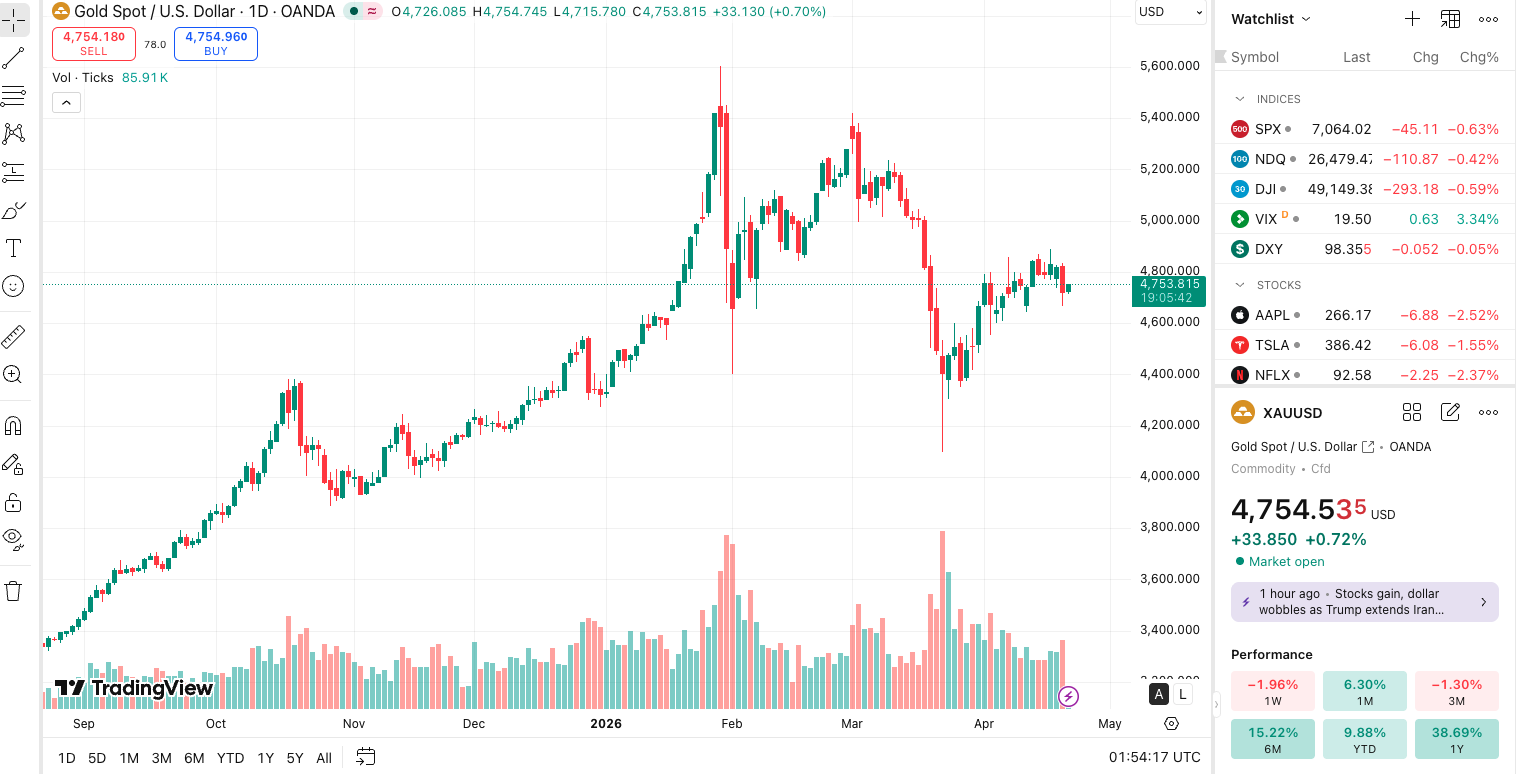
As of 9:00 AM Beijing time, gold is trading around 4740. This level matters, because after last night’s drop, price did not continue to lose momentum. Instead, it stabilized near the lows, suggesting that market sentiment is beginning to settle.
From the global market perspective, on April 21, spot gold briefly fell to around $4712.04/oz, dropping more than 2% intraday. The move was mainly driven by a stronger U.S. dollar and rising Treasury yields. However, during the Asian session on April 22, gold rebounded above $4730, with reports indicating it was fluctuating near $4732.45/oz.
🧠 1. What actually drove last night’s move?Last night’s pullback was not a collapse of gold’s underlying logic, but rather a temporary strengthening of short-term pressures.
First layer: the U.S. dollar
According to Reuters, lingering doubts about a ceasefire with Iran, combined with hawkish remarks from Fed chair nominee Kevin Warsh and stronger-than-expected U.S. retail sales data, pushed the dollar index to a one-week high.In such an environment, gold, as a non-yielding asset, naturally becomes a target for position trimming and rebalancing.
Second layer: rising Treasury yields
Reuters also highlighted that higher yields reduced gold’s appeal.In other words, despite ongoing geopolitical concerns, the combination of “higher-for-longer rates + a stronger dollar” led to a short-term valuation compression in gold.
Third layer: shifting geopolitical sentiment
Market sentiment shifted from extreme risk aversion to cautious observation.Although Trump announced an “indefinite extension” of a ceasefire arrangement with Iran, the market did not fully buy into it. It appeared more like a unilateral statement, while key risks such as U.S. military presence and the Strait of Hormuz situation remain unresolved.
This created a very typical price behavior:
👉 Initial pressure from USD and yields👉 Followed by support as geopolitical risks remain unresolved
🎯 2. Why 4740 is a key level nowBecause this level is not just a technical bounce.It reflects a subtle message from the market:
“We can sell gold, but we’re not ready to fully turn bearish.”At the moment, gold is caught between two forces:
Bearish factors still present:
Strong dollarElevated yieldsNo clear shift in rate cut expectationsBullish factors still intact:
Middle East tensions remain unresolvedOil prices are still high (WTI around $90/barrel as of April 22)High oil prices imply persistent inflation risk and ongoing geopolitical uncertainty, both of which continue to support gold’s safe-haven demand.
⚖️ 3. What does this tell us?4740 is better understood as a repricing zone, not the end of a trend.
The market is not fully convinced that risks have disappeared.The so-called “ceasefire extension” has not resolved key uncertainties, especially regarding energy supply and geopolitical stability.
Right now, gold is essentially doing two things at once:
👉 Absorbing short-term pressure from USD strength👉 Continuing to price in unresolved geopolitical risks
📊 4. Key levels to watchUpside: Around 4800If price reclaims this level, last night’s move may have been more of a sentiment-driven shakeoutDownside: Around 4712A break below this level would suggest short-term control remains with the dollar and yields 🧠 Final thoughtGold didn’t fall because its logic broke.It fell because the rhythm changed.
What determines the next move is not a single headline about a ceasefire,but whether the market truly believes the risk is over —or merely paused.