





Central banks risk making a mistake

Central banks risk making a mistake
· Raising interest rates during an oil crisis is a clear mistake.
· Stagflation is knocking at the door of the US economy.
The US dollar has been fluctuating within a 0.5% range since the end of last week amid conflicting signals regarding the situation in the Middle East. On the one hand, Iran has rejected mediators’ proposal for a 45-day ceasefire with the US, which marked a clear escalation and triggered a rise in Brent prices and a strengthening of the greenback. On the other hand, traffic through the Strait of Hormuz is at its highest since early March, as Tehran concludes more and more bilateral agreements on passage through the world’s main oil artery.
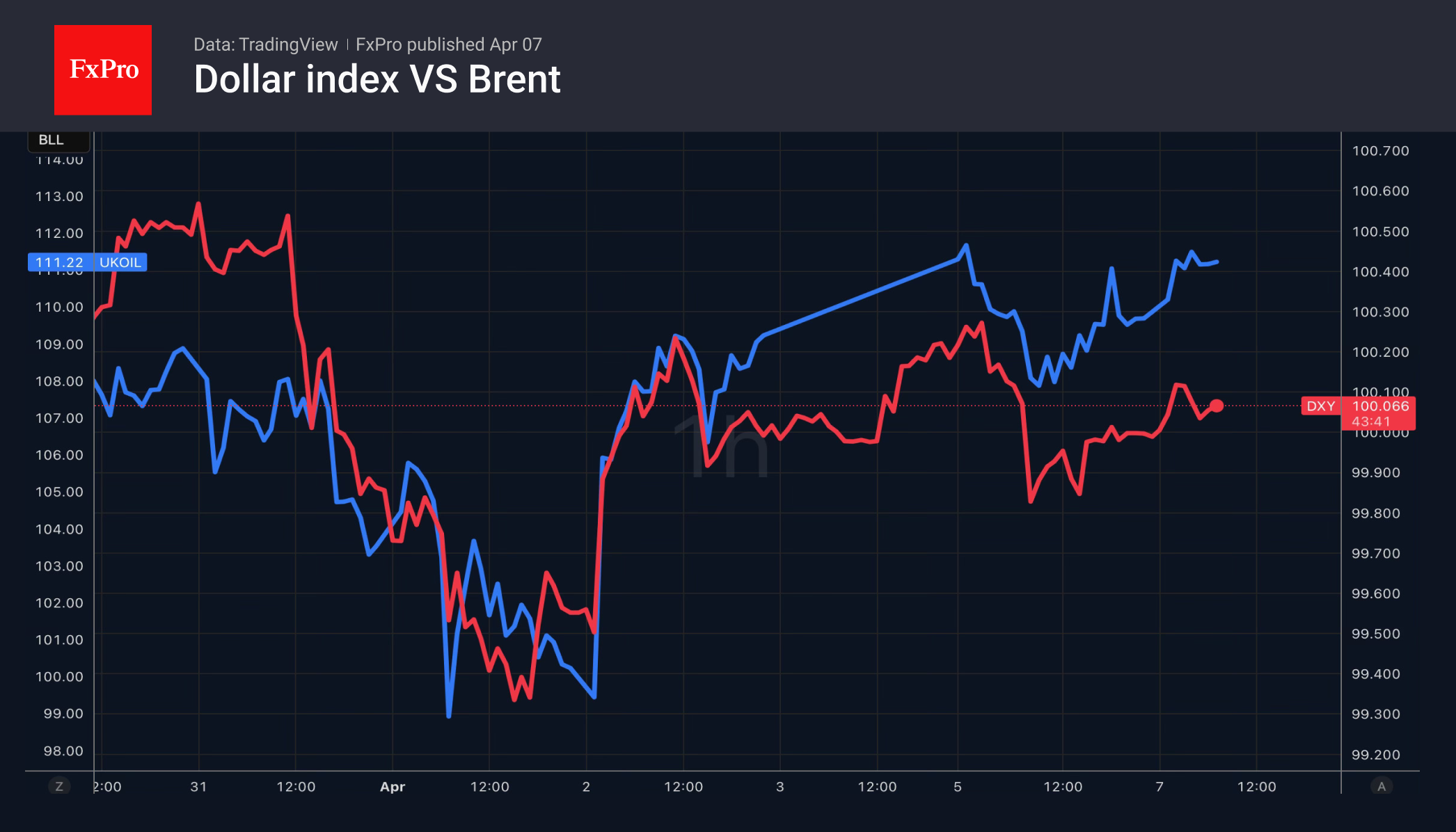
The gradual restoration of pre-war traffic through the Strait of Hormuz is key to stabilisation. Brent prices already factor in a risk premium for potential US strikes on Iran’s energy infrastructure. Another postponement of the ultimatum would cause Brent and the US dollar to retreat.
The conditions proposed by one side continue to be a red line for the other. So far, there has been no clear progress, and the parties are not genuinely moving closer to an agreement.
The problem is that geopolitical risks will not disappear even in the event of a truce, sustaining heightened demand for the US dollar as a safe-haven asset. This is all the more so given that the Fed’s rival central banks are poised to make a mistake by raising interest rates. The oil and gas shortage is a blow to spending, and a tightening of monetary policy will double the economic pain.
The fall in EUR/USD could have been more severe were it not for Donald Trump’s eccentricity, which is undermining investor confidence in the US dollar and bonds. At the same time, the market is realising that the US economy will also suffer. It is heading towards stagflation, as evidenced by the dynamics of leading indicators.
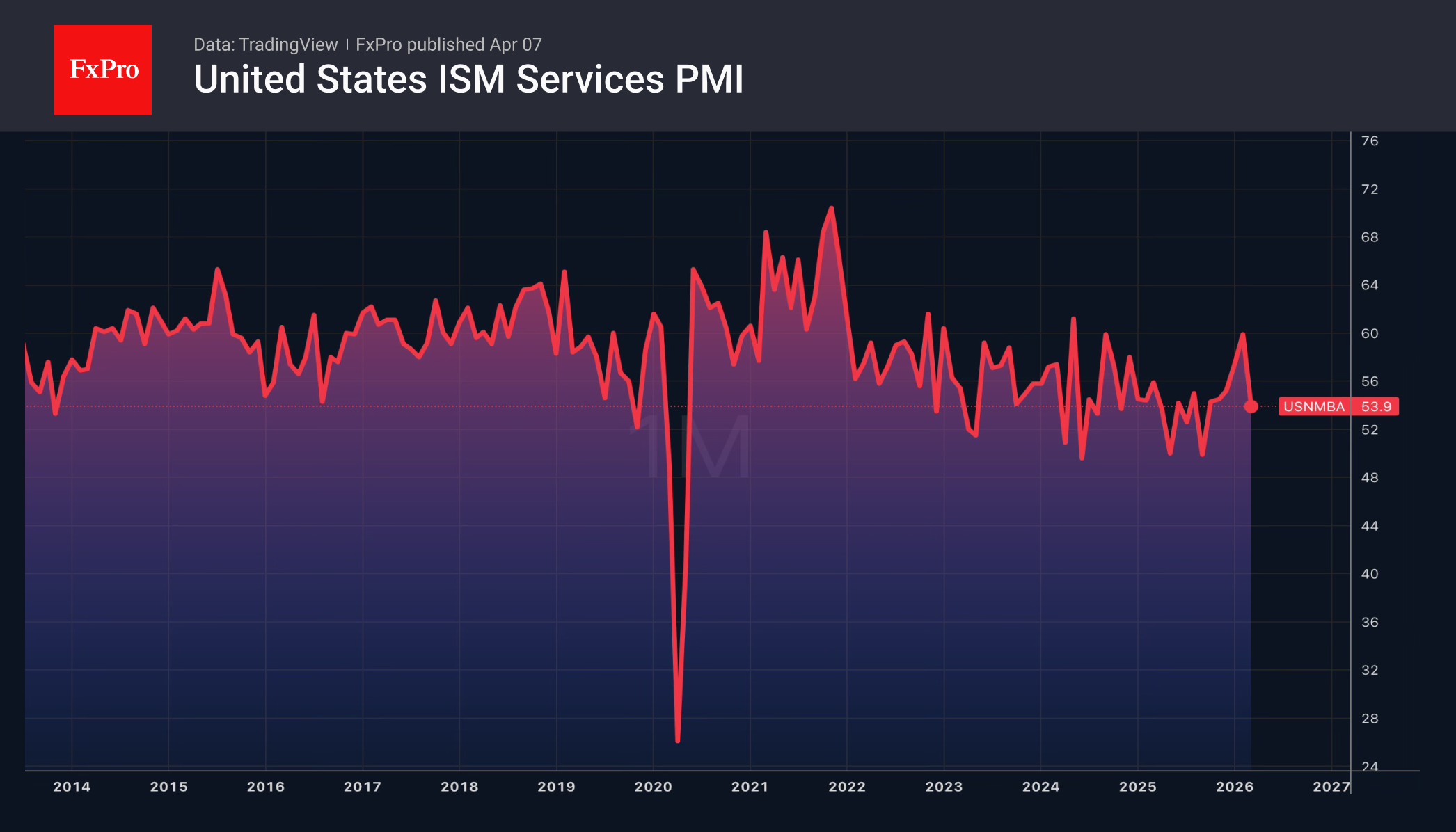
In March, the ISM Services PMI fell, with the employment component dropping to its lowest level since 2023. Meanwhile, the input prices component reached its highest level since October 2022, recording its largest monthly increase in the last 14 years. Stagflation is evident, which is weighing on the US dollar.
By the FxPro Analyst Team

Fed Remarks Dampen Rate Hike Hopes Ahead of NFP Release

Global Bond Selloff, Eyes on Central Banks & US ADP

Week Ahead: Gold, Jobs Data and Fed Policy Shape September Markets

Oil Shock and Rate Bets Reshape Global Markets | 1st September, 2026

Technical Analysis – EURUSD nurses losses, readies for a rebound
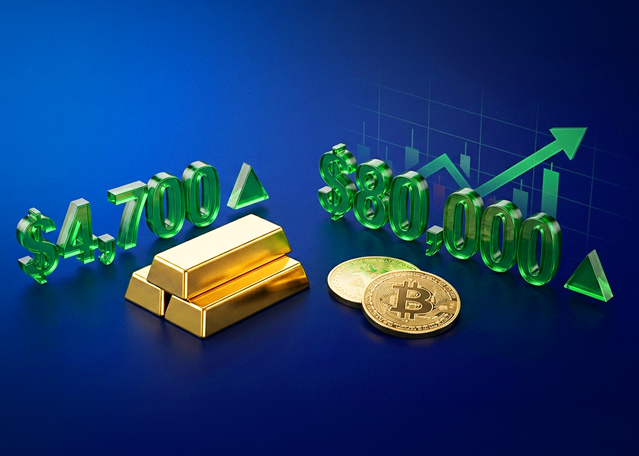
Weekly Analysis: Global Markets Mixed as Gold Approaches $4,700 and Bitcoin Hovers Around $80,000
Fed Chair Speech to Set Tone for September Interest Rates Hinges