






Fed Rate Decision in Focus as Currencies React to Inflation and Policy Divergence | 28th October, 2026

Fed Decision in Focus
Global financial markets are focused on the Federal Reserve's interest rate decision as persistent inflation and rising energy costs influence expectations for future monetary policy. The Australian Dollar has strengthened against the New Zealand Dollar following hotter-than-expected Australian inflation and the RBNZ's unexpected decision to hold rates, while the Japanese Yen, British Pound, and Euro remain under pressure from different economic and policy challenges. Investors will closely monitor the Fed's guidance, the UK's budget announcement, and upcoming central bank meetings for signals that could shape currency and precious metal movements.
AUD/NZD Forecast
Current Price and Context
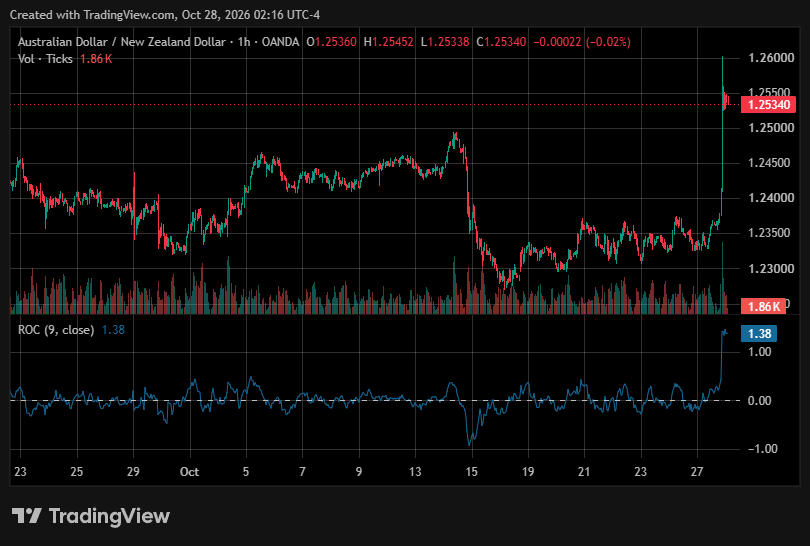
AUD/NZD is trading around 1.2550 after rallying to its highest level since March 2013 and approaching 1.2600 during Wednesday's Asian session. Stronger-than-expected Australian inflation has increased expectations of a potential Reserve Bank of Australia rate hike in November, while the Reserve Bank of New Zealand's unexpected decision to hold its official cash rate at 2.75% has weighed heavily on the New Zealand Dollar. The divergence in monetary policy expectations has helped the Australian Dollar outperform its New Zealand counterpart.
Key Drivers
• Geopolitical Risks: Geopolitical uncertainty and elevated energy prices could affect inflation expectations and risk sentiment, influencing both the Australian and New Zealand Dollars.
• US Economic Data: The Federal Reserve's decision could influence broader market sentiment, although relative Australian and New Zealand monetary policy remains the more direct driver of AUD/NZD.
• FOMC Outcome: A hawkish Fed outlook could weigh on risk-sensitive currencies, while a less restrictive message could improve sentiment and potentially support the Australian Dollar.
• Trade Policy: Changes in global trade conditions and demand for Australian and New Zealand exports could influence the economic outlook and relative performance of both currencies.
• Monetary Policy: Strong Australian inflation has strengthened expectations for a November RBA rate hike, while the RBNZ's unexpected rate hold has weakened the New Zealand Dollar despite its indication that tighter policy may eventually be required.
Technical Outlook
• Trend: AUD/NZD maintains a strong bullish bias after reaching its highest level since March 2013 and gaining nearly 1.5% during Wednesday's Asian session.
• Resistance: The recent high around 1.2600 is the immediate resistance area to watch for a potential continuation of the rally.
• Support: The 1.2500 psychological level is a potential area to monitor during pullbacks, although the supplied article does not confirm a technical support level.
• Forecast: AUD/NZD could extend its advance if it breaks convincingly above 1.2600, while a sustained retreat toward or below 1.2500 would suggest that bullish momentum is cooling.
Sentiment and Catalysts
• Market Sentiment: Sentiment remains bullish toward the Australian Dollar as stronger inflation supports expectations for tighter RBA policy and the New Zealand Dollar struggles following the RBNZ decision.
• Catalysts: Further Australian inflation data, RBA policy signals, and the RBNZ's assessment of the economic outlook are the main catalysts for AUD/NZD.
XAG/USD Forecast
Current Price and Context
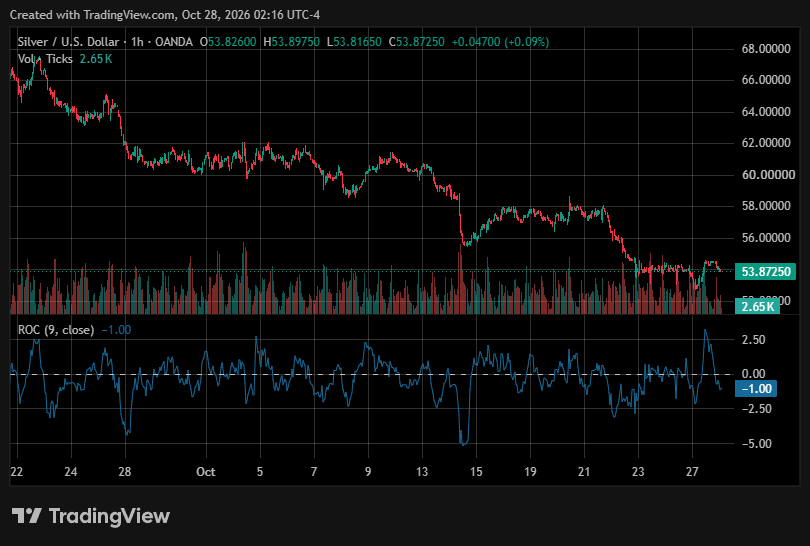
Silver (XAG/USD) is trading around $54.10 per troy ounce, retreating after recording modest gains in the previous session. Rising crude oil prices have renewed inflation concerns and strengthened expectations that the Federal Reserve could maintain a restrictive policy stance or tighten policy again in December. Investors are awaiting the Fed's October decision, which is widely expected to leave interest rates unchanged, while uncertainty surrounding Israel's election and the broader Middle East conflict continues to influence energy prices and market sentiment.
Key Drivers
• Geopolitical Risks: Uncertainty surrounding Israel's closely contested election and the broader Middle East conflict could keep energy markets volatile and influence demand for precious metals.
• US Economic Data: Incoming US economic and inflation data could change expectations for future Federal Reserve policy, affecting silver through movements in Treasury yields and the US Dollar.
• FOMC Outcome: A hawkish Fed message could pressure silver by supporting the dollar and increasing expectations for higher interest rates, while a dovish surprise could encourage a recovery.
• Trade Policy: Changes in global trade conditions and industrial demand could influence silver prices because the metal serves both investment and industrial purposes.
• Monetary Policy: Expectations of a possible December Fed rate hike remain a headwind for silver, which generally becomes less attractive when interest rates and yields rise.
Technical Outlook
• Trend: XAG/USD maintains a bearish near-term bias as silver retreats toward $54.00 amid renewed inflation concerns and expectations of restrictive monetary policy.
• Resistance: The $55.00 psychological level is an area to monitor for a potential recovery, although the supplied article does not confirm a technical resistance level.
• Support: The article does not identify a confirmed technical support level below the current price, so traders should verify nearby support using an updated price chart.
• Forecast: Silver could face further downside pressure if prices remain weak and the Fed maintains a hawkish outlook, while a more dovish policy message could encourage a corrective rebound.
Sentiment and Catalysts
• Market Sentiment: Sentiment toward silver remains cautious as higher oil prices, inflation concerns, and expectations of further monetary tightening weigh on the non-yielding metal.
• Catalysts: The Federal Reserve's decision and press conference, crude oil price movements, developments in the Middle East, and changing expectations for December monetary policy are the primary catalysts.
USD/JPY Forecast
Current Price and Context
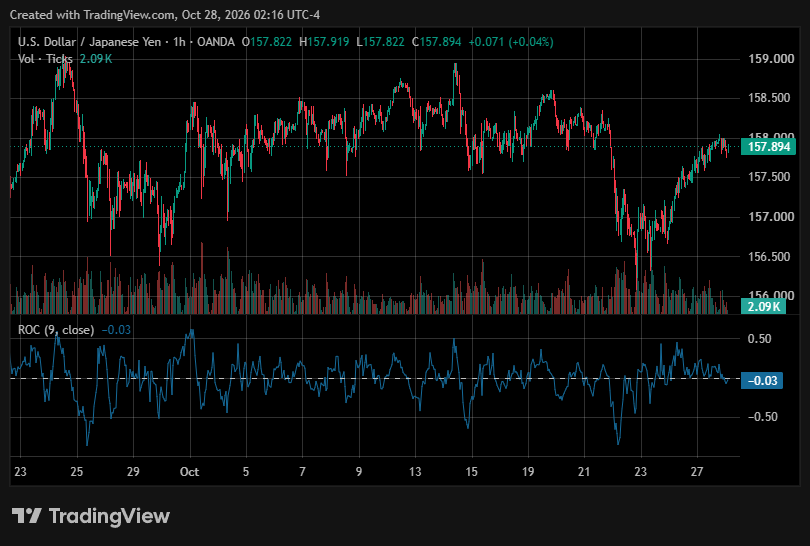
USD/JPY is trading around 158.00, extending its gains for a fourth consecutive session as the Japanese Yen remains under pressure from rising crude oil prices. Higher energy costs increase Japan's import burden, creating additional challenges for an economy that relies heavily on imported energy. The Bank of Japan is widely expected to hold interest rates steady at its Friday meeting, while markets continue to anticipate a possible December rate hike. Meanwhile, the Federal Reserve is expected to maintain its benchmark interest rate at 3.75%–4.00% at its October meeting, with traders watching for guidance about future policy.
Key Drivers
• Geopolitical Risks: Uncertainty surrounding Israel's election and the broader Middle East conflict could keep oil prices elevated, increasing Japan's import costs and weighing on the Yen.
• US Economic Data: Strong US economic data or persistent inflation could support Treasury yields and the dollar, potentially strengthening USD/JPY further.
• FOMC Outcome: A hawkish Fed message could support USD/JPY by sustaining expectations for a relatively wide interest-rate differential between the United States and Japan.
• Trade Policy: Changes in global trade conditions could influence risk sentiment and economic expectations, affecting demand for both the US Dollar and Japanese Yen.
• Monetary Policy: The expected Fed rate hold contrasts with the Bank of Japan's cautious approach, although expectations for a possible December BoJ hike could eventually provide support to the Yen.
Technical Outlook
• Trend: USD/JPY maintains a constructive bullish bias around 158.00, with price trading above its short-term and medium-term exponential moving averages and the daily RSI near 52.
• Resistance: The supplied article does not identify a confirmed overhead resistance level, so traders should monitor the latest chart for potential barriers above 158.00.
• Support: Initial support is located around the 50-period EMA at 157.96, followed by the nine-period EMA near 157.76.
• Forecast: USD/JPY could extend its recovery while holding above 157.96–157.76, although a sustained break below this support zone would weaken the immediate bullish outlook.
Sentiment and Catalysts
• Market Sentiment: Sentiment favors the US Dollar as rising energy costs pressure the Yen and expectations of a near-term BoJ hold limit immediate support for the Japanese currency.
• Catalysts: The Fed's policy decision and forward guidance, Friday's BoJ meeting, movements in crude oil prices, and changing expectations for a December rate hike are the principal catalysts.
GBP/USD Forecast
Current Price and Context
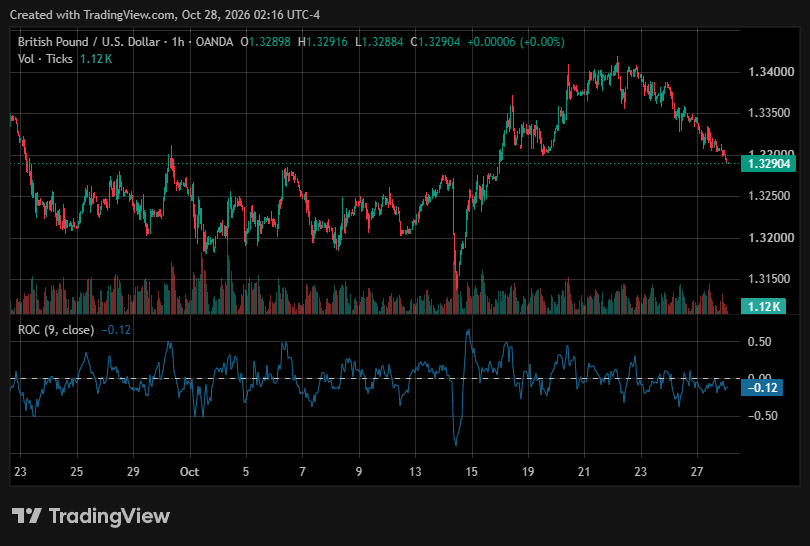
GBP/USD has declined toward 1.3300 as traders adopt a cautious stance ahead of the UK's budget announcement and the Federal Reserve's interest rate decision. The UK government faces pressure to address household living costs and support businesses while managing high borrowing costs and existing fiscal commitments. The Fed is widely expected to keep its benchmark rate unchanged at 3.75%–4.00%, making its forward guidance and signals about a possible December rate move particularly important for the US Dollar and the Pound.
Key Drivers
• Geopolitical Risks: Persistent geopolitical uncertainty and elevated energy costs could weigh on market confidence and reinforce demand for the US Dollar.
• US Economic Data: Incoming US economic and inflation data could influence expectations for future Fed policy, affecting GBP/USD through changes in dollar demand and Treasury yields.
• FOMC Outcome: A hawkish Fed message could strengthen the dollar and push GBP/USD lower, while a dovish surprise could help the pair recover.
• Trade Policy: Changes in global trade policy and uncertainty surrounding international commerce could affect growth expectations and create additional volatility for Sterling.
• Monetary Policy: The Bank of England's concerns about persistent wage inflation could limit expectations for near-term rate cuts, although the UK's fiscal outlook remains an important consideration for Sterling.
Technical Outlook
• Trend: GBP/USD retains a mildly bearish outlook while trading below its 100-day simple moving average near 1.3390, with the Relative Strength Index around 47 indicating limited bullish momentum.
• Resistance: Initial resistance is located around 1.3390, followed by the upper Bollinger Band near 1.3415.
• Support: Immediate support is around 1.3285, followed by the lower Bollinger Band near 1.3150, while the recent low near 1.3300 remains an important area to monitor.
• Forecast: GBP/USD could extend its decline toward 1.3285 and potentially 1.3150 if selling pressure persists, while a recovery above 1.3390–1.3415 would improve the short-term outlook.
Sentiment and Catalysts
• Market Sentiment: Sentiment toward Sterling remains cautious as traders weigh UK fiscal uncertainty against persistent wage pressures and the dollar's relative strength.
• Catalysts: The UK's budget announcement, the FOMC decision, the Fed Chair's press conference, and developments in UK borrowing costs are the main catalysts for GBP/USD.
EUR/USD Forecast
Current Price and Context
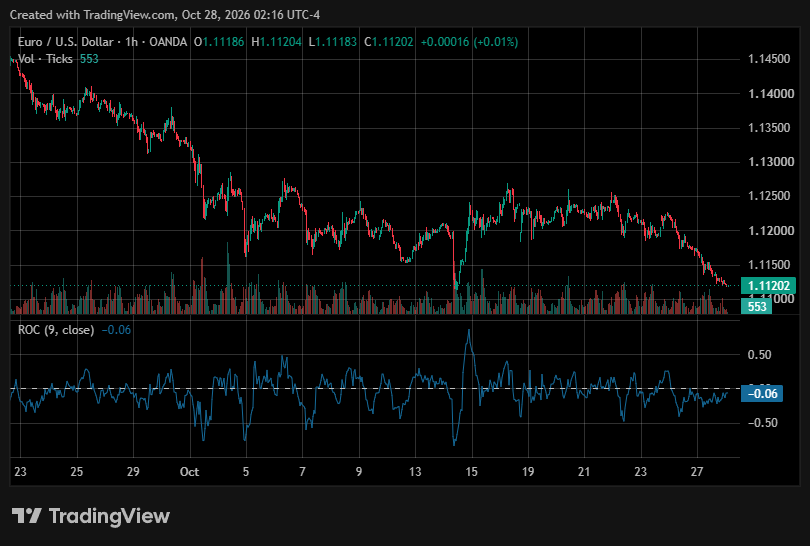
EUR/USD is trading around 1.1125, remaining below the 1.1150 area as traders await the Federal Reserve's latest policy decision. The pair has struggled to recover amid persistent dollar strength, elevated energy costs, concerns about France's fiscal position, and volatility in French government bonds. The Fed is expected to leave rates unchanged at 3.75%–4.00%, while the European Central Bank is scheduled to announce its policy decision on Thursday. Traders will therefore focus on the Fed's guidance and the ECB's assessment of inflation and economic conditions.
Key Drivers
• Geopolitical Risks: Geopolitical tensions and elevated energy prices could weigh on the Euro by increasing import costs and adding pressure to the Eurozone's inflation and growth outlook.
• US Economic Data: Strong US economic data or persistent inflation could reinforce expectations of restrictive Fed policy and support the dollar against the Euro.
• FOMC Outcome: A hawkish Fed message could keep EUR/USD under pressure, while a dovish surprise could trigger a dollar pullback and provide room for a recovery.
• Trade Policy: Uncertainty surrounding international trade and global economic conditions could affect the Eurozone's export outlook and broader demand for the shared currency.
• Monetary Policy: The ECB is expected to leave rates unchanged at its upcoming meeting, while expectations for possible future Fed tightening continue to support the dollar, making the ECB's guidance important for EUR/USD.
Technical Outlook
• Trend: EUR/USD maintains a bearish near-term bias as it trades below key moving averages and the lower Bollinger Band, while the Relative Strength Index near 30.3 indicates that the pair is approaching oversold territory.
• Resistance: Initial resistance is located near 1.1130, followed by the Bollinger Band midpoint around 1.1205 and the upper band near 1.1280.
• Support: The supplied technical analysis does not identify a confirmed support level below the current price, leaving the pair vulnerable to exploring fresh lows if selling continues.
• Forecast: EUR/USD could remain under pressure while trading below 1.1205, although near-oversold momentum could allow a corrective bounce; a sustained recovery above the midpoint would begin to ease the bearish outlook.
Sentiment and Catalysts
• Market Sentiment: Sentiment toward the Euro remains bearish as energy costs, French fiscal concerns, and the dollar's relative strength limit recovery attempts.
• Catalysts: The Federal Reserve's decision and guidance, Thursday's ECB meeting, developments in French government bonds, and changes in energy prices are the main catalysts for EUR/USD.
Wrap Up
The Federal Reserve's policy decision remains a major near-term catalyst, with its guidance likely to influence the US Dollar, silver prices, and broader market sentiment. The Australian Dollar is benefiting from stronger inflation and a weaker New Zealand Dollar, while the Japanese Yen, British Pound, and Euro face distinct pressures from energy costs, fiscal concerns, and monetary policy expectations. Traders should monitor the Fed's communication, the UK's budget announcement, and upcoming ECB and BoJ decisions while treating technical levels as reference points rather than guarantees of future price movements.
Ready to trade global markets with confidence? Join Moneta Markets today and unlock 1000+ instruments, ultra-fast execution, ECN spreads from 0.0 pips, and more! Start now with Moneta Markets!


Dollar Firms and Oil Rebounds Ahead of Fed Decision

FOMC and Month-End: How FX Hedging Flows Can Move Currency Markets

Federal Reserve Decision Looms as Dollar Strength Challenges Major Currencies | 27th October, 2026

GBP/USD vulnerable after rejection near 1.3400

Euro and Pound Ease, Gold Holds Near Lows Ahead of Rate Decisions

Technical Outlook on USD/JPY, EUR/USD, GBP/USD

Central banks are in no hurry