





XAU/USD Breaks Below $4,000: Analyzing Treasury Yield Correlations and Dollar Strength

Gold (XAU/USD) came under selling pressure last week, falling below the psychologically significant $4,000 per troy ounce level and reaching its lowest point in more than a year. The decline coincided with stronger-than-expected US inflation data, rising US Treasury yields, and changing expectations surrounding Federal Reserve monetary policy.
After trading at around $4,120 per troy ounce on Monday, November 9, spot gold declined to an intraday low of approximately $3,852 on Thursday, November 12. This represented a decrease of around 6.5% from the stated Monday reference level over three trading sessions.
The decline reflects a shift in market sentiment as investors reassess the outlook for US inflation and monetary policy. Persistent inflationary pressures have contributed to expectations that the Federal Reserve may maintain restrictive monetary conditions for longer, while the possibility of further interest rate increases has also attracted market attention.
Stronger US Inflation Data Influences Fed Rate Expectations
One of the developments associated with gold's recent decline was the release of US inflation data for October.
The US Consumer Price Index (CPI) increased by 0.4% month over month, exceeding market expectations of 0.3%. Meanwhile, Core CPI, which excludes food and energy prices, also rose by 0.3%, compared with the forecast of 0.2%. The figures indicate that inflationary pressures remained present during the reporting period, contributing to market discussions about the Federal Reserve's monetary policy outlook.
These market expectations are relevant to gold because the precious metal does not generate interest income. When interest rates and bond yields increase, interest-bearing assets such as US government bonds may become relatively more attractive to investors.
However, the relationship between interest rates and gold is not always straightforward. Currency movements, inflation expectations, investment demand, and broader financial market conditions can also influence gold prices.
Rising US Treasury Yields and the US Dollar Influence Gold Prices
In addition to inflation developments, movements in US Treasury yields and the US dollar were among the factors associated with gold's recent decline.
Following the release of stronger-than-expected CPI data, the yield on two-year US government bonds rose to approximately 4.74%, while the 10-year Treasury yield moved above 5%.
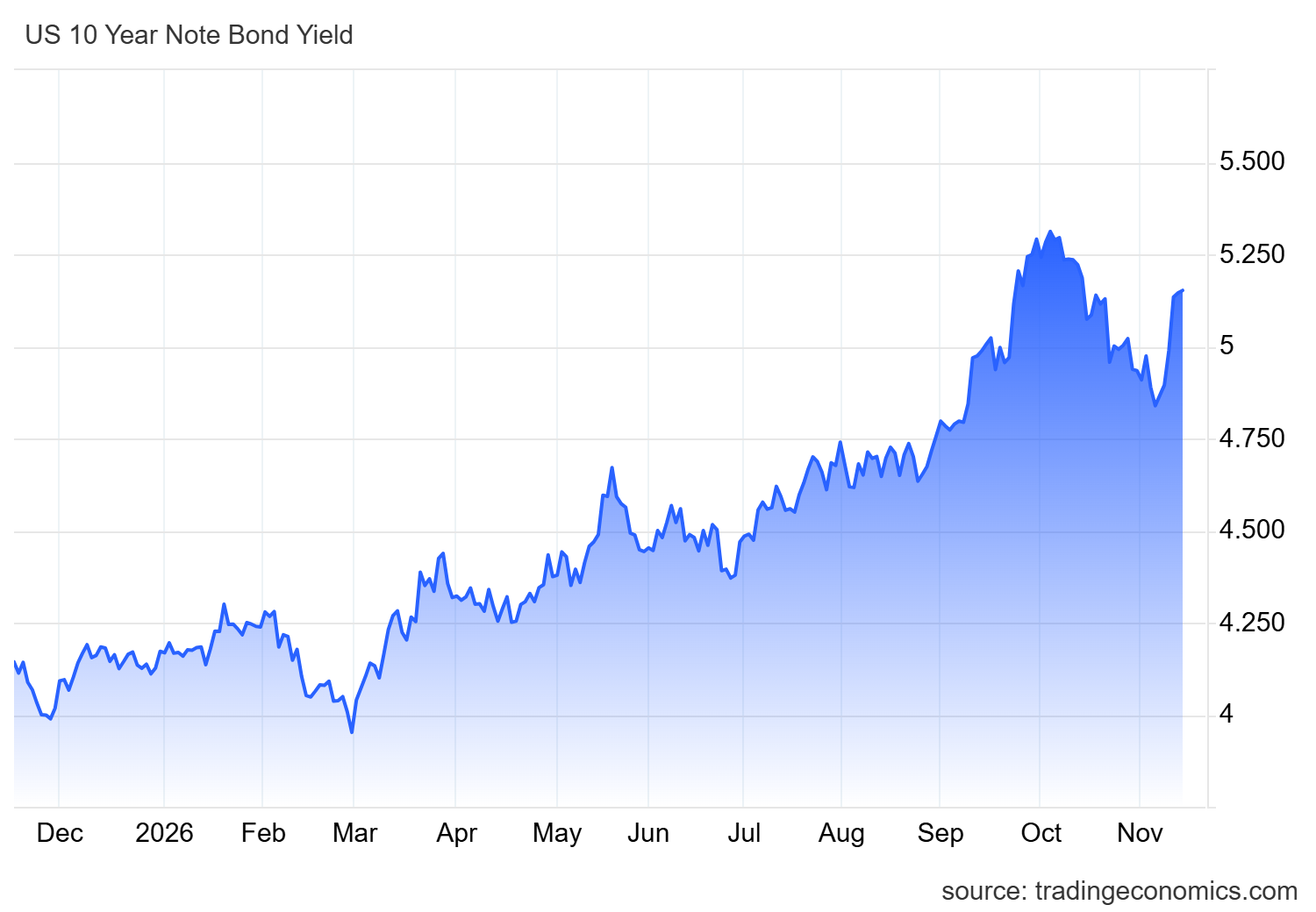
On November 13, the 10-year US Treasury yield reached approximately 5.16%, based on market data cited by Investing.com. During the same period, the US Dollar Index (DXY) traded above 103, reaching its highest level since April 2025.
These developments illustrate two important relationships between financial markets and gold prices.
First, higher US Treasury yields can increase the opportunity cost of holding gold. As government bonds offer higher yields, some investors may reassess their exposure to non-yielding assets, including precious metals.
Second, a stronger US dollar can make dollar-denominated gold more expensive for international buyers using other currencies. This currency effect may influence purchasing demand and international gold market activity.
The simultaneous movement in Treasury yields and the US dollar therefore provides important context for understanding the recent weakness in XAU/USD. Nevertheless, the extent of their influence can vary depending on broader economic conditions and investor positioning.
Geopolitical Tensions and Inflation Concerns Shape Gold Market Sentiment
Gold has historically been associated with safe-haven demand during periods of geopolitical uncertainty. However, its response to geopolitical developments can vary depending on other market conditions.
During the week, rising tensions involving Iran and concerns surrounding the Strait of Hormuz contributed to discussions about potential disruptions to global energy supplies and movements in crude oil prices.
Geopolitical uncertainty can influence demand for gold as investors reassess exposure to financial market risks. At the same time, higher oil prices may contribute to inflationary pressures, particularly when energy costs remain elevated.
This creates several possible market scenarios.
If higher energy prices contribute to persistent inflation, market expectations surrounding interest rates may adjust. Depending on Federal Reserve communication and incoming economic data, this could influence Treasury yields and the US dollar.
In such circumstances, the impact of geopolitical uncertainty on gold may be influenced by monetary policy expectations and currency movements, rather than safe-haven demand alone.
The recent market developments illustrate the interaction between geopolitical risks, energy prices, inflation expectations, and financial market conditions.
What Economic Developments Are Relevant to Gold Market Sentiment?
Gold market sentiment is influenced by several interconnected factors, including US inflation, Federal Reserve communication, Treasury yields, and movements in the US dollar.
Several scheduled economic releases and central bank communications are relevant to market discussions during the week.
The October US Retail Sales report, scheduled for November 17, is expected to provide further information about consumer spending activity and the condition of the US economy. Meanwhile, the release of the Federal Open Market Committee (FOMC) meeting minutes on November 18 may provide additional context regarding policymakers' assessments of inflation and monetary policy.
Stronger-than-expected economic data could influence expectations surrounding interest rates, while weaker readings may contribute to a different assessment of the economic outlook. However, the market response will also depend on previous expectations, other economic indicators, and Federal Reserve communication.
The $4,000 level remains an important psychological reference point following the recent decline. Price movements around this level may provide additional information about short-term market sentiment.
Meanwhile, the recent low around $3,850 represents another technical reference area. A sustained move below this level would indicate further weakness in the observed price structure, while a recovery could reflect a change in short-term market conditions.
Neither outcome can be considered certain, as price movements remain subject to changes in economic data, monetary policy expectations, currency valuations, and broader market sentiment.
Overall, gold's recent decline reflects a combination of macroeconomic developments rather than a single market catalyst. US inflation, Treasury yields, Federal Reserve expectations, and geopolitical developments remain interconnected factors in the precious metals market. Their relative influence may continue to evolve as new economic information becomes available.
Disclaimer : 76% of retail investor accounts lose money when trading CFDs with this provider. Consider whether you can afford the high risk of losing your money. This marketing publication is for informational and educational purposes only. It is not an investment recommendation. We do not suggest any investment strategy in this material, nor do we provide investment advice. The material does not take into account your individual financial situation, needs, or investment objectives. It does not constitute a solicitation or invitation to buy, sell, or engage with any product or service of IUX. We have prepared this marketing publication carefully and objectively. We present the facts known to the authors at the time of its creation. We do not include any judgmental elements. Information and research based on historical data or results, as well as forecasts, are not a reliable indicator of the future. We are not responsible for your actions or omissions, especially if you decide to purchase or sell financial instruments based on the information in this marketing publication. We are also not liable for any damages that may result from the direct or indirect use of this information.


Gold Rebounds 2% Towards $3,600 After Steepest Weekly Decline Since March

AI Selloff Deepens Despite Anthropic’s Record Debut

Dollar Holds Firm as Metals Slide and Oil Supports the Canadian Dollar | 20th November, 2026
EBC Markets Briefing | There is almost nowhere to hide in markets

GOLD at $3,800: Cheap Opportunity or Still Expensive? FOMC Minutes in Focus

Gold Slides to 14-Month Low as Dollar and Yields Hold Strong

Tech Tremors and Hawkish Fed Pressures Trigger Broad Risk-Off Reset