-1162026812.png)
-1162026812.png)





BITCOIN'S 30% CRASH: THE NEXT BIG REBOUND OR MORE PAIN AHEAD?

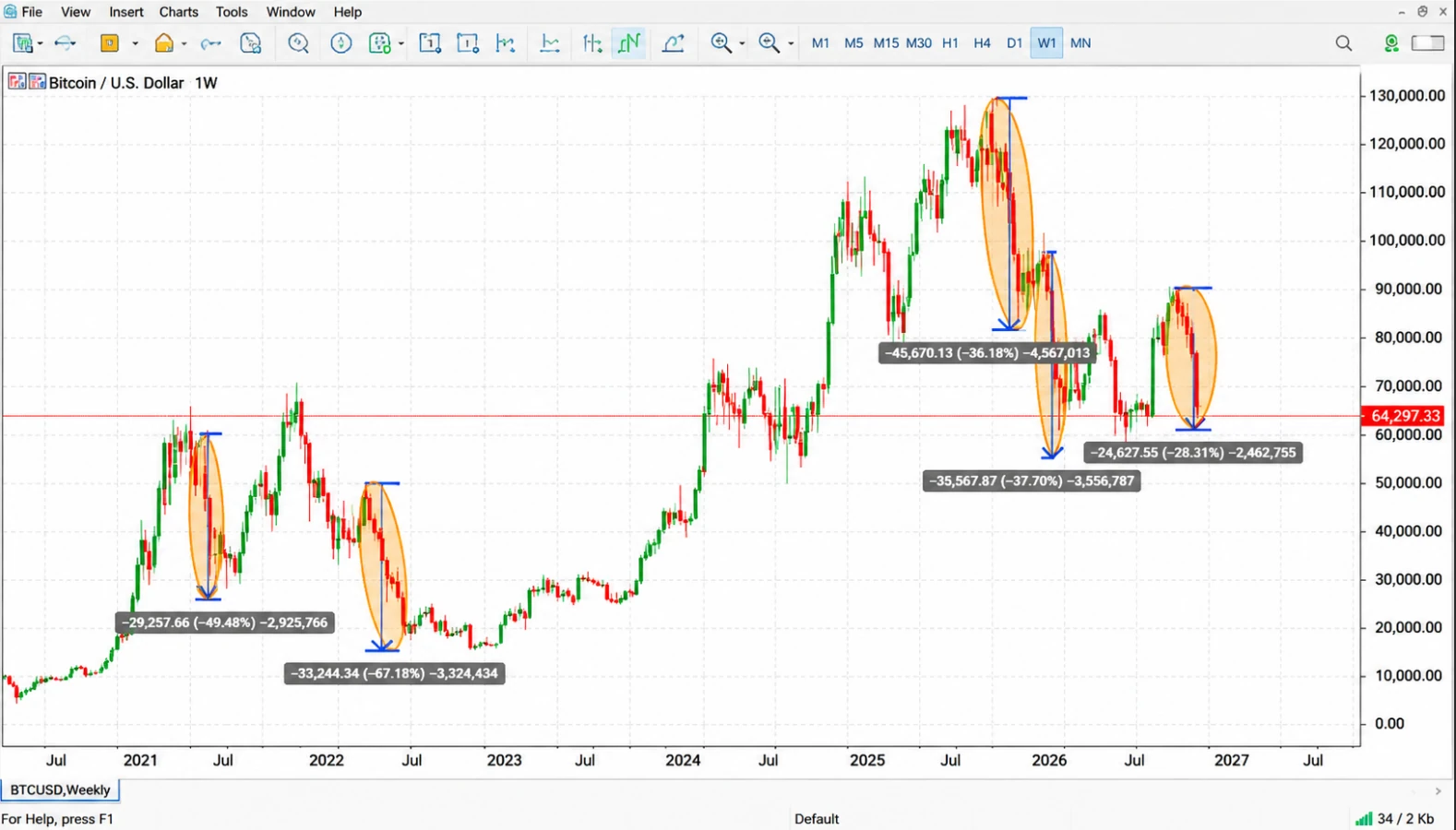 Bitcoin has suffered one of the sharpest sell-offs in its history, plunging nearly 30% in just ten days. Only four comparable short-term declines have been more severe: in May 2021, April–May 2022, November 2025 and January–February 2026.
On the other hand, much of the downward move may already be behind us. Previous sell-offs of this magnitude were followed by recoveries, so why not take a ride on the Bitcoin rollercoaster 🎢?
1. Extreme selling pressure can create opportunities. Sharp corrections often push prices well beyond levels justified by short-term market fundamentals, particularly when leveraged positions are being liquidated. As forced selling subsides, even a modest improvement in buying demand can produce a substantial rebound. However, the scale of the decline alone does not confirm that the market has reached its bottom.
2. Market sentiment may be approaching a turning point. When fear dominates trading decisions, investors tend to focus on immediate losses rather than longer-term prospects. Such periods can coincide with attractive entry opportunities, but extreme pessimism can also persist for longer than anticipated. The critical distinction is whether selling pressure is genuinely diminishing or merely pausing before another downward move.
3. Key technical levels will determine the next move. With Bitcoin trading around $64,400, the $62,000 area represents an important immediate support zone. A sustained recovery above $65,000–66,000 could encourage further buying towards $68,000 and potentially $70,000. Conversely, a decisive break below $62,000 would expose the psychologically significant $60,000 level and suggest that the correction has further to run.
4. The broader macroeconomic environment remains decisive. Bitcoin's recovery prospects depend not only on its own technical structure but also on global liquidity, US monetary policy and investors' appetite for risk. A strong dollar and expectations of further Federal Reserve tightening could continue to weigh on cryptocurrencies. Conversely, easing Treasury yields, improving liquidity conditions or a recovery in broader risk sentiment could provide the catalyst for a more convincing rebound.
ConclusionBitcoin's recent collapse may have created the conditions for a powerful recovery, but historical precedent is an opportunity to assess — not a guarantee to rely upon. The next decisive signals will come from price stabilisation, sustained buying interest and the ability to reclaim key resistance levels. For investors prepared to navigate exceptional volatility, the coming sessions could offer significant opportunities on either side of the market.
The rollercoaster is moving. The question is whether the next major move is another drop — or a sharp climb back.Trade smart with Headway


Technical Analysis – GBPUSD rebounds from one-month lows after five-day slide

Tech Tremors and Hawkish Fed Pressures Trigger Broad Risk-Off Reset

EBC Markets Briefing | Yen moves sideways after unexpected GDP contraction

Daily Fundamental Analysis: stock indices trade lower as Nvidia continues to weigh on market sentiment

Yen Intervention Risk Builds as Dollar Momentum Cools and Precious Metals Attempt to Stabilize | 17th November, 2026

Dollar Index Hits 19-Month High as Demand for Dollar Strengthens

Wall Street Slides as AI Fears Hit Nvidia and Chip Stocks Ahead of Earnings