





Brent chooses its path

Brent chooses its path
· Investors are assessing whether the 2022 or 2025 oil scenario will play out.
· Releasing reserves will not necessarily lower oil prices.
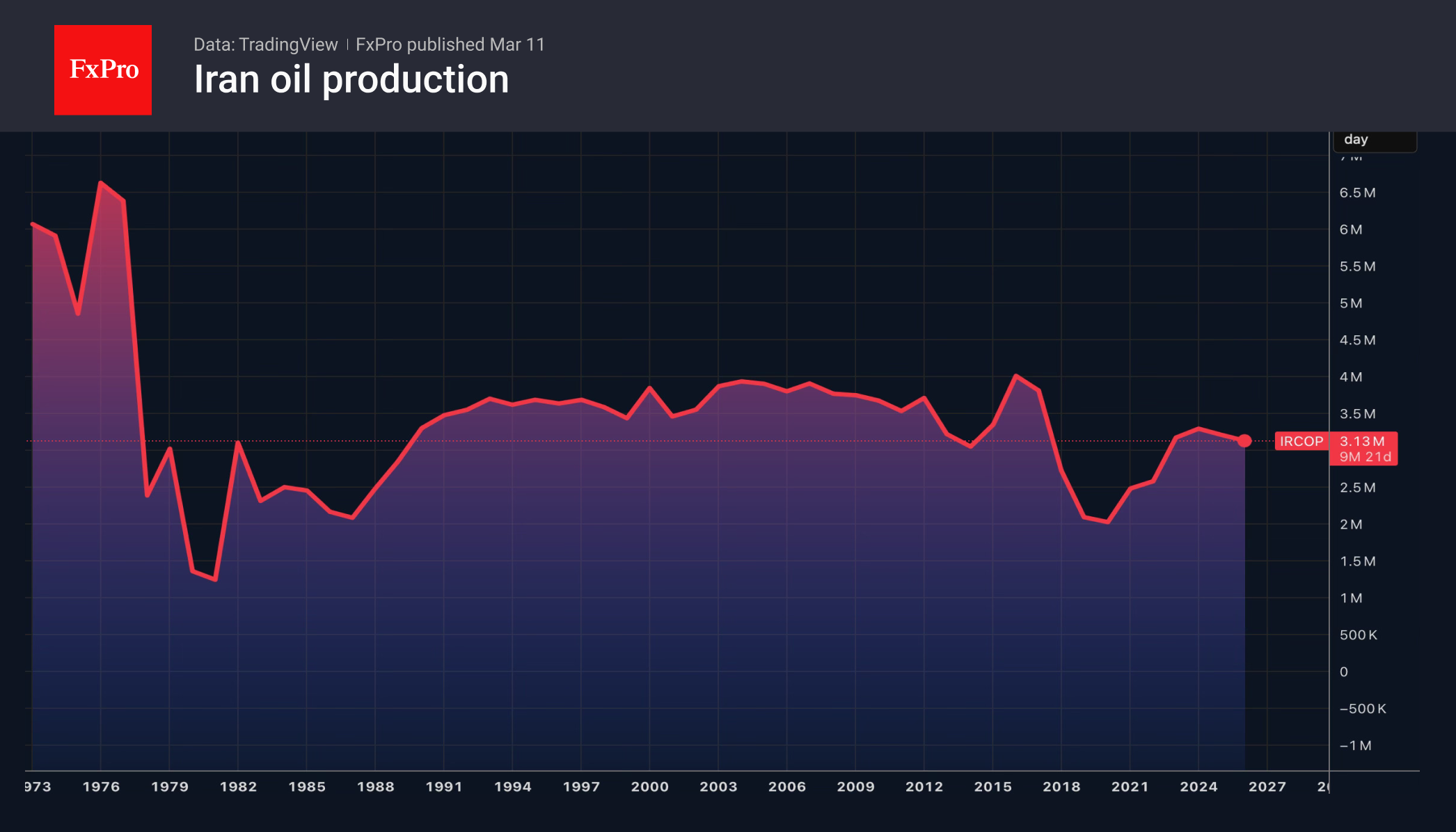
The oil market is focused on two main issues: how quickly the conflict in the Middle East will end, and how it will conclude. Donald Trump insists on regime change and further cooperation between Tehran and Washington. The so-called Venezuelan scenario could enable Iran to boost oil production from the current 3.5 million bpd. Before the 1979 revolution, production exceeded 6 million bpd. An increase in supplies will likely cause prices to fall sharply. If the ruling regime remains in power and relations with the West stay strained, production may decline.
Earlier this week, Donald Trump assured investors that the conflict would soon conclude, setting the stage for a 12-day war in 2025 and causing a surge in Brent and WTI prices at the start of the week. Market rumours suggest that the US president, under domestic political pressure, might declare victory and back down. Investors are awaiting the right moment to deploy the TACO strategy, or Trump Always Chickens Out.
However, in past instances, the White House's opponents agreed to the conditions imposed upon them. Iran is now outright refusing to engage in negotiations, citing that two previous dialogues with the US, in summer 2025 and winter 2026, ended in bombings. Trump has promised to escalate actions if Tehran begins mining the Strait of Hormuz. Rumours of a tanker explosion near Abu Dhabi imply that he is already taking such steps.
Meanwhile, according to Goldman Sachs, oil flows through the world's main artery have increased from zero to 1.6 million bpd. While this is far below the pre-war level of 20 million bpd, its growth could support the bearish outlook on Brent and WTI. In fact, the actual volume of crude passing through the Strait of Hormuz may be even higher, as tankers try to conceal their movements.
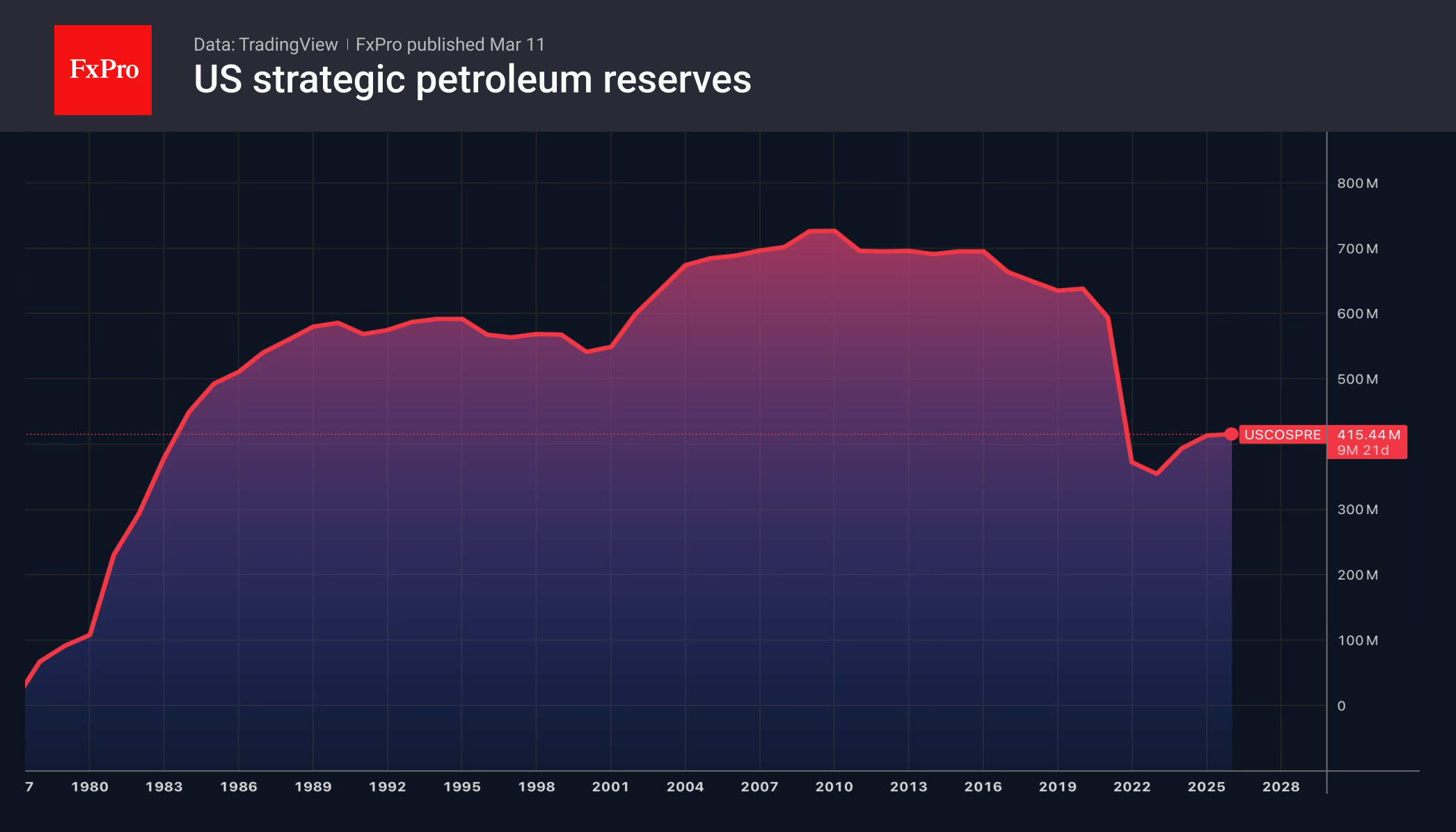
The intention behind the IEA member countries releasing barrels from strategic reserves appears to be twofold. The US and its allies experienced a similar situation in 2022, when the release of 182 million barrels caused fears and a 20% spike in Brent prices within a week. Investors interpreted this as a sign of a fragile market. Conversely, the United States' sale of reserves on the first day of the 1991 Iraq invasion, during Operation Desert Storm, led to a 20% decline in North Sea crude prices.
By the FxPro Analyst Team


Dell Shares Drop Despite AI Boom as Investors Look Beyond Earnings

Global Bond Selloff, Eyes on Central Banks & US ADP

Attention on JPY Crosses: Intervention Risk Back in Focus

USDJPY (4H): rebound or breakdown at 159.50?

Australian Inflation and RBA Rate Expectations: Impact on AUD Outlook

THE US BOND YIELDS SURGE AS POLICY RISKS COLLIDE💥
Canadian Dollar Shrugs Off Tariff Shock as Markets Focus on Bigger Risks