






Dollar Weakens as Gold and Major Currencies Await US CPI | 14th October, 2026

Markets Await US CPI
Global markets are focused on the upcoming US Consumer Price Index (CPI) report, which could significantly influence Federal Reserve interest-rate expectations and currency movements. The US Dollar Index has weakened toward 102.00, providing temporary support to the Euro and Canadian Dollar as Treasury yields retreat. Gold is holding above $4,150 per ounce as traders assess inflation risks and the potential direction of US monetary policy. Meanwhile, the Australian Dollar is gaining against the Japanese Yen following China's latest inflation figures, highlighting the importance of regional economic developments in shaping currency markets.
CANADIAN DOLLAR (USD/CAD) Forecast
Current Price and Context
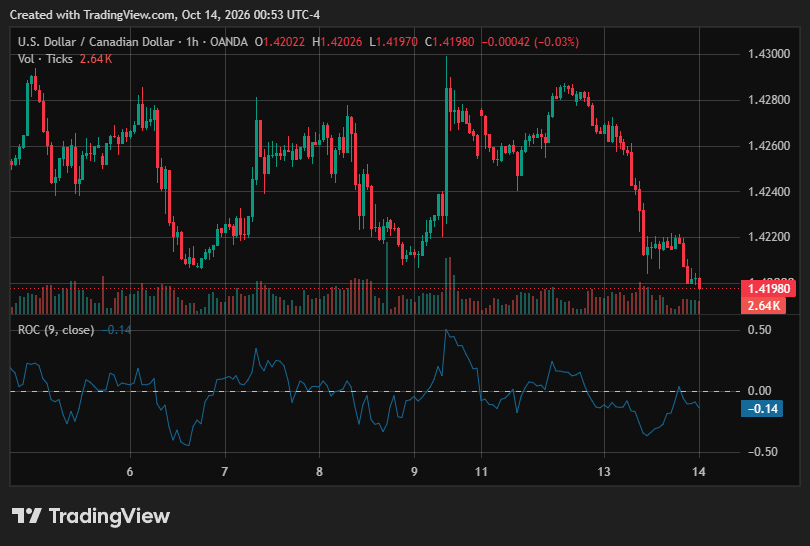
USD/CAD is trading near 1.4200 as the Canadian Dollar edges higher against the US Dollar ahead of the September US CPI report. Higher oil prices are providing additional support to the Canadian Dollar, while the broader retreat in the Greenback is helping the pair move lower as traders await fresh inflation data. The technical outlook remains cautiously bullish for USD/CAD while the pair holds above its 20-day exponential moving average near 1.4163.
Key Drivers
• Geopolitical Risks: Ongoing Middle East tensions and potential disruptions to global energy supplies could support oil prices and strengthen the Canadian Dollar because Canada is a major energy exporter.
• US Economic Data: The September US CPI report is the primary near-term catalyst, with headline inflation expected at 3.6% and core inflation at 2.5% year over year, potentially influencing the Dollar's direction.
• FOMC Outcome: Expectations that the Federal Reserve may maintain restrictive monetary policy could support the US Dollar and limit further declines in USD/CAD.
• Trade Policy: Changes in US-Canada trade relations and cross-border tariffs could influence Canadian exports, economic growth, and demand for the Canadian Dollar.
• Monetary Policy: Differences between Federal Reserve and Bank of Canada interest-rate expectations could determine the pair's direction as investors reassess the outlook for borrowing costs.
Technical Outlook
• Trend: USD/CAD maintains a cautiously bullish technical bias while trading above its 20-day exponential moving average near 1.4163, despite its recent modest decline.
• Resistance: The 1.4250 area is a potential resistance zone, while a sustained breakout could expose the pair to further gains.
• Support: The 1.4163 area represents initial technical support, and a decisive break below it could weaken the bullish outlook.
• Forecast: USD/CAD may consolidate around 1.4200 ahead of US CPI data, with stronger inflation potentially triggering a rebound and softer inflation increasing downside pressure.
Sentiment and Catalysts
• Market Sentiment: Sentiment is mixed as higher oil prices support the Canadian Dollar while uncertainty surrounding US inflation and Federal Reserve policy limits directional conviction.
• Catalysts: US CPI data, crude oil prices, Treasury yields, and Bank of Canada policy expectations will be key drivers of USD/CAD.
EUR/USD Forecast
Current Price and Context
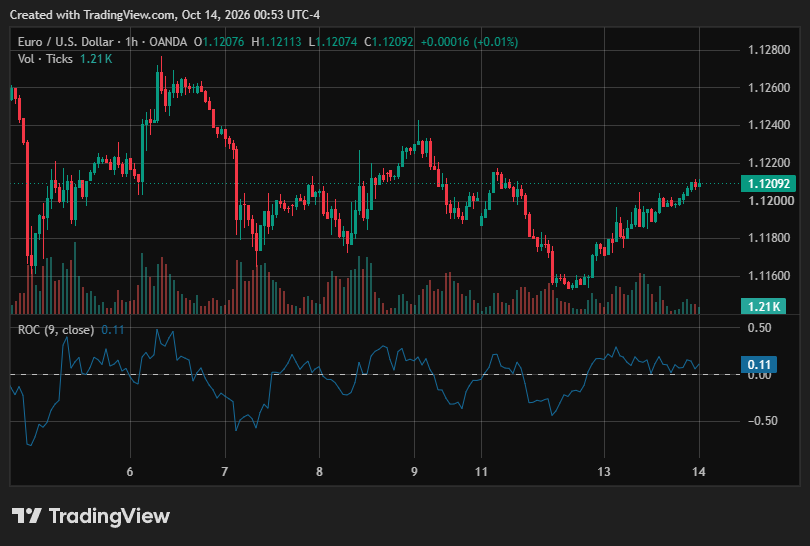
EUR/USD has recovered toward 1.1210 as the US Dollar retreats and Treasury yields ease ahead of the September inflation report. However, the Euro's recovery remains vulnerable because the pair continues to trade below its 20-day exponential moving average near 1.1303, while French fiscal concerns and Federal Reserve expectations remain important market influences.
Key Drivers
• Geopolitical Risks: Ongoing geopolitical tensions could support safe-haven demand for the US Dollar and limit the Euro's ability to sustain its recovery.
• US Economic Data: The September US CPI report could determine the pair's next direction, with stronger inflation potentially weighing on EUR/USD and softer readings supporting additional gains.
• FOMC Outcome: A Federal Reserve decision to maintain restrictive policy could strengthen the Dollar, while a less hawkish outlook could help the Euro extend its recovery.
• Trade Policy: Changes in US tariffs and international trade conditions could affect European export prospects and create additional volatility for the Euro.
• Monetary Policy: Expectations that the Federal Reserve and European Central Bank will keep interest rates unchanged in the near term could leave EUR/USD particularly sensitive to incoming economic data.
Technical Outlook
• Trend: EUR/USD retains a bearish near-term bias while trading below its 20-day exponential moving average near 1.1303, despite its recent recovery.
• Resistance: The 1.1303 area is the key technical resistance level, and a daily close above it would be needed to ease the prevailing bearish pressure.
• Support: The 1.1153 area represents immediate support, while a decisive break below it could expose the pair to further losses toward 1.1100.
• Forecast: EUR/USD could extend its recovery if US inflation comes in below expectations, but a stronger reading could push the pair back toward 1.1153.
Sentiment and Catalysts
• Market Sentiment: Sentiment toward the Euro has improved modestly following the Dollar's retreat, although fiscal concerns and the broader bearish technical structure remain obstacles.
• Catalysts: US CPI data, Treasury yields, Federal Reserve commentary, French fiscal developments, and European Central Bank expectations will influence EUR/USD.
AUSTRALIAN DOLLAR (AUD/JPY) Forecast
Current Price and Context
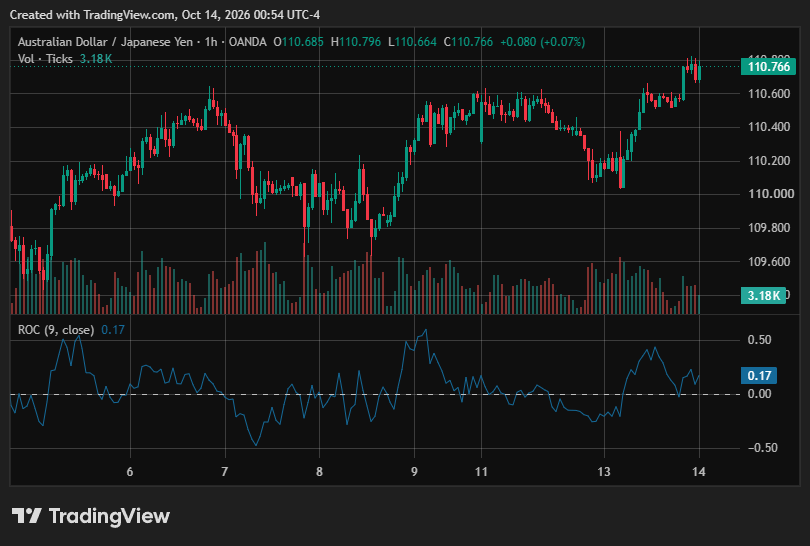
AUD/JPY is trading near 110.70 as the Australian Dollar extends its gains following China's September inflation data. China's annual consumer inflation increased to 0.9% from 0.8% in August, while producer price inflation accelerated to 5.0%, exceeding expectations and providing a mixed but potentially supportive signal for Australia's major trading partner. Meanwhile, expectations that the Bank of Japan will avoid another immediate rate increase and concerns about possible currency intervention are keeping the Yen under pressure.
Key Drivers
• Geopolitical Risks: Escalating geopolitical tensions could increase volatility across Asian markets, while higher energy prices may weigh on Japan because of its reliance on imported energy.
• US Economic Data: The US CPI report could influence global risk sentiment and currency flows, indirectly affecting AUD/JPY through changes in the US Dollar and regional market positioning.
• FOMC Outcome: A hawkish Federal Reserve outlook could tighten global financial conditions and pressure risk-sensitive currencies, potentially limiting gains in AUD/JPY.
• Trade Policy: Changes in global trade conditions and Chinese demand for Australian commodities could influence the Australian Dollar's strength relative to the Yen.
• Monetary Policy: Diverging expectations for Reserve Bank of Australia and Bank of Japan policy could support AUD/JPY if Australian interest rates remain comparatively attractive.
Technical Outlook
• Trend: AUD/JPY maintains a bullish short-term bias as the pair extends its recovery toward the 110.70 area.
• Resistance: The 111.00 psychological level is a potential resistance zone where further gains could encounter selling pressure.
• Support: The 110.00 psychological level is a potential initial support area if the pair retreats from its recent advance.
• Forecast: AUD/JPY could test 111.00 if Australian Dollar demand persists, while renewed Yen strength or deteriorating risk sentiment could trigger a pullback toward 110.00.
Sentiment and Catalysts
• Market Sentiment: Sentiment toward AUD/JPY is cautiously bullish as stronger Chinese producer inflation supports the regional outlook while uncertainty over Japanese monetary policy weighs on the Yen.
• Catalysts: Chinese economic data, Australian commodity demand, Bank of Japan policy signals, possible Japanese currency intervention, and broader risk sentiment will influence AUD/JPY.
GOLD (XAU/USD) Forecast
Current Price and Context
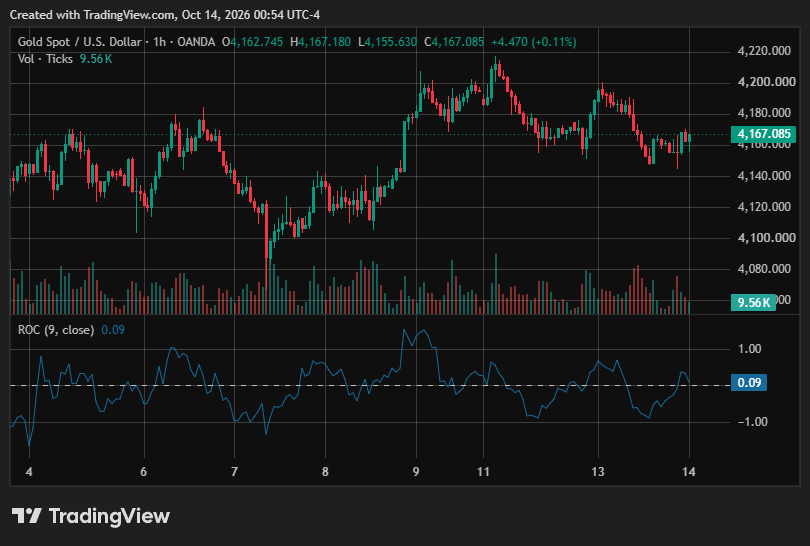
Gold is holding above $4,150 per ounce as the US Dollar retreats from its recent 18-month high, providing temporary support to the precious metal. However, rising oil prices are intensifying inflation concerns and increasing expectations of further Federal Reserve tightening, potentially limiting Gold's upside as traders await US CPI data and additional guidance from Federal Reserve officials.
Key Drivers
• Geopolitical Risks: Persistent tensions in the Middle East could sustain safe-haven demand for Gold, although changes in energy prices and market risk appetite may influence the strength of that support.
• US Economic Data: The September US CPI report is the key immediate catalyst, as weaker inflation could support Gold through a softer Dollar while stronger inflation could increase selling pressure.
• FOMC Outcome: A Federal Reserve decision to maintain restrictive policy or signal another rate increase could weigh on Gold, while a more cautious outlook could support prices.
• Trade Policy: Uncertainty surrounding tariffs and international trade conditions could increase demand for defensive assets if investors become concerned about global economic growth.
• Monetary Policy: Lower Treasury yields and expectations of less restrictive monetary policy generally support Gold, while rising yields can make the metal less attractive relative to interest-bearing assets.
Technical Outlook
• Trend: Gold remains in a cautious consolidation phase, with prices holding above $4,150 but the broader technical structure still vulnerable to renewed selling pressure.
• Resistance: The $4,193 area is initial resistance, followed by the $4,215–$4,220 zone and the $4,238 level.
• Support: The $4,115 area represents important technical support, and a sustained break below it could expose Gold to further losses toward the previous cycle-low region near $3,958.
• Forecast: Gold could recover toward $4,193–$4,220 if the Dollar weakens further, while stronger-than-expected inflation could push prices below $4,150 and increase downside risks.
Sentiment and Catalysts
• Market Sentiment: Sentiment toward Gold is cautiously constructive as a softer Dollar provides support, although rising energy-driven inflation risks and expectations of further rate increases limit bullish conviction.
• Catalysts: US CPI data, Treasury yields, Dollar movements, Federal Reserve commentary, and geopolitical developments will determine Gold's next major move.
US DOLLAR INDEX (DXY) Forecast
Current Price and Context
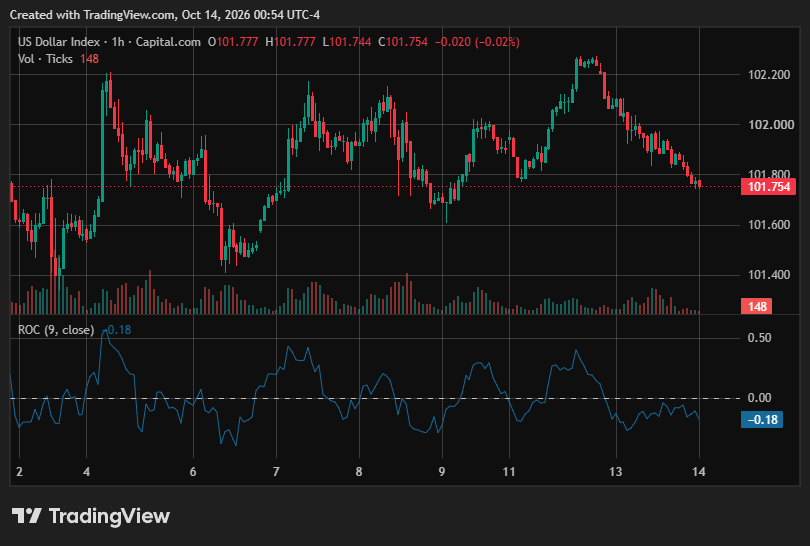
The US Dollar Index is trading near 102.15 after retreating from its recent peak of approximately 102.61 as investors reassess Federal Reserve policy expectations. Federal Reserve commentary suggesting that another rate increase may be appropriate this year, while additional increases may not be necessary in 2027, has contributed to a softer Dollar tone ahead of the September CPI release.
Key Drivers
• Geopolitical Risks: Ongoing geopolitical tensions could sustain safe-haven demand for the US Dollar, although easing uncertainty may encourage investors to move toward risk-sensitive currencies.
• US Economic Data: The September CPI release is the primary near-term catalyst, with headline inflation expected at 3.6% and core inflation at 2.5% year over year, potentially determining the Dollar's next direction.
• FOMC Outcome: Federal Reserve officials' comments about the possibility of another rate increase could support the Dollar if markets revise expectations toward a more hawkish policy outlook.
• Trade Policy: Uncertainty surrounding US trade measures and their potential impact on inflation, economic growth, and international capital flows could contribute to further Dollar volatility.
• Monetary Policy: Expectations that US interest rates will remain elevated relative to those of other major economies could provide underlying support to the Dollar despite its recent pullback.
Technical Outlook
• Trend: The DXY is experiencing short-term corrective pressure after retreating from its recent peak, although its broader technical outlook remains constructive while the index holds above key moving averages.
• Resistance: The 102.50–102.61 zone represents potential resistance, with a sustained breakout above it potentially restoring bullish momentum.
• Support: The 102.00 psychological level is an important near-term support area, and a decisive break below it could expose the index to a deeper correction.
• Forecast: The DXY could extend its decline if US inflation disappoints, while stronger-than-expected CPI data could trigger a rebound toward 102.50–102.61.
Sentiment and Catalysts
• Market Sentiment: Sentiment toward the US Dollar is cautious as traders reduce exposure ahead of CPI data while still considering the possibility of further Federal Reserve tightening.
• Catalysts: US CPI data, Treasury yields, Federal Reserve speeches, geopolitical developments, and movements in major currency pairs will shape the Dollar's next move.
Wrap Up
Global markets are preparing for a potentially significant shift in sentiment as the US CPI report takes center stage and influences expectations for Federal Reserve policy. The retreating US Dollar is providing support to the Canadian Dollar, Euro, and Gold, although stronger-than-expected inflation could reverse these moves by lifting yields and strengthening the Greenback. Meanwhile, the Australian Dollar is gaining against the Japanese Yen as China's inflation data influences regional sentiment and uncertainty over Japanese monetary policy weighs on the Yen. Traders should monitor inflation results, central bank commentary, and key technical levels while maintaining disciplined risk management amid continued event-driven volatility.
Ready to trade global markets with confidence? Join Moneta Markets today and unlock 1000+ instruments, ultra-fast execution, ECN spreads from 0.0 pips, and more! Start now with Moneta Markets!


Weekly Market Recap and Forecast: AI Stocks Face Renewed Pressure as Oil Prices Surge, Gold Falls Below $4,100

EURUSD failed to break through the French barrier

Weak Tech Earnings Pressure the US Dollar as Central Bank Divergence Shapes Forex Markets | 23rd October, 2026

Gold Slips Below $4,000 as Inflation Fears and a Hawkish Fed Outlook Outweigh US–Iran Tensions

USDCAD eyes 1.4000 support

US Dollar Outlook Shifts as Treasury Yields Fall and Central Bank Divergence Shapes Forex | 22nd October, 2026

Oil Holds Near Highs as Gold Slips Ahead of Fed Decision