






EBC Markets Briefing | "Blue Wave" poised to sweep across stock markets

Money managers' stock exposure dropped to a low level, while quant funds continued to snap up stocks. The gap between the two hit the second-widest since 2020 in mid-October, data compiled by Deutsche Bank AG show.
Apparently money managers emerge victorious, with the S&P 500 (SPXUSD) down significantly within half a month, forcing computer-based strategies to unwind their positions aggressively.
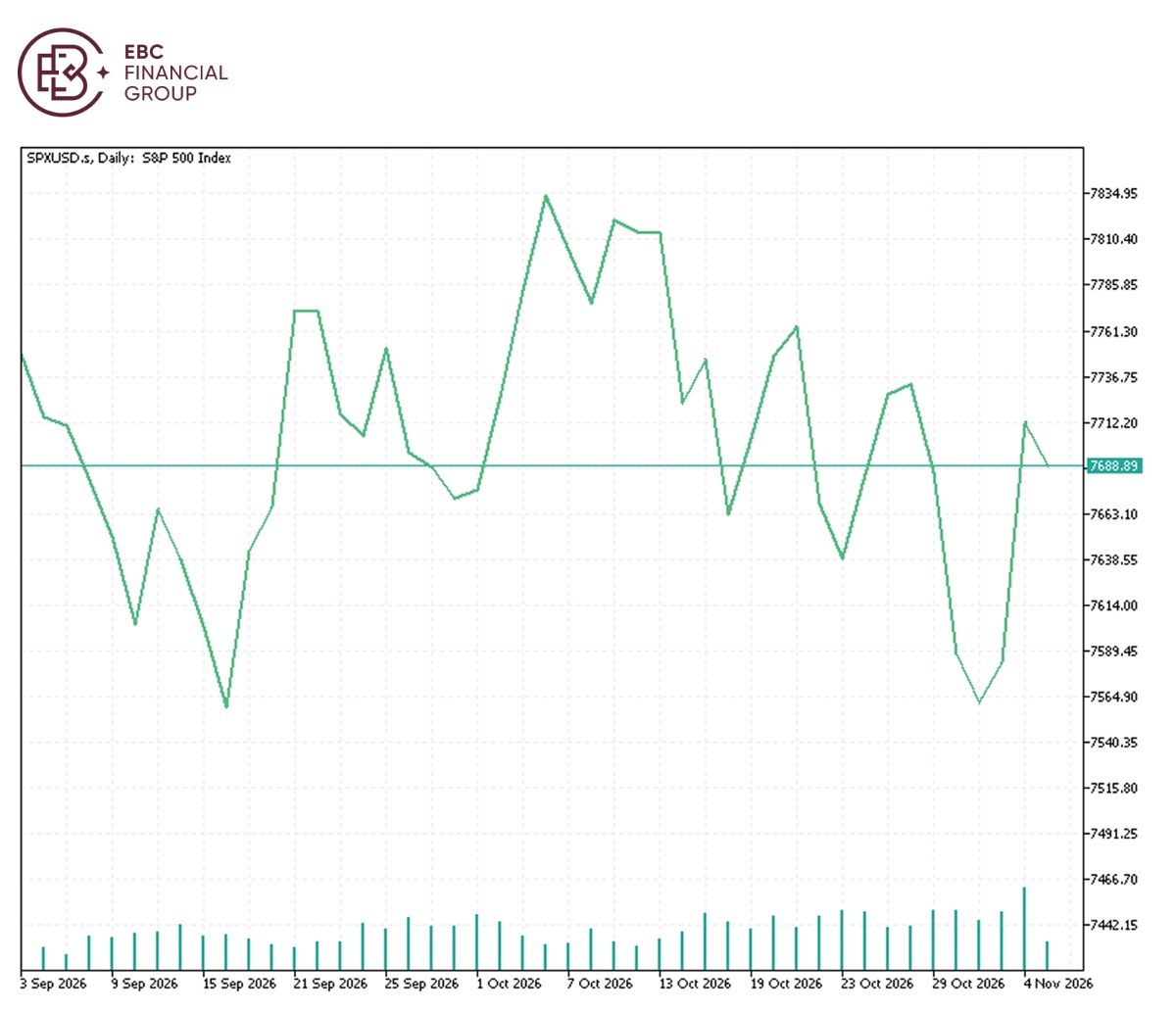
Despite that, Deutsche Bank noted the buildup of unallocated capital of discretionary investors serves as a structural backstop, ready to absorb selling pressure in the months ahead.
Democrats took control of Congress in the mid-term elections, delivering a stinging rebuke to Trump. The president said he was prepared to work with Democrats.
Historically, a chamber flipping in a midterm election does not significantly alter the primary direction of the stock market, as Wall Street prefers political gridlock which heightens stability.
Market jitters may grow in the short run at a time of AI-related stock selloff. Treasury yields moved lower following the election results, reflecting the need to hedge a jump in volatility.
Analysts noted that expanding Democratic power at the state level will likely create financial challenges for companies tied to data centres and tech hardware manufacturing.
Technology
Shares of AI infrastructure firms declined amid concerns about tighter regulation, changes to technology tax incentives and increased scrutiny of data centre development.
While experts question whether any new laws could truly the construction boom, more intensified legislative hearings and probes into the ongoing AI infrastructure expansion seems likely.
The neocloud provider CoreWeave's (CRWV.OQ) bonds and shares both tumbled. Citigroup maintained its Buy rating on the stock while lowering its price target to $128 from $159.
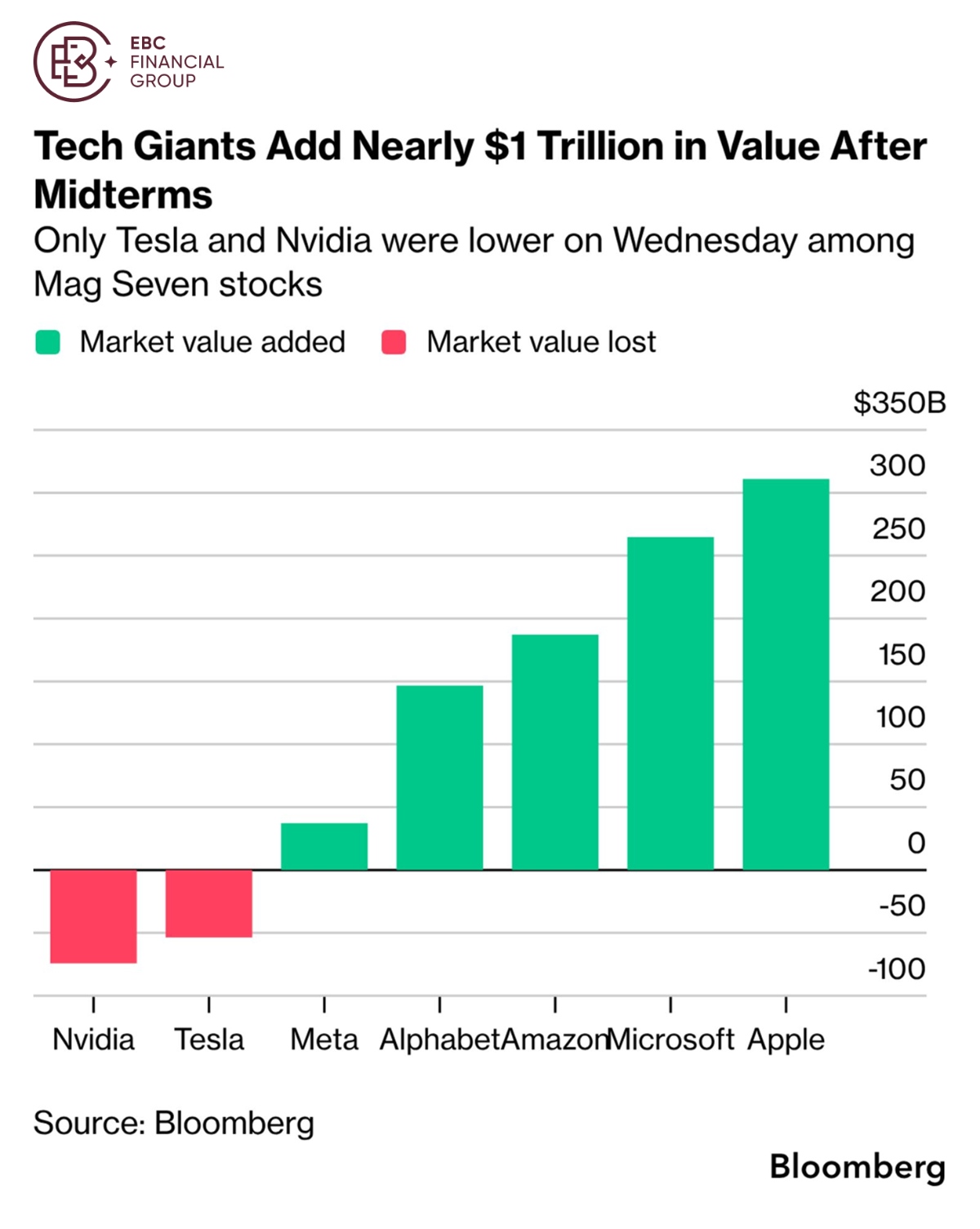
On the contrary, Big Tech shareholders were cheerful. The hyperscalers may stop spending exorbitant amounts of money, thus mending their cash flow balance gradually.
The five major hyperscalers leading the global AI boom have collectively spent hundreds of billions of dollars in 2026, including Alphabet (GOOGL.OQ), Amazon (AMZN.OQ), Meta (META.OQ), Microsoft (MSFT.OQ), and Oracle (ORCL.N).
According to Goldman Sachs, they have also accumulated approximately $3.2 trillion in off-balance-sheet commitments. Whether and when that will finally pay off is controversial.
Meanwhile, iShares MSCI SOUTH KOREA ETF (EWY.P) and iShares MSCI TAIWAN ETF (EWT.P) took a punch as the US AI infrastructure relies heavily on critical hardware components from the two regions.
Healthcare
The healthcare sector appears one of the biggest winners. The Democratic legislative agenda focuses on restoring expired health insurance subsidies and reversing Trump's Medicaid rollbacks.
That will keep commercial marketplaces affordable, directly benefiting McKesson Corp (MCK.N) through a higher systemic baseline of prescription volumes. The stock soared roughly 7% in the last session.
RBC Capital Markets upgraded healthcare to overweight and downgraded tech to market weight in October, further bolstering confidence.
Traders are already turning to healthcare stocks for refuge. Vanguard Health Care ETF (VHT.P) has risen about 18% this year — outperforming the broader market by a wide margin.
State Street Investment Management's Michael Arone noted that the sector's rally is fuelled not just by defensive positioning, but also by strong healthcare earnings and a brightening outlook for 2027.
The latest earnings season for the industry giants appears highly positive, marked by strong top- and bottom-line beats. A preponderance of them have raised their full-year 2026 guidance.
AbbVie (ABBV.N) stock hit a record high as high immunology momentum successfully offset Humira biosimilar erosion. Eli Lilly (LLY.N) moved in tandem, driven by explosive weight-loss drug demand.
Miscellany
BofA analyst Peter Galbo raised his recommendation for Constellation Brands (STZ.N). Hispanic consumers represent around 40% of its beer business, so looser border control could increase the population and social gatherings.
The percentage of Americans who say they consume alcohol remains at record-low levels, per ser a survey by Gallup in August. Over half of Americans this year said alcohol is "bad for health".
Clean-energy stocks rallied on expectations for increasing scrutiny of efforts to roll back emissions rules. Democrats may leverage the Congressional Review Act to block rules that facilitate the sale of gas-powered trucks and SUVs.
NextEra Energy (NEE.N), the largest electric power and energy infrastructure company in Americas, has successfully cushioned its business despite the cutbacks in US renewable energy tax credits.
Likewise, iShares Global Clean Energy ETF (ICLN.OQ) looks promising. Geopolitical disruptions in the Middle East, raising the awareness of energy independence and green transition.
The financial sector plummeted to become the worst-performing group in early 2026, triggered by Trump's demand for Congress to pass legislation capping credit card interest rates at 10%.
Now the pressures continue to pile up as Democratic control is often associated with increased regulation. Despite that, robust economic outlook readily shores up Wall Street banks such as Bank of America (BAC.N).
EBC Financial Group Disclaimer: This material is for general information purposes only and is not intended as (and should not be considered to be) financial, investment or other advice on which reliance should be placed. No opinion given in the material constitutes a recommendation by EBC Global Financial Collaboration or the author that any particular investment, security, transaction or investment strategy is suitable for any specific person.


Stocks sink amid AI wipeout, dollar shines ahead of NFP

US Payrolls in Focus as Wall Street Rout and Falling Yields Cap the Dollar | 6th November, 2026

Week Ahead – Inflation and geopolitics in focus as US political landscape shifts

The dollar saves the day
Tech Stocks Lead US Selloff Ahead of Payrolls

Technical Analysis – USDJPY stays rangebound, pinned at support near 158.00
EBC Markets Briefing | Sterling down after first BOE rate hike in years