-482026738.png)
-482026738.png)





Gold Tests $4,650 as Traders Assess Fed Inflation Signals

Key Takeaways
- Gold recovered towards the $4,630 area as traders reassessed the Federal Reserve’s policy outlook.
- Stronger-than-expected inflation data increased uncertainty around the future path of interest rates.
- July PCE inflation rose to 3.7%, while core PCE remained elevated at 3.3%, keeping rate expectations in focus.
- Gold remains supported by defensive demand, a weaker US dollar outlook and concerns around broader market risks.
Gold recovered towards the $4,630 area as traders balanced renewed buying interest against uncertainty surrounding the Federal Reserve’s next policy decisions.
The move followed a period of weakness, with gold rebounding as investors reassessed market conditions and renewed demand for defensive assets.
Why Traders Are Watching Gold
Gold remains closely linked to changes in interest-rate expectations, Treasury yields and US dollar movements.
The latest inflation data has become a key focus for markets. July PCE inflation increased to 3.7%, while core PCE remained elevated at 3.3%, influencing expectations around the pace of future Federal Reserve policy adjustments.
If inflation remains persistent, markets may expect interest rates to stay higher for longer, which could create pressure on gold through higher yields. However, concerns around fiscal conditions, currency weakness and broader market risks may continue supporting demand for precious metals.
Physical demand is also being monitored, with investment flows and buying activity from major markets such as China remaining relevant factors for longer-term gold sentiment.
Key factors influencing gold prices include:
- Federal Reserve Policy: Future rate expectations remain a major driver of gold demand.
- Inflation Trends: Persistent price pressures could affect expectations around monetary policy.
- Treasury Yields and US Dollar: Changes in yields and currency strength can influence gold’s attractiveness.
- Market Risk Sentiment: Uncertainty across financial markets can increase demand for defensive assets.
- Physical Demand: Global investment flows continue to shape longer-term gold trends.
Key Trading Levels
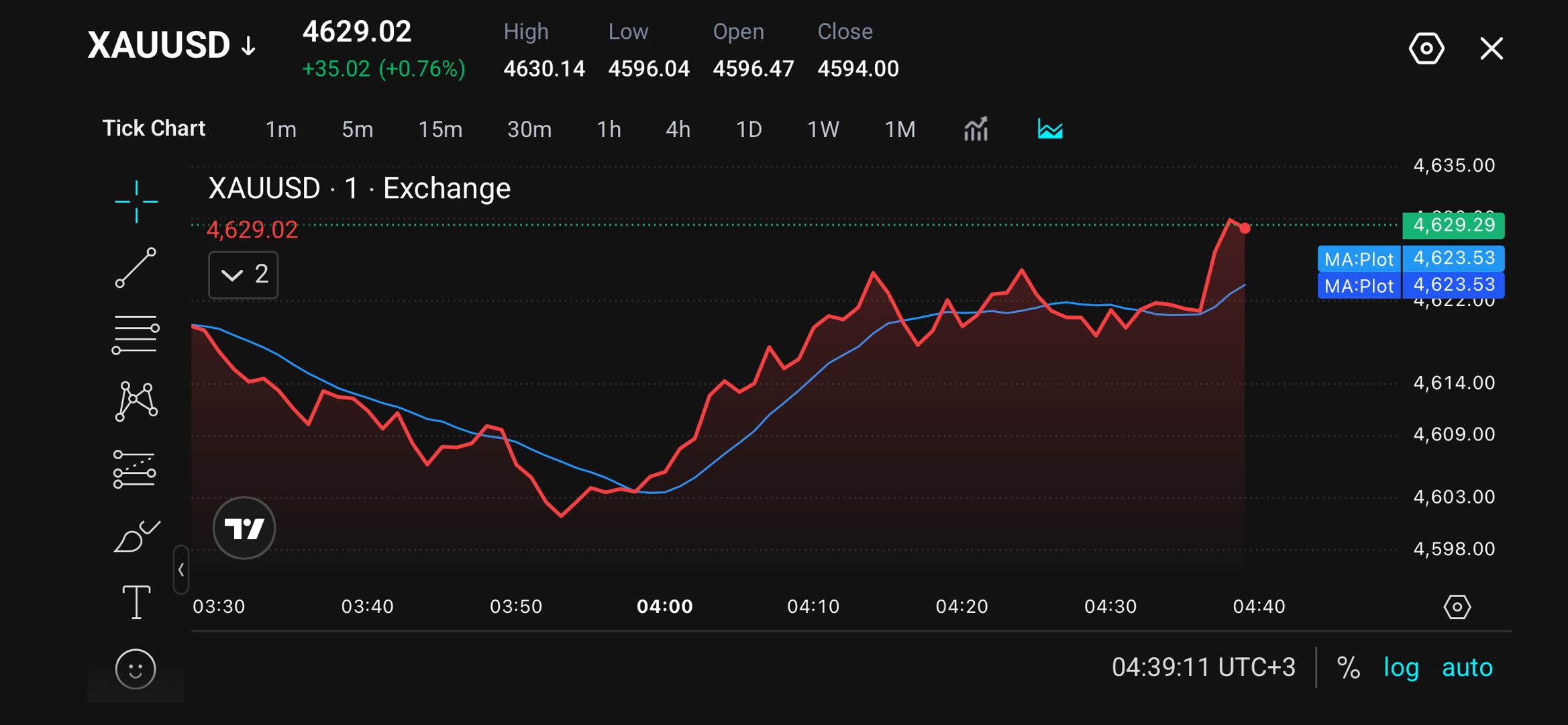
Gold (XAUUSD) is trading around the $4,630 area after recovering from the recent low near $4,596.
A sustained move above $4,630 could maintain recovery momentum and bring the $4,650 resistance area into focus.
A break below $4,600 would weaken the short-term recovery structure and shift attention towards the $4,550 support area.
Bottom Line
The next direction for gold will depend on how markets interpret the balance between persistent inflation pressures, interest-rate expectations and demand for safe-haven assets.
Traders should monitor the $4,650 resistance and $4,600 support levels while watching Federal Reserve communication, Treasury yields and US dollar movements.
For a deeper analysis of gold’s outlook, key technical levels and the factors influencing XAUUSD movements, read this article.


US Yields Rise Despite Buybacks; Eyes on ECB Hike

Yen Hits 6-Month High, Volatility Returns After North American Holiday.

Gold Slides Below $4,500 as Strong NFP Revives Fed Hike Bets

US Payrolls Hit 5-Month High as Markets Await CPI This Week.

The dollar is in no hurry to gain ground

Dollar Strength Meets Geopolitical Risk | 7th September, 2026

Week Ahead: US Jobs Strengthen Fed Hike Bets as CPI Looms