-1162026812.png)
-1162026812.png)





Investors Are Heavily Long the US Dollar

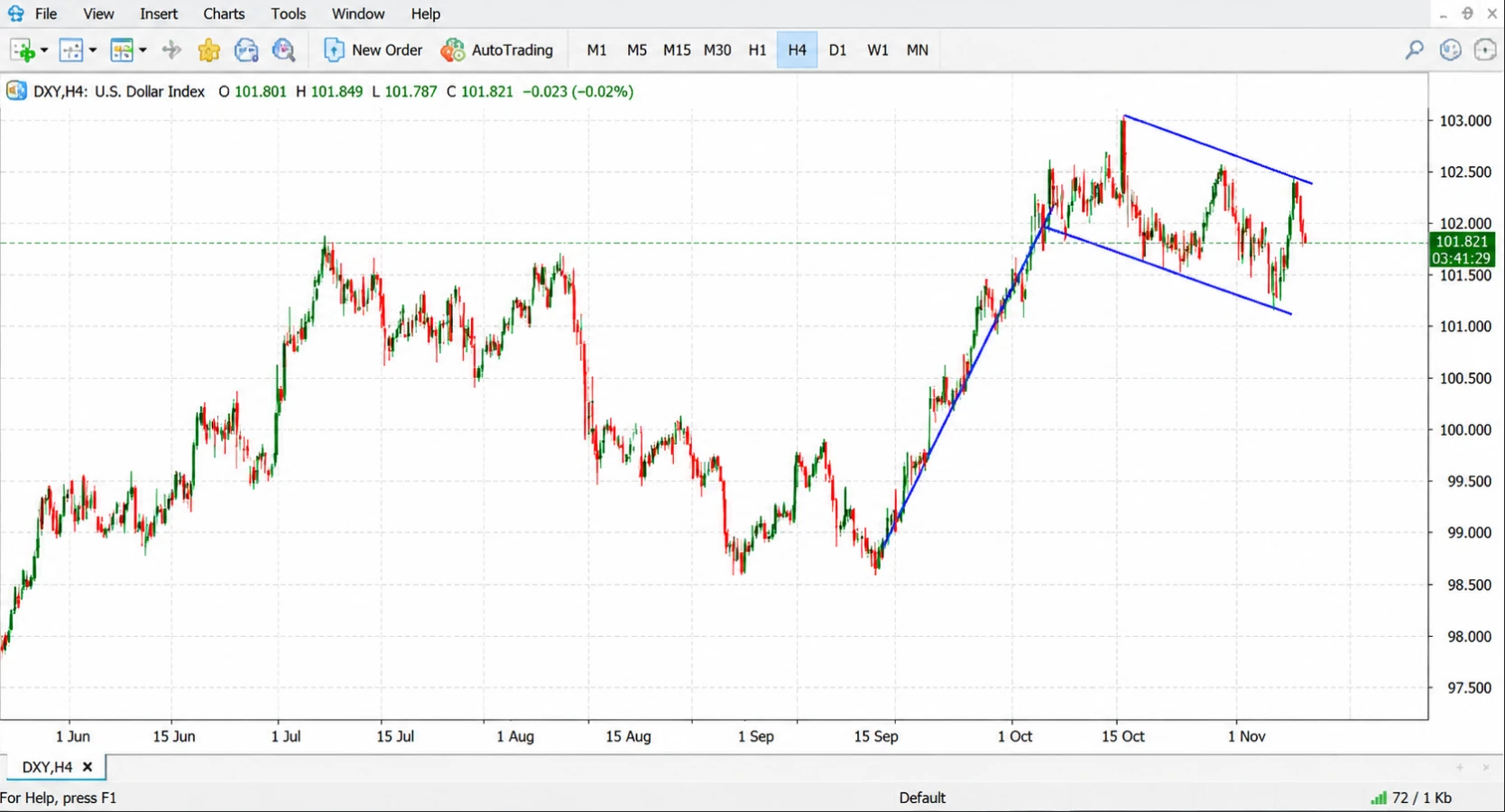 Judging by current market sentiment, investors are overwhelmingly positioned for further gains in the US dollar. Friday’s US employment report has only strengthened that conviction, giving dollar bulls another reason to remain optimistic. The resilience of the labour market gives the Federal Reserve room to maintain a hawkish stance, and if inflationary pressures persist, a rate hike in December cannot be ruled out.
October’s employment figures suggest that the US labour market remains in relatively good shape. The economy added 165,000 jobs, including 159,000 in the private sector. Figures for previous months were also revised upwards by a combined 84,000. However, the broader picture is somewhat less impressive: over the past six months, the economy has created an average of just 88,000 jobs per month, pointing to a more modest underlying pace of hiring.
Other labour market indicators also showed signs of improvement. The unemployment rate fell to 4.1%, labour force participation edged up to 61.9%, and the employment-to-population ratio rose to 59.3%. All three measures improved by 0.1 percentage points over the month. Meanwhile, job openings increased to 7.5 million, bringing the ratio of vacancies to unemployed workers to around 1.06, suggesting that demand for labour remains relatively healthy.
Wage growth is picking up, whilst layoffs remain subdued. Average hourly earnings rose by 0.4% month on month, with annual growth reaching 3.1%. Initial jobless claims stood at just 189,000, whilst the number of Americans receiving unemployment benefits was around 1.7 million. Both figures are close to their lowest levels since 2023, reinforcing the view that the labour market is showing few signs of significant deterioration.
At the same time, financial conditions in the US can hardly be described as particularly restrictive. Measures of financial stress remain low, whilst access to funding suggests that monetary policy is not placing excessive pressure on the economy. Inflation expectations have eased slightly but remain elevated, standing at 4.3% over the next year and 3.4% over a five-year horizon. For the Fed, this provides another reason to remain cautious about easing policy too soon.
Attention now turns to tomorrow’s US inflation report. If price pressures prove stronger than expected, the dollar could find fresh support as markets reassess the likelihood of a more hawkish Fed. Conversely, a meaningful slowdown in inflation could prompt investors to rethink their positions, particularly given how heavily the market is already leaning towards further dollar strength.
There is also a real possibility that markets are underestimating the chances of a Fed rate hike as early as December. Strong employment, accelerating wage growth and persistently elevated inflation expectations give policymakers reasons to consider a more restrictive approach. If tomorrow’s figures show inflation picking up again, the prospect of a December rate increase could return firmly to the discussion. That would go beyond simply keeping rates on hold and raise the possibility of a fresh round of monetary tightening. For the dollar, such a shift could provide substantial support, particularly if investors begin to reprice their interest rate expectations.
However, there is another side to the story: the market may already be too heavily positioned for a stronger dollar. When long positions become this crowded, even positive economic news is not always enough to push the currency higher, as much of the optimism may already be reflected in prices. Under these circumstances, even a modest disappointment in the inflation figures could trigger widespread profit-taking and a sharp pullback. The key question, therefore, is not simply whether the economic data remain strong, but whether they are strong enough to beat what investors have already priced in.
All of this makes December’s Fed meeting potentially far more interesting than the market currently expects. If inflation remains stubborn and the labour market continues to hold up, a rate hike becomes a credible possibility, even if it remains an alternative rather than the base-case scenario for now. Such an outcome could push US Treasury yields higher, lend further support to the dollar and put pressure on gold, equities and other assets sensitive to borrowing costs. On the other hand, if tomorrow’s inflation figures come in below expectations, the sheer weight of long dollar positions could quickly work against the bulls. Ultimately, the question is no longer simply how strong the US economy is, but whether inflation is proving persistent enough to make the Fed seriously consider raising rates again.Trade smart with Headway


Today Technical Analysis: Gold jumps 1.5% to $4,134 an ounce. Silver is back above $53

Today Fundamental Analysis: Asian tech stocks close higher, oil prices fall on hopes of progress in peace talks

The S&P 500 is counting on support from the Fed

Sterling’s Rebound Faces US Inflation Hurdle

EURUSD plummeted from its high

Gold, GBPUSD, EURUSD

Crypto is testing an important trend line