-21420261153.png)
-21420261153.png)





Markets Await United States Midterms as Dollar Holds Steady and Oil Falls


Currency markets remained rangebound ahead of Tuesday's United States midterm elections, while diplomatic developments involving Iran weighed on oil prices and concerns over a major cryptocurrency hack continued to pressure digital assets.
Market Wrap-Up: Mixed Moves Across Currencies and Commodities
The United States (US) dollar and other major currencies traded within narrow ranges on Monday as investors turned their attention to Tuesday's US midterm elections, which could shift the balance of power in Congress. Meanwhile, oil prices fell more than 1% amid continued diplomatic talks aimed at ending the US-Israeli war on Iran.
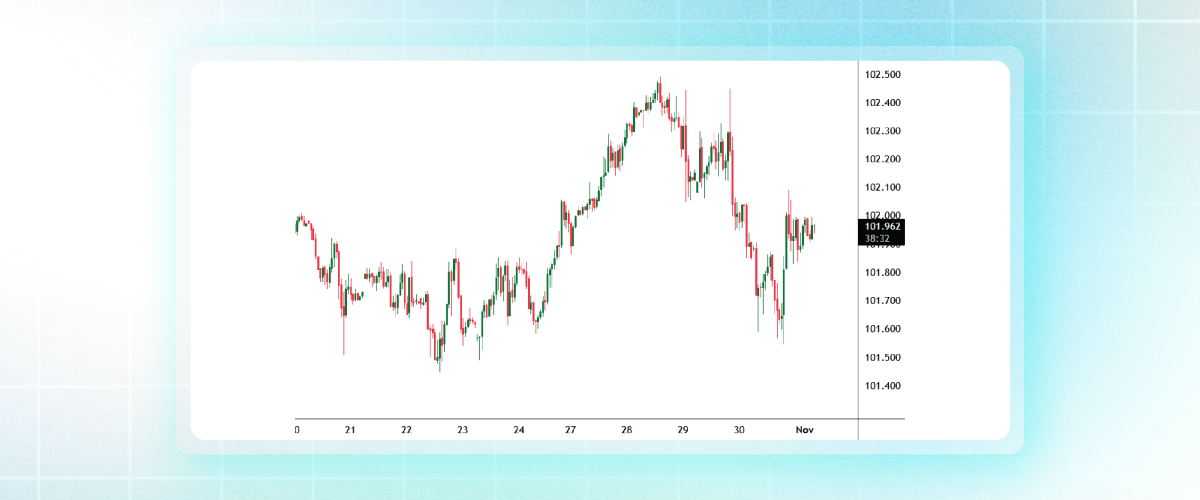
The US Dollar Index (DXY) stood at 101.94, while the euro traded near a 17-month low of USD 1.1159 in early Asian trading. The single currency remained under pressure following Fitch's revision of France's credit outlook to negative from stable after Friday's market close. Sterling was little changed at USD 1.3387.
The US midterm elections are expected to be a major market focus this week. Democrats are widely predicted to win the House of Representatives, although the Senate outcome remains less certain. According to Standard Chartered's Eric Robertsen, polling suggests strong anti-incumbent sentiment, but this does not always translate into election results.
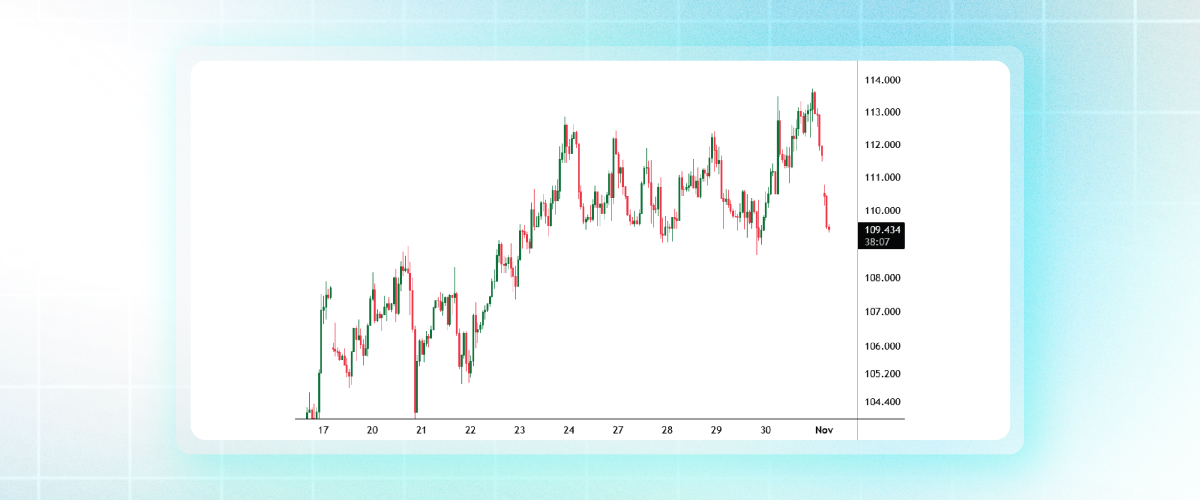
Oil prices retreated after Iranian and Qatari officials held a third consecutive day of talks aimed at reaching an agreement to end the conflict. Brent crude futures fell 1.40% to USD 111.84 a barrel, while West Texas Intermediate (WTI) declined 1.50% to USD 102.56.
The pullback followed a strong October, during which Brent settled at a six-month high amid concerns that the US-Iran conflict could escalate after the midterm elections. However, the possibility of diplomatic progress and the absence of meaningful military escalation over the weekend eased some immediate pressure on prices. The Organization of the Petroleum Exporting Countries and its allies (OPEC+) also maintained their December production targets.
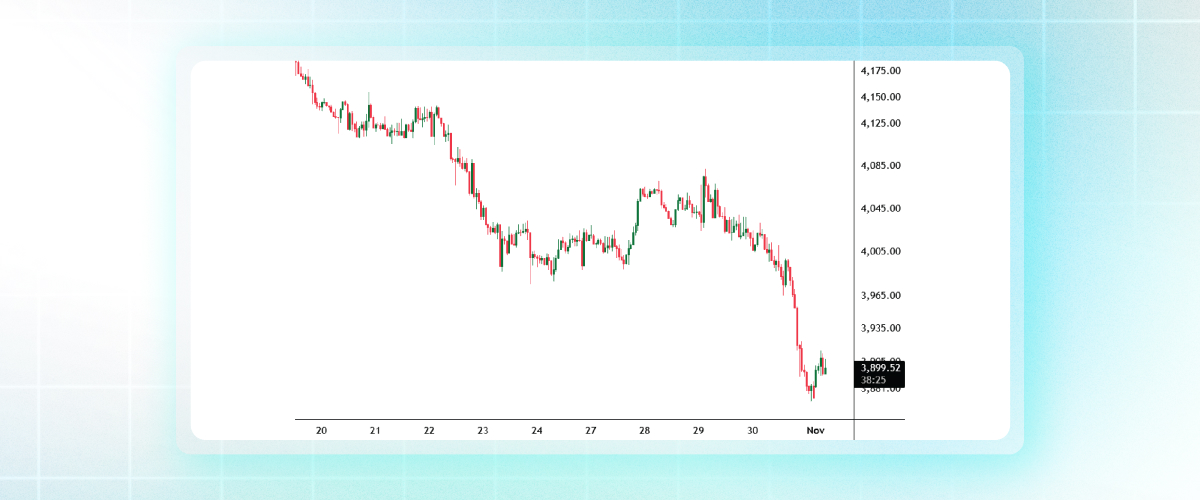
In precious metals, gold and silver came under significant pressure on Friday as technology shares sold off amid concerns over whether heavy artificial intelligence (AI) investment would generate sufficient returns. Spot gold fell 3.5% to USD 3,880.97 an ounce, its lowest level since October 2025, while silver dropped 6.5% to USD 49 an ounce, breaking below the USD 50 level for the first time in 11 months.
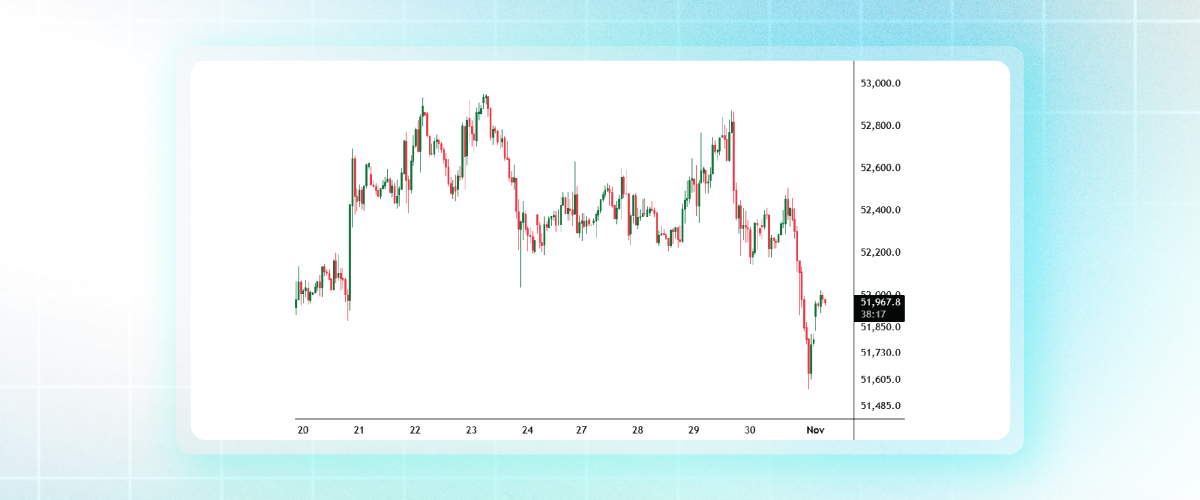
The technology-led selloff also weighed on broader equity markets. The Dow Jones Industrial Average fell 1.09% to 51,770.31, the Standard & Poor's 500 (S&P 500) declined 1.82% to 7,580.07, and the Nasdaq Composite lost 2.86% to 25,437.00. Meanwhile, the US 10-year Treasury yield fell 5.8 basis points to 4.931%, reflecting demand for government bonds amid pressure on technology shares.
Cryptocurrencies remained volatile following last week's USD 6.3 billion hack at Binance, the world's largest cryptocurrency exchange. Bitcoin and Ether had fallen to multi-week lows on Friday before recovering slightly on Monday. Bitcoin traded at USD 77,975.62, while Ether stood at USD 2,268.42. Binance reported that customers withdrew USD 3.64 billion, equivalent to 2.1% of its assets, following the incident, although the exchange said withdrawals were stabilising and that it had covered 95% of the stolen assets.
Markets will now focus on the US midterm election results, October US employment data, and upcoming central bank decisions in the United Kingdom (UK), Australia, Norway, and Sweden. Additionally, today's economic calendar includes the final manufacturing PMI readings across the Eurozone, the UK, and Canada, alongside the US ISM Manufacturing PMI and New Orders Index. Investors will also monitor remarks from Federal Reserve official Austan Goolsbee for further insight into the economic outlook and monetary policy expectations.
US Dollar Index (DXY)
Key Takeaways
· The US dollar remains supported by uncertainty surrounding the US midterm election outcome and its potential implications for fiscal policy.
· Diverging monetary policy expectations across major economies could influence dollar direction, particularly ahead of several central bank decisions this week.
Technical Outlook
· Daily Bias: Bearish
· Support: 101.59
· Resistance: 102.44
XAU/USD
Key Takeaways
· Precious metals remain exposed to broader equity-market volatility, with forced selling and margin calls adding to downside pressure.
· Persistent expectations of higher-for-longer US interest rates continue to challenge gold's appeal, while subdued Asian demand adds another headwind.
Technical Outlook
· Daily Bias: Bearish
· Support: 3,870
· Resistance: 4,082
Brent Contract for Difference (CFD)
Key Takeaways
· Diplomatic progress involving Iran could ease the geopolitical risk premium in crude markets, although the possibility of renewed escalation remains a key source of uncertainty.
· OPEC+'s decision to maintain December production targets leaves supply-side developments and disruptions in the Middle East central to the oil outlook.
Technical Outlook
· Daily Bias: Bearish
· Support: 108.66
· Resistance: 113.72
Dow Jones CFD
Key Takeaways
· Concerns over AI monetisation and elevated capital expenditure are putting pressure on technology-sector valuations, raising questions about the sustainability of the broader equity rally.
· Defensive positioning is becoming more prominent, with consumer staples and utilities attracting interest amid weaker risk sentiment.
Technical Outlook
· Daily Bias: Bearish
· Support: 51,556
· Resistance: 52,507
Calendar Watch
· Eurozone and UK S&P Global Manufacturing Purchasing Managers' Index (PMI) Final: The final readings will provide an updated assessment of manufacturing activity across the three economies, with particular attention to output, new orders, employment, and input costs. Markets will assess whether manufacturing conditions are improving or weakening, offering further insight into regional economic momentum.
· Canada S&P Global Manufacturing: The October reading will provide insight into the health of Canada's manufacturing sector, offering further clues about business activity, new orders, employment, and input costs.
· US Institute for Supply Management (ISM) Manufacturing PMI: The October reading will provide insight into the health of the US manufacturing sector. Markets will assess business activity, production, employment, and price pressures for further clues about economic growth and inflation conditions.
· US ISM Manufacturing New Orders Index: This component will be closely watched for signs of changes in manufacturing demand. An increase would indicate stronger incoming orders, while a decline could point to softer demand and potentially weaker production activity in the months ahead.
· US Federal Reserve's Austan Goolsbee Discussion: Chicago Fed President Austan Goolsbee is scheduled to moderate a discussion. Markets may monitor any monetary-policy-related remarks for further insight into the economic outlook and expectations for future interest-rate decisions.
Whether you are new to the markets or an experienced trader, stay connected to global markets with CPT Markets.
Access our trading platforms across multiple devices, with competitive spreads and fast execution.
This content is provided for informational purposes only and does not constitute investment advice, investment recommendations, or an offer or solicitation to buy or sell any financial instrument. Trading financial products such as foreign exchange (forex) and contracts for difference (CFDs) involves a high level of risk and may not be suitable for all investors. You may lose all of your invested capital, and in certain circumstances, losses may exceed your initial deposit. Please ensure that you fully understand the risks involved and carefully consider your financial objectives, level of experience, and financial situation before trading.

US Midterm Elections Loom as Dollar Hovers Near One-Month Low

Gold Steadies Near $3,943 as Falling Oil Eases Inflation Fears

Week Ahead: RBA, BoE and US Jobs Data Put AUDUSD, GBPUSD and Gold in Focus

US Inflation Heats Up, Strengthening December Rate Hike Bets

Federal Reserve Holds Rates, Leaving Policy Outlook Unclear

FOMC Today, ECB Tomorrow — Will GOLD Break Above $4,160 or Fall Below $3,950?

Dollar Holds Firm Ahead of Fed Decision; Oil Rises on Saudi Refinery Attack