-1162026812.png)
-1162026812.png)





Oil-Laden Caravans?

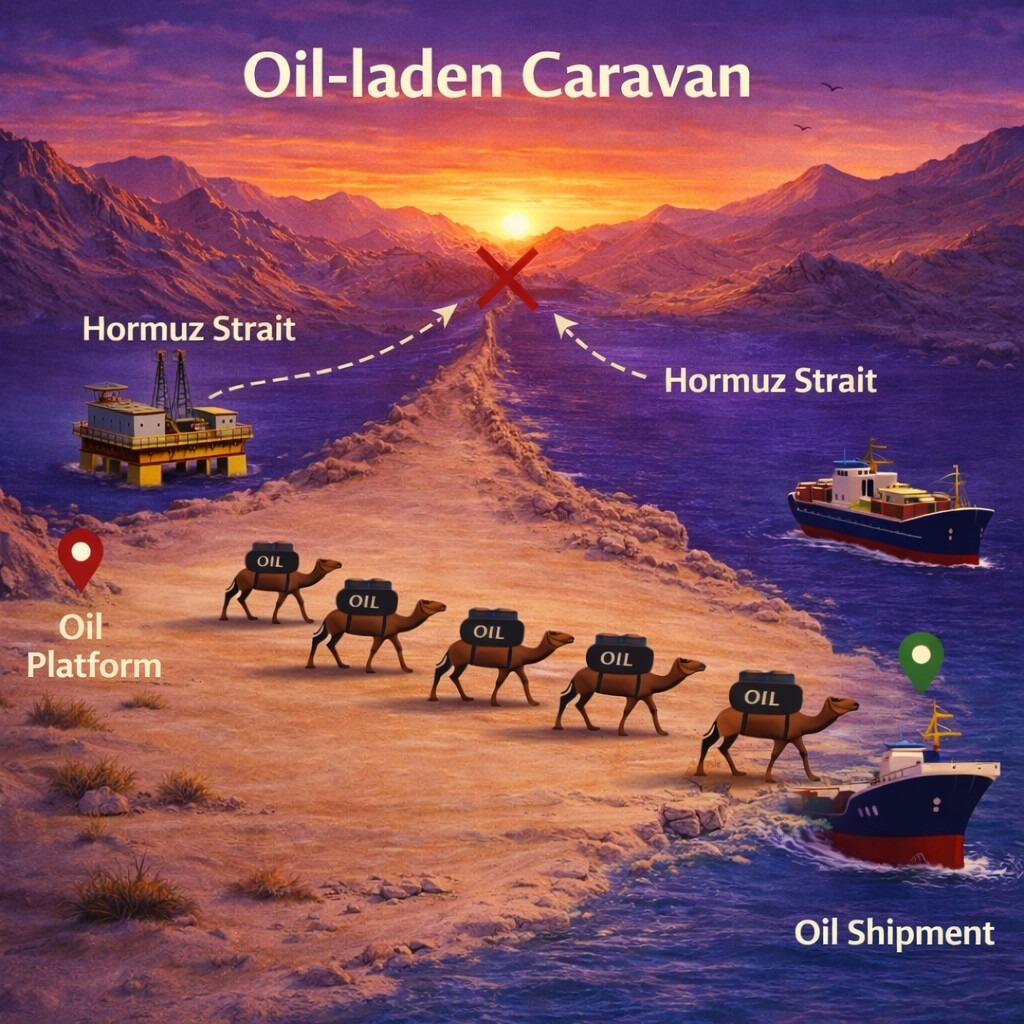
At first blush, the notion sounds rather irrational: resolving the Strait of Hormuz problem by ferrying oil across the desert on caravans. Clearly absurd in practice — yet it serves to underline a far more serious issue.
At its core, this is a matter of the risk’s concentration. Roughly one-fifth of the world’s oil supply moves through a single, narrow maritime passage. A substantial portion of global energy flows depends on one highly constrained corridor.
What is striking is not the absence of technical alternatives, but rather the lack of meaningful investment in them. There are neither viable bypasses, nor scalable overland solutions. Instead, capital expenditures have tended to flow elsewhere—into high-profile real estate ventures in the desert, expansive coastal developments, tourism infrastructure etc.
In effect, the system has been engineered for efficiency rather than resilience. So long as the strait remains open, such reliance appears commercially sensible. Yet the risk — while low in probability — is far from negligible, and arguably underpriced.
The recent disruptions in the Red Sea offer a useful point of reference. Even relatively modest interference with shipping was enough to add approximately 0.5% to the eurozone’s inflation.
Hormuz, however, would be an altogether different proposition. Any meaningful disruption could send oil prices towards $150+, carrying a significant inflationary shock along. In such circumstances, major central banks would find very limited room to ease policies.
The broader conclusion is difficult to ignore: the global economy remains heavily dependent on the uninterrupted functioning of a handful of strategic chokepoints.
Efficient, undoubtedly—but also inherently fragile. Trade smart with Headway


The Great Gold Reallocation: Central Banks Rethink Reserve Security 💥

The dollar has staked its fate on the NFP
Weekly Analysis: Markets Find Support in Employment Data as Gold Rebounds and Oil Stays Elevated

Futures Move First: What the Market’s First Hour Really Tells Traders

Snowflake Tests AI Rally Strength After Earnings Surge

Bitcoin Holds Above $81,000 as NFP Data Sets the Next Direction

Dovish Fed bets pummel dollar, boost gold ahead of NFP