-1162026812.png)
-1162026812.png)





Precious Metals: June Ends with Diverging Fortunes

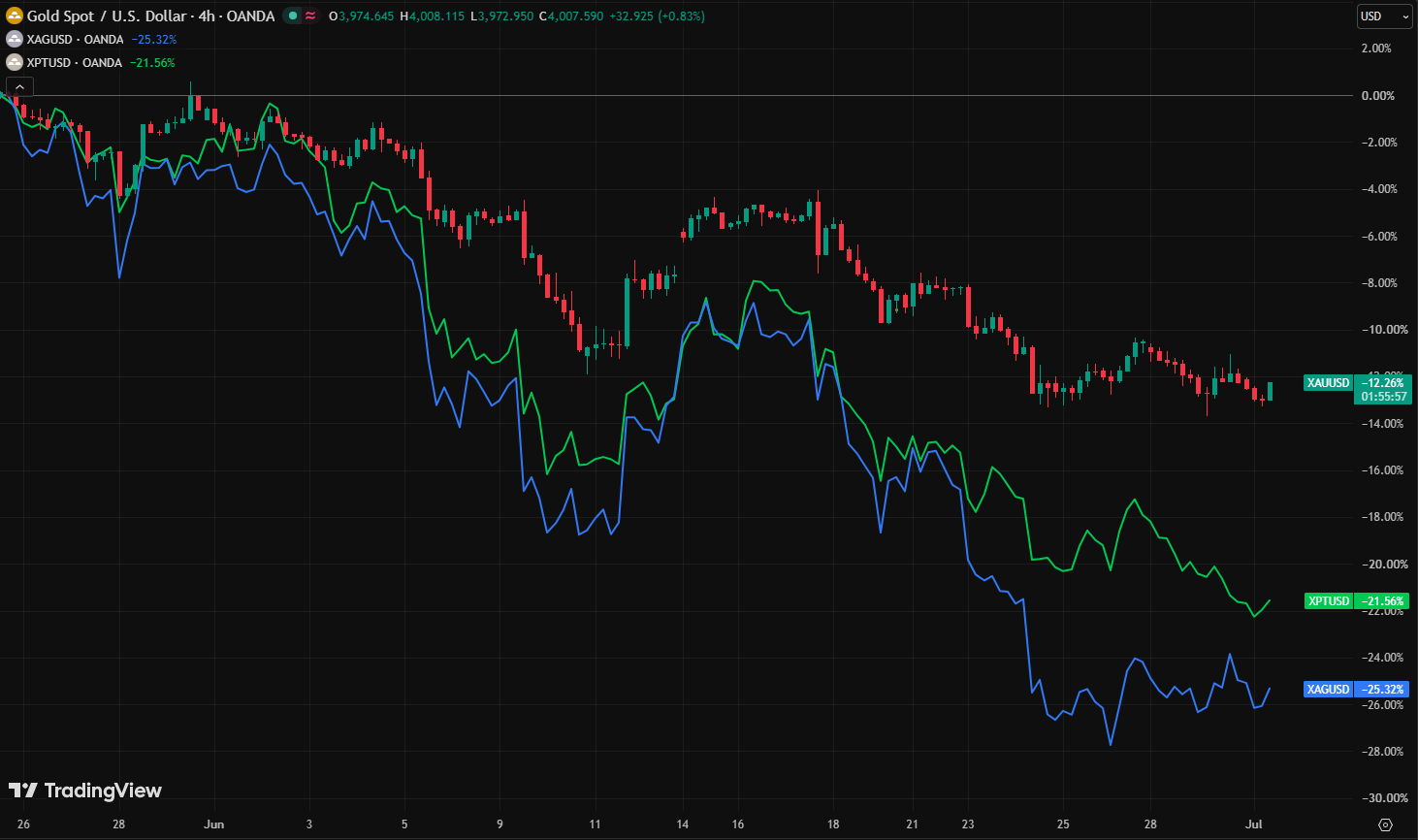
June proved a difficult month for gold as macroeconomic pressure intensified. A more hawkish tone from the Federal Reserve pushed real yields higher and strengthened the US dollar, triggering a deeper correction in gold prices and encouraging some financial investors to cut exposure. Even so, the market continued to find firm underlying support. Central banks maintained strong purchases, Chinese gold imports remained exceptionally high, and the global precious metals trading infrastructure continued its gradual shift towards Asian financial centers.
Silver remained highly volatile throughout the month, falling below $60 per ounce for the first time since December 2025. Although the stronger dollar and expectations of higher interest rates continued to weigh on prices, the longer-term fundamentals remained constructive. A persistent structural supply deficit, resilient industrial demand and strong physical buying, particularly across Asia, helped offset much of the macroeconomic pressure.
The platinum group metals market also continued to adjust to shifting global industrial trends and trade flows. Platinum retained signs of a supply deficit, supported by constrained output and steadily rising industrial demand. Palladium, by contrast, remained under pressure as the automotive sector slowed and substitution in catalytic converters continued. At the same time, Russia significantly increased exports of both platinum and palladium to China, reinforcing the ongoing reorientation of global PGM trade towards Asia.
This is precisely why many of the market's traditional relationships are no longer behaving as expected. The geopolitical risk premium has largely faded, oil prices have retreated to levels seen before the conflict began, and interest rates remain elevated. Yet gold still trades at more than twice the level seen three years ago. At the same time, many of the world's largest banks continue to publish forecasts well above current prices, with some expecting levels of around $6,000 per ounce. Far from acting irrationally, the market is being revalued by buyers who are not chasing short-term profit. They are buying insurance against the very monetary system that underpins the US dollar — and for them, price is no longer the main consideration.


GBPUSD (4H) recovery holds above 1.3550, 100-SMA remains key hurdle

Apple Stock Slips After iPhone 18 Launch as AI Growth Expectations Remain in Focus

US Treasury Triples Long-Term Bond Buyback Size

Oil Breaks Above $100 as Supply Risks Push Brent Higher

Why CPI Data Can Trigger Market Moves Across the Dollar, Gold and Stocks

Brent has soared above $100. Is this just the beginning?
Today Fundamental Analysis: Brent Holds Around $100 Amid Fresh US-Iran Escalations