-1162026812.png)
-1162026812.png)





SPACEX FACES ITS BIGGEST POST-IPO TEST

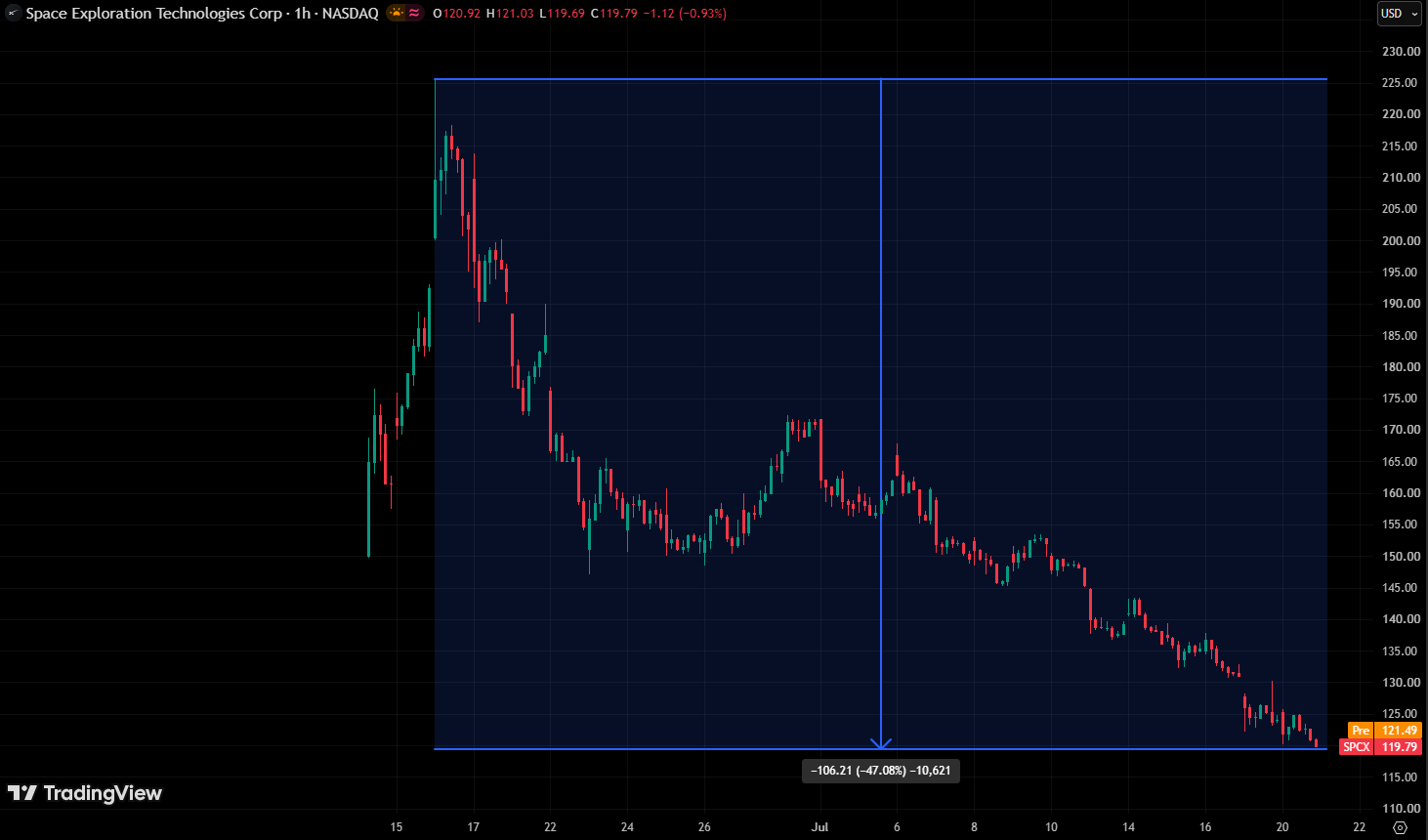
The SpaceX IPO generated a level of demand rarely seen in global equity markets. The company came to market at a valuation of approximately $1.75 trillion, pricing its shares at $135 and raising close to $86 billion in what became the largest initial public offering on record. Demand materially exceeded the shares available, while a free float of less than 5% intensified the scarcity premium. Within the opening sessions, the shares advanced above $220, taking the company’s market capitalization towards $3 trillion. At that stage, trading was driven principally by access, momentum and expectations of long-term dominance in launch services, satellite communications and space infrastructure.
The subsequent performance has been markedly weaker. SpaceX shares have fallen by 47% from their peak as the initial scarcity premium has unwound and investors have begun to reassess the valuation against execution risk. Delays to Starship milestones, profit-taking and a broader reduction in appetite for highly rated growth companies have all contributed to the decline. The market is now moving beyond the IPO narrative and towards a more conventional assessment of revenue growth, capital intensity, cash generation and delivery against operational targets.
The next significant technical event is the expiry of the IPO lock-up period in early August. This could make approximately 911 million shares eligible for sale, compared with roughly 639 million shares placed through the flotation, including the overallotment option. The potential increase in tradable supply is therefore substantial. It does not follow that all eligible holders will sell, but the removal of restrictions will give employees, founders and early financial backers greater flexibility to realize part of their holdings. That creates a material overhang at a time when the shares remain under pressure.
The outcome will depend on the balance between insider selling and institutional demand. A limited level of disposals may already be reflected in the share price, particularly after the near-50% decline. However, sustained selling by early holders could place further pressure on the market if buyers require a lower valuation to absorb the additional supply. Conversely, a measured lock-up expiry, supported by credible financial results and continued operational progress, could help establish a more durable valuation base. Early August is therefore likely to provide the clearest indication yet of whether the recent correction represents a normal post-IPO reset or the beginning of a broader re-rating.Trade smart with Headway


Weekly Analysis: Global Markets Mixed as Gold Approaches $4,700 and Bitcoin Hovers Around $80,000

EBC Markets Briefing | A debt-laden world keeps investors on tenterhooks

The dollar: all eyes on Jackson Hole

Stocks rise ahead of Jackson Hole, oil headed for weekly loss

Crypto has reached May’s max, aiming higher

Salesforce Repositions for the AI Era With Claudeforce Partnership

EBC Markets Briefing | Crude prices down as Venezuela weighs exit from OPEC