





Tech selloff weighs on dollar as Treasury yields tumble

Dollar loses ground as traders seek shelter in Treasuries and the yen
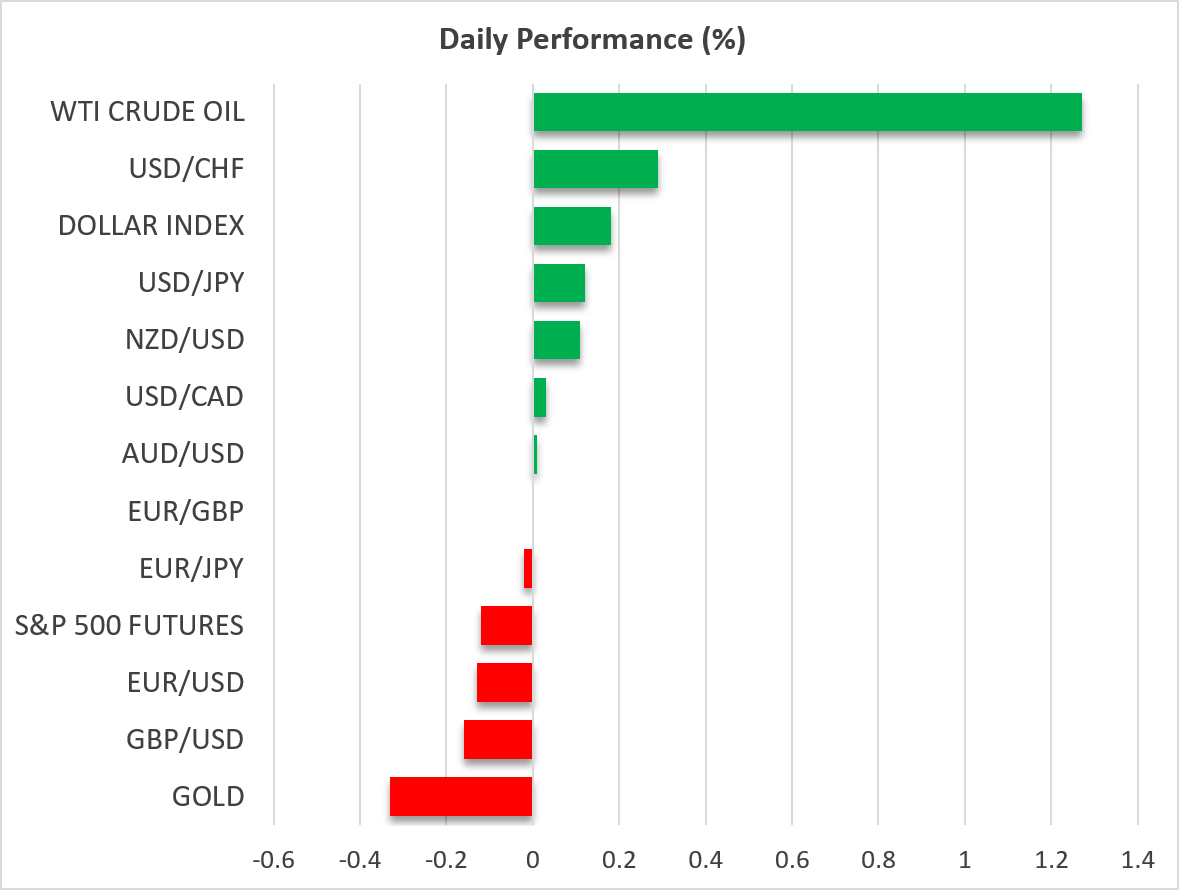
The US dollar traded lower against most of its major peers on Thursday, losing the most ground against the Japanese yen. The greenback gained some ground against the euro, perhaps as the common currency continues feeling the heat of fiscal and political tensions in Paris, and against the aussie and kiwi, suggesting deterioration in the broader market appetite.
Indeed, the dollar’s slide is owed to the selloff in tech stocks on Wall Street, which may have prompted investors to shift their funds towards the bond market, causing Treasury yields to tumble. The 10-year yield dropped back below 5% for the first time since September 23. Besides Treasuries, market participants may have sought shelter in the yen for the first time in a long while. That’s maybe why the Japanese currency was the best performer yesterday.
With anxiety and fear related to tech giants, the dollar may have lost its safe-haven allure, amid concerns about spillover effects to the broader economy. This is also evident in traders’ reduced bets on Fed rate hikes. The probability of a rate hike in October has dropped to 7%, while a quarter-point increase is not fully penciled in for December anymore. The December hike now receives an 87% chance, while by the end of 2027, traders are factoring in 80bps worth of increases.
Elevated oil prices could revive Fed hike expectations
And all this despite the renewed tensions in the Middle East and the rebound in oil prices. WTI crude oil is up more than 3% since Thursday’s opening amid new attacks by Houthis on Saudi Arabia’s infrastructure, as well as headlines that the US and Israel are considering escalating their strikes against Iran after the US midterm elections.
Following the hotter-than-expected US CPI and PPI data for September, this is likely to keep inflation fears elevated and as soon as investors shift their attention away from Wall Street, Treasury yields are likely to rebound strongly as investors reconsider their Fed hike bets. Something like that is likely to add fuel to the dollar’s engines again.
Meta sparks tech selloff, AI spending concerns resurface
On Wall Street, the Dow Jones closed Thursday’s session virtually unchanged, but both the S&P 500 and the Nasdaq Composite indices slid, with the latter losing more than 2.5%. This was the Nasdaq’s worst day since June as investors abandoned high-growth tech and communication-services stocks and rotated towards US Treasuries.
The catalyst behind the selloff on Wall Street and the spillover effect to both the bond and currency markets was Meta Platforms. The Facebook parent saw its share price plummet 8% after it reported negative quarterly free cash flow, raised the lower end of its 2026 spending outlook, and proposed the creation of a new class of non-voting shares, for financing its Artificial Intelligence expansion.
Doubts about whether the enormous investment required for AI can generate adequate returns skyrocketed again, with investors selling other big names as well, as they reassess AI valuations and financing risks and requirements. Microsoft, Alphabet, Amazon and Oracle were among the sufferers.
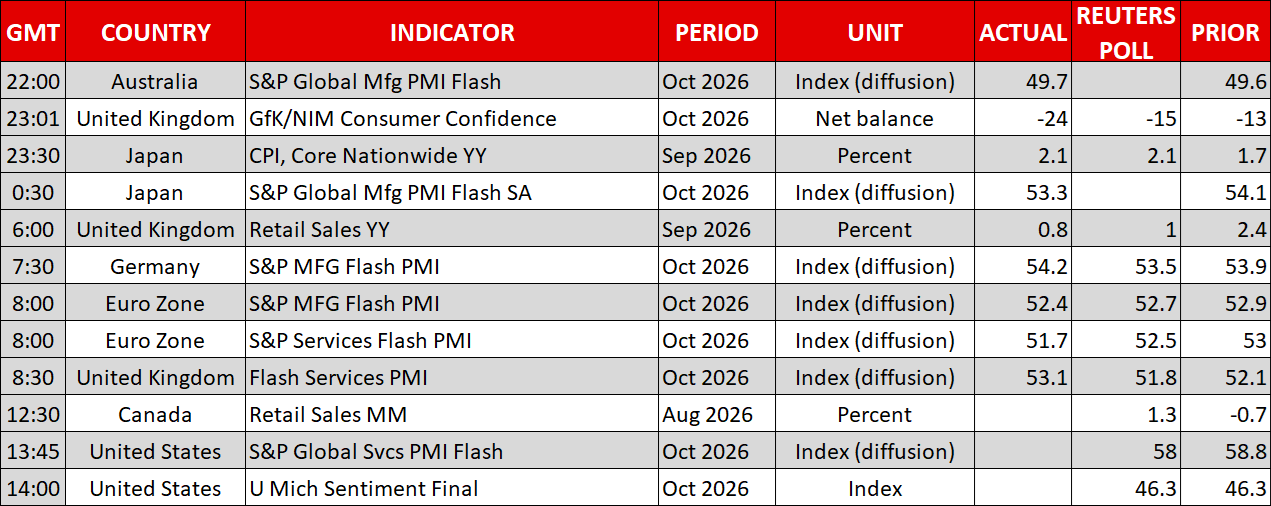
Now the focus turns to today’s flash PMIs for another growth check, but the spotlight is likely to shift to next week’s results from Microsoft and Alphabet on Wednesday, as well as Amazon on Thursday. Investors will scrutinize those tech giants’ AI expenditure and financing needs to see whether they are following Meta’s footsteps.
Gold tumbles despite retreat in dollar and Treasury yields
Gold tumbled yesterday, falling nearly 3%, and extended its slide today to reach the psychological round figure of $4,000. The tumble was striking as both Treasury yields and the dollar, which are the main drivers for the precious metal, retreated.
Perhaps this was a response to the escalating tensions in the Middle East and the rebound in oil prices. With energy supply concerns remaining elevated, gold participants may have become more worried about inflation spiraling out of control in the coming months. As already noted, this could – at some point – revive Fed hike bets and thereby bolster Treasury yields and the US dollar once again.


Weekly Market Recap and Forecast: AI Stocks Face Renewed Pressure as Oil Prices Surge, Gold Falls Below $4,100

EURUSD failed to break through the French barrier

Week Ahead – Central bank and earnings bonanza could roil markets

Bitcoin: all eyes on the next move

EBC Markets Briefing | Crude market on a roll as US prepares for new attacks

Brent Crude Climbs Above $114 as US–Iran Tensions Revive

Weak Tech Earnings Pressure the US Dollar as Central Bank Divergence Shapes Forex Markets | 23rd October, 2026