





The euro has slipped out of its range

The euro has slipped out of its range
• Rising political risks in France are tying the ECB’s hands.
• The US economy is capable of withstanding high interest rates, which is strengthening the dollar.
The US dollar has reached an 18-month high, driven by strong macroeconomic data, a further rise in bond yields, and a rebound in oil prices. The revision of second-quarter GDP data from 1.6% to 2.2% demonstrates that the US economy is growing faster than the European economy and can withstand higher interest rates. Personal consumer spending soared by an impressive 0.9% in August, exceeding forecasts, but did not trigger an acceleration in the core price index from 3.0% year-on-year. However, shortly afterwards, the markets realised that current rates remain significantly above the 2% target.
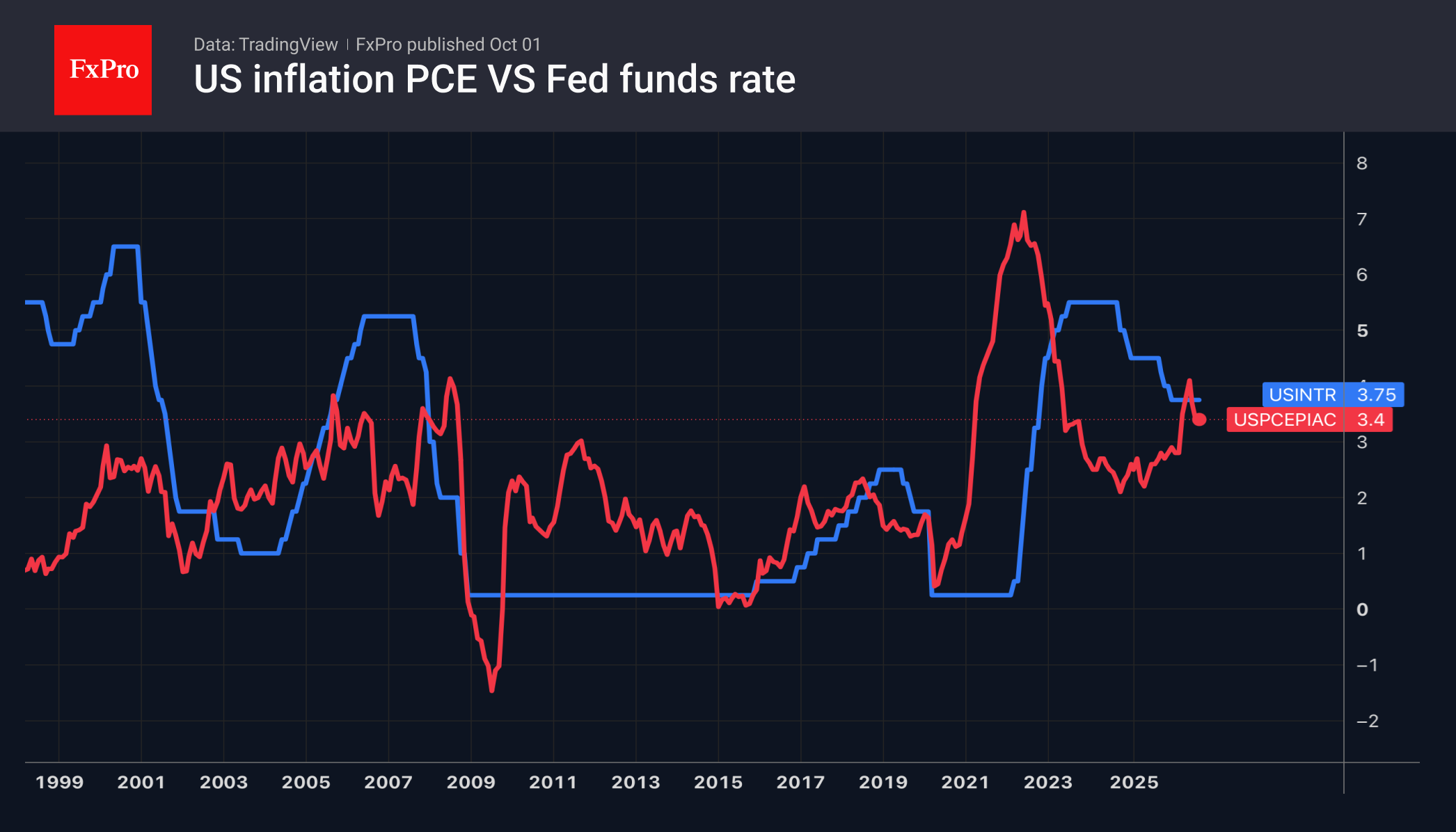
According to Goldman Sachs’ estimates, oil exports from the Middle East, including those from the grey market, reached 23.3 million barrels per day, exceeding the 2025 figure. The bank believes that the main reasons why Brent prices are not falling are a significant reduction in global stocks and growing risks of conflict escalation. The longer prices remain at elevated levels, the greater the risk that they will feed into core inflation. The higher the likelihood of aggressive monetary tightening by the Fed, the greater the likelihood of a further strengthening of the US dollar.
Meanwhile, the ground is shifting beneath European assets. EURUSD, the main currency pair in the forex market, has broken out of its consolidation range and fallen below 1.13, the lowest level since May 2025. This is due to accelerating inflation and a deteriorating trade balance. However, an excessively rapid rise in interest rates – the simple remedy available to the ECB – could harm the economy. According to Governing Council officials, including Christine Lagarde, there are as yet few signs of second-order effects. As a former French finance minister, head of the IMF during the European debt crisis, and long-standing president of the European Central Bank, she understands that raising interest rates will fuel a rally in European bond yields, thereby exacerbating debt-financing problems.
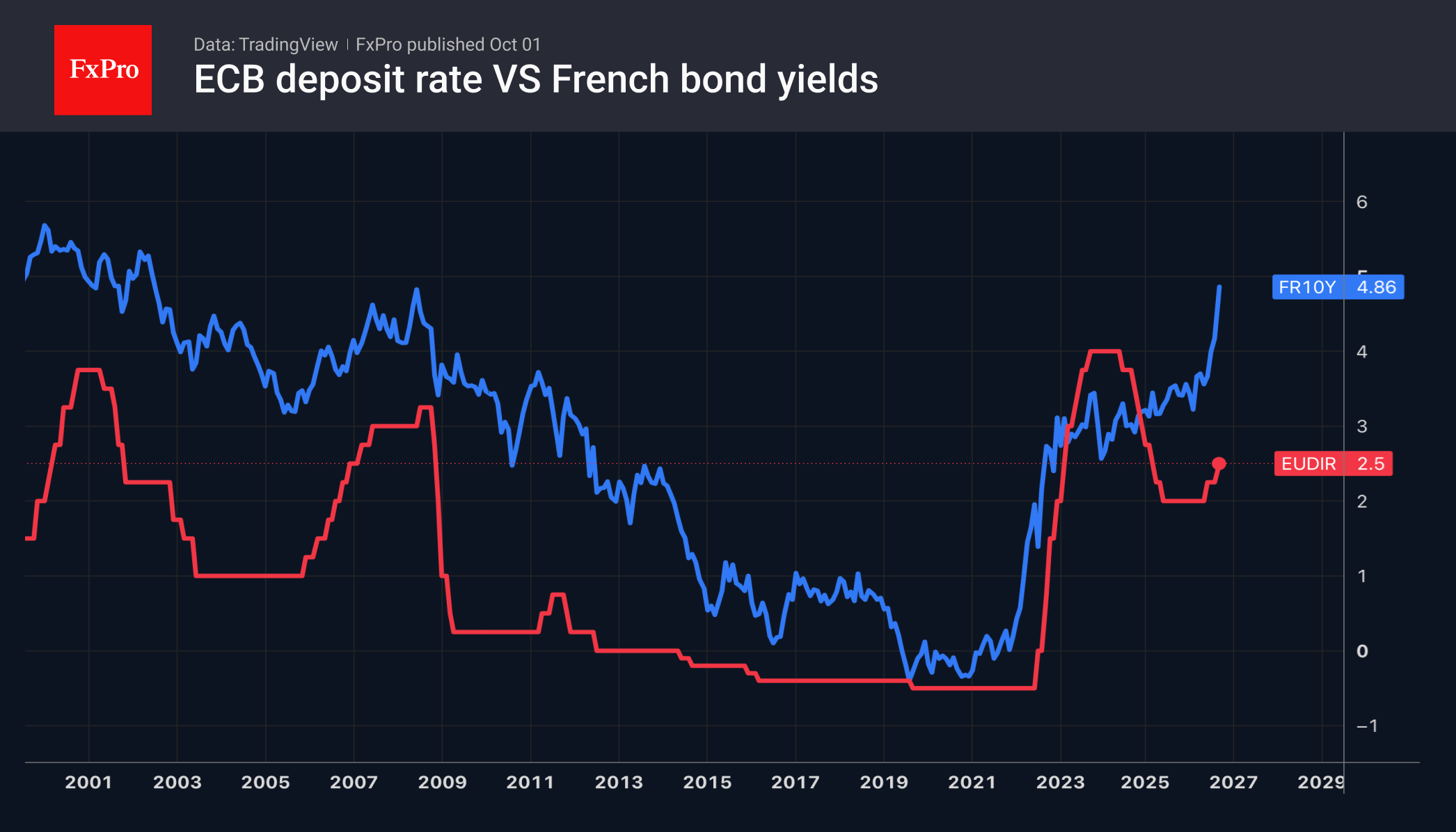
These problems are particularly acute in France. A slowdown in the eurozone’s second-largest economy could widen the budget deficit from 5.1% to 5.6% of GDP in 2026. Given the government’s focus on austerity measures and the reluctance of both right-wing and left-wing parties in parliament to comply with them, a clash between the executive and legislative branches appears inevitable.
Investors are fleeing the country, causing the yield spread between local and German bonds to widen to 130 basis points, the highest level since the European debt crisis, after 12 years of a quite tepid upward trend. The acceleration of the sell-off in debt markets is putting significant pressure on the EURUSD.
In such circumstances, rising inflation is working against the single currency rather than in its favour, as price rises will erode the single currency’s purchasing power, whilst the central bank will have to stand by and watch for some time. It may take several quarters for the euro’s weakness to reignite the European economy through the region’s more competitive export prices.
The FxPro Analyst Team


September Market Review: Fed Rate Hike, AI Momentum and October Outlook

Higher Yields Reshape Currency Markets | 1st October, 2026

The dollar has retreated from the edge

EUR/USD Breaks July Support as Yield Gap and Energy Shock Favor the Dollar

US Major Stocks Slip as Yields, Oil Lift Inflation Concerns; RBA Decision in Focus

Fed Rate Bets Pressure Major Currencies | 29th September, 2026

ATFX Market Outlook - 25th September 2026