-1162026812.png)
-1162026812.png)





The Fed Held Rates, but the Voting Split Signals a More Hawkish Autumn

The Federal Reserve left the target interest rate unchanged at 3.75%, although the decision was passed by a 9–3 vote, with three policymakers favoring an immediate rate increase.
The three hawkish persons — Beth Hammack, Neel Kashkari and Lorie Logan — made it clear that a consensus has yet to emerge. The remaining members, together with Kevin Warsh and Jerome Powell, voted in favor of maintaining the current policy stance.
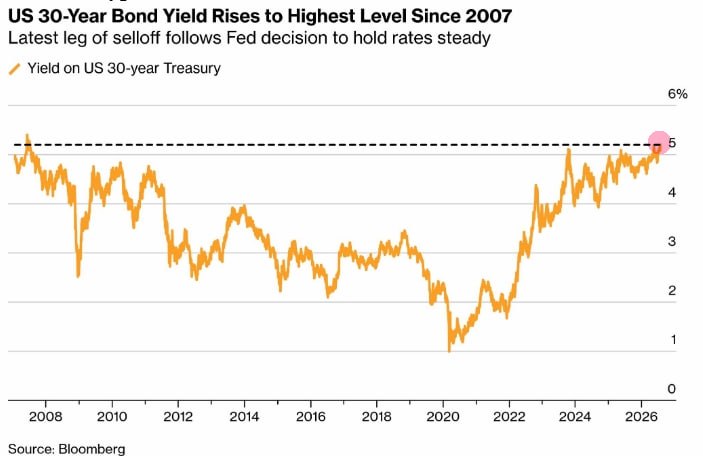
The yield on the 30-year US Treasury climbed to its highest level since 2007, the period immediately preceding the global financial crisis. During yesterday's FOMC press conference, Kevin Warsh nevertheless delivered two particularly clear messages: (1) nominal and real Treasury yields remain materially above desirable levels; and (2) should inflation remain elevated, higher interest rates may become part of the policy response.
The accompanying policy statement offered no meaningful new signals and was notably brief. Nevertheless, a rate increase at the autumn meeting has become an increasingly realistic possibility, despite markets having feared a considerably more hawkish outcome in July. Following his first appearance as Federal Reserve Chair, one impression has already emerged: Warsh resembles a modern-day Alan Greenspan in miniature — markets appreciate his communication, yet once the press conference concludes, there is remarkably little clarity as to his underlying message.
Market attention is now gradually shifting away from the decision to hold rates steady and towards the voting split and the underlying rationale behind it. Three votes in favor of tightening should not be dismissed as an isolated event; rather, they reflect growing concern within the Committee that inflationary pressures remain persistent. Should upcoming macroeconomic data confirm that disinflation has stalled, the probability of further policy tightening this autumn is likely to increase materially.
Equally significant is the message being sent by the US Treasury market. Rising long-dated Treasury yields suggest that investors are demanding a higher premium to hold US government debt. This reflects expectations of interest rates remaining elevated for longer, persistent inflationary pressures and increasing concerns over the scale of the United States' fiscal debt burden and the growing cost of servicing it.
The reaction across financial markets has been equally telling. Following the initial volatility, the US dollar began to recover, EURUSD retreated from its post-Fed gains, gold remained highly volatile, while Bitcoin exhibited a comparatively muted response. This price action suggests that investors remain reluctant to draw definitive conclusions and are waiting for further economic data before materially revising expectations for US monetary policy.
The key takeaway is that the July meeting did not represent a policy turning point, but it has significantly shifted market expectations. Although the Federal Reserve formally left interest rates unchanged, the voting split, the policy rhetoric and developments in the Treasury market increasingly suggest that the tightening cycle cannot yet be considered definitively over. As a result, the Federal Reserve's autumn meeting is now emerging as one of the most important macroeconomic events of the second half of the year. decision but also on how the Federal Reserve intends to balance inflation risks, economic resilience and the rapidly expanding US fiscal debt burden.

US Yields Rise Despite Buybacks; Eyes on ECB Hike
US Treasury Triples Long-Term Bond Buyback Size

The euro is banking on the ECB
EBC Markets Briefing | Euro eyes more gains on mounting dollar debasement risks
Yen Hits 6-Month High, Volatility Returns After North American Holiday.

EUR/USD Holds Its Rising Channel as 1.1641 Breakout Awaits ECB and U.S. CPI

Gold, EURUSD, OIL