-1162026812.png)
-1162026812.png)





THE FED'S DECEMBER DILEMMA: MARKETS BRACE FOR HIGHER INTEREST RATES

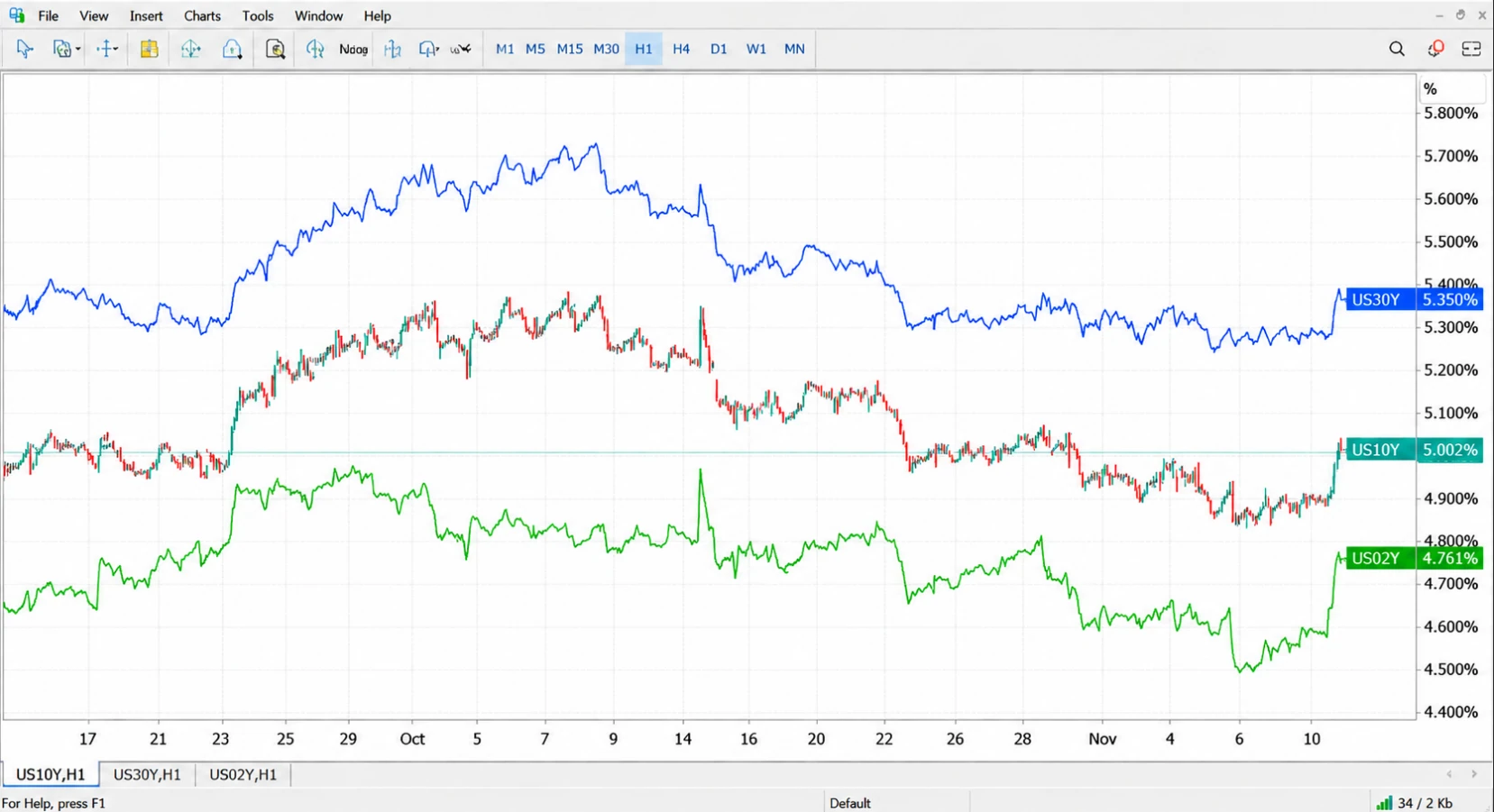 Over the past 24 hours, US Treasury yields have risen by approximately 10–20 basis points across different maturities. Despite this notable increase, they remain well below the peaks reached roughly a month ago. Nevertheless, the move is significant. Investors are once again reassessing the likely path of interest rates and the future cost of borrowing in the world's largest economy.
The latest US inflation figures have prompted a marked shift in market expectations. According to current market pricing, investors have fully factored in a Federal Reserve rate increase at its December meeting. Expectations have gone a step further, with a modest probability now assigned to a larger, 50-basis-point rise. Although such an aggressive move remains a less likely outcome, its emergence in market pricing illustrates the growing concern over persistent inflation. Financial markets are increasingly preparing for tighter monetary conditions.
Particular attention is now turning to Federal Reserve Chair Kevin Warsh. The December meeting could provide an important indication of how independently the Fed is prepared to act amid political pressure from President Donald Trump. Until recently, some market observers had questioned whether Warsh's hawkish rhetoric was being matched by equally decisive policy action. Investors will therefore be assessing not merely the interest-rate decision itself, but whether the Fed's leadership is prepared to follow through on its stated commitment to controlling inflation.
Further Analysis and Market Implications1. The Bond Market Is Setting the ToneRising Treasury yields reflect more than expectations of higher short-term interest rates. They also signal a reassessment of inflation risks, future monetary policy and the additional compensation investors require for holding longer-dated debt.
The distinction between the short and long ends of the yield curve is particularly important. If two-year Treasury yields rise more sharply, markets are primarily adjusting their expectations for forthcoming Fed decisions. If ten- and thirty-year yields lead the increase, the move may point to deeper concerns over persistent inflation, the US fiscal outlook and the long-term cost of capital.
2. A Stronger Dollar — But Not Without RisksHigher US Treasury yields generally make dollar-denominated assets more attractive, providing support for the dollar whilst placing pressure on EUR/USD, GBP/USD and gold.
However, the sustainability of that support depends on what is driving yields higher. If investors interpret rising yields as evidence of economic resilience and a determined Federal Reserve, the dollar could strengthen further.
If, instead, yields are rising primarily because of concerns over inflation and the sustainability of US public finances, the currency market's response may be less straightforward. Higher borrowing costs are not necessarily a sign of greater economic strength.
3. December Could Become a Test of the Fed's CredibilityThe December decision may prove important not only for the direction of interest rates, but also for confidence in the Federal Reserve itself.
Markets need to see consistency between the Fed's public statements, its policy decisions and the economic evidence. A 25-basis-point increase, accompanied by a firm commitment to containing inflation, could reinforce confidence in the central bank's determination.
A more aggressive 50-basis-point rise would send an even stronger signal about inflation concerns, but could also heighten fears of an unnecessary slowdown in economic activity.
Conversely, leaving rates unchanged despite persistent inflation would require a particularly convincing explanation. Any perceived inconsistency between the Fed's rhetoric and its actions could unsettle financial markets.
4. The Real Risk Lies in the Gap Between Expectations and RealityWhen financial markets have already priced in a particular interest-rate decision, its eventual announcement does not necessarily trigger another rise in the dollar or Treasury yields.
The greater market reaction may instead come from the accompanying policy statement, updated economic projections and the Fed Chair's press conference.
Investors will be looking for clues about how long restrictive monetary conditions might remain in place, whether further rate increases are under consideration and what could eventually justify a change in direction.
The December meeting should therefore be viewed as more than a single interest-rate announcement. It could establish the framework for market expectations throughout 2027.
The Bottom LineDecember's Federal Reserve meeting could become a defining test of three things: its determination to contain inflation, the consistency of its monetary policy and its ability to maintain independence from political pressure.
For financial markets, the decisive factor may not be the size of the rate increase itself, but the credibility of the Fed's explanation and the guidance it provides for the months ahead.
The market has priced in higher rates. What it has yet to establish is how far the Fed is prepared to go — and whether its actions will finally match its words.Trade smart with Headway


Technical Outlook on GBP/USD, GOLD, US100

A perfect storm for the dollar

Gold Tests Key Support as Fed Hike Bets Keep Dollar Firm

Week Ahead: Nvidia Earnings and Anthropic IPO Put AI Stocks and the Nasdaq in Focus
EURUSD Slips Towards 1.1019 as Higher Treasury Yields and Fed Tightening Bets Support the Dollar

Forex is banking on the Fed

Weekly Analysis and Forecast: Gold falls to its lowest level in 2026. And Jensen Huang‘s resignation adds uncertainty to the stock market