-1162026812.png)
-1162026812.png)





US Dollar Roars Back: Inflation Shock Fuels Fed Rate-Hike Bets and Extends DXY Rally

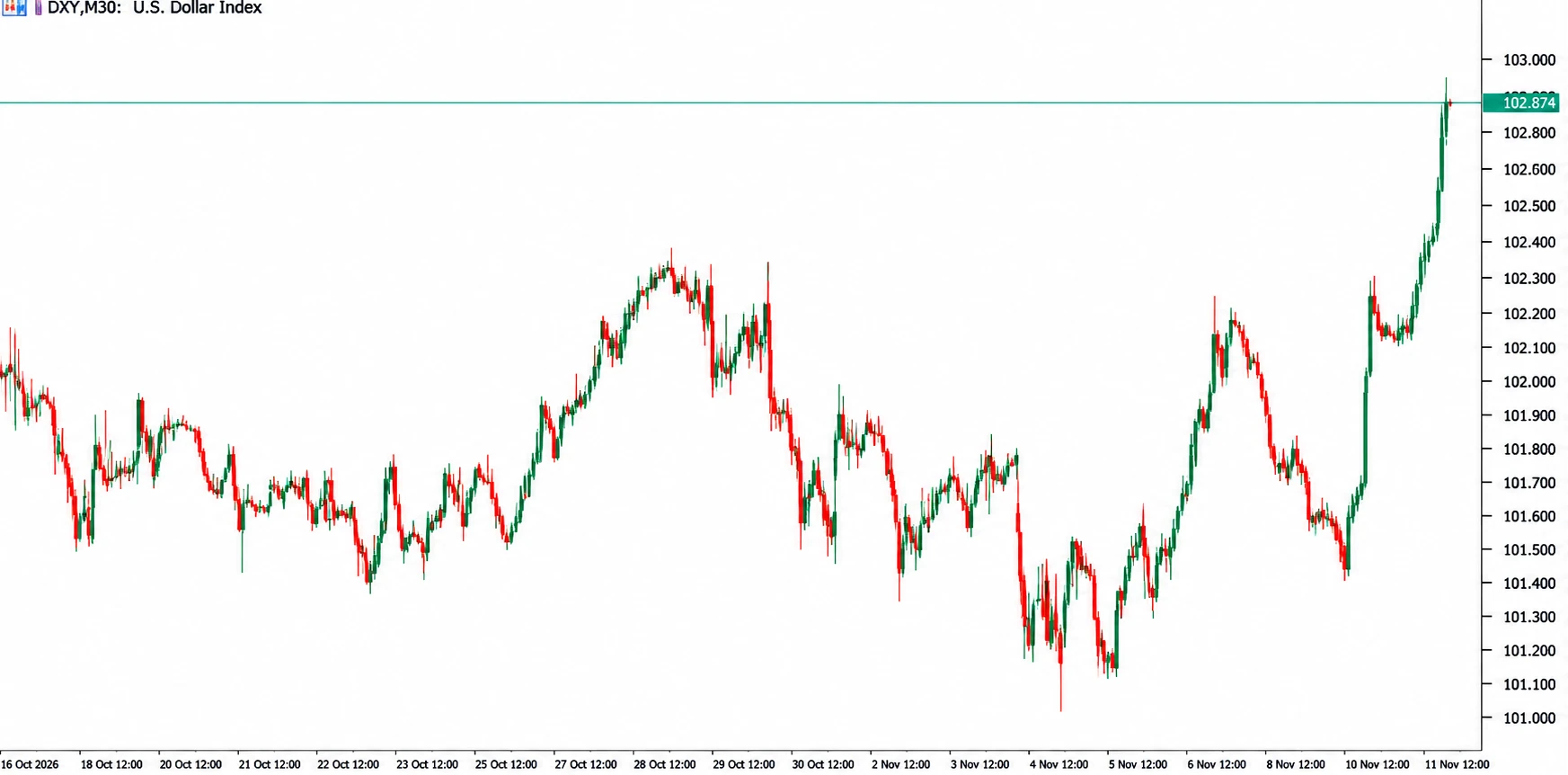 US Dollar Rebounds Sharply Following Inflation Surprise. The US Dollar Index (DXY) has staged a strong bullish reversal following higher-than-expected US inflation figures. The latest Consumer Price Index (CPI) report showed that inflationary pressures remain persistent, strengthening expectations that the Federal Reserve will tighten monetary policy further. After gaining approximately 0.5% on Tuesday, the dollar extended its rally on Wednesday, with DXY trading around 102.4–102.5. The move suggests renewed buying interest in the US currency.
December Fed Rate-Hike Expectations Surge. Financial markets have sharply increased their expectations of an interest rate increase at the Federal Reserve meeting on 9 December. CME FedWatch indicated an 89% probability of a December hike following Tuesday's inflation release, with subsequent market pricing moving towards a fully anticipated increase. Higher expected US interest rates make dollar-denominated assets more attractive and provide fundamental support for the currency. However, these probabilities change continuously as traders respond to new economic information.
Higher Bond Yields Strengthen the Dollar. The inflation surprise has also pushed US Treasury yields higher, particularly at the shorter end of the yield curve. Rising yields reflect expectations that borrowing costs will remain elevated or increase further. This supports demand for the dollar as investors seek higher returns on US assets. If Treasury yields continue rising, the dollar could maintain its upward momentum, especially against currencies whose central banks are expected to follow less aggressive monetary policies.
EURUSD and Other Major Currencies Face Pressure. The renewed dollar rally has placed downward pressure on several major currency pairs. EURUSD has weakened towards the 1.1130–1.1140 area, while USDJPY has approached the psychologically important 160.00 level. Sterling and the Swiss franc have also come under pressure. These movements suggest that dollar strength is broad-based rather than limited to a single currency pair. Further DXY gains could extend this pressure, although individual currencies will also respond to domestic economic developments.
Gold and Risk Assets React to Tighter Monetary Expectations. A stronger dollar and rising US Treasury yields generally create a more challenging environment for gold, as the metal does not generate interest income. Gold declined sharply following the inflation report, while cryptocurrencies also faced pressure from expectations of tighter financial conditions. Equity markets may experience increased volatility if investors begin pricing in higher borrowing costs and a more restrictive Federal Reserve. Nevertheless, these relationships are not constant, and geopolitical developments or changes in risk sentiment can produce different outcomes.
DXY Technical Outlook: Can the Rally Continue? From a technical perspective, the recent reversal suggests improving bullish momentum in the Dollar Index. The 102.50 area is an important near-term reference point, while a sustained move higher could bring the 102.85 region into focus. Traders should monitor whether DXY can maintain its recent gains and establish higher lows on the H4 and daily charts. Failure to hold the breakout could trigger profit-taking, particularly if the market has already priced in most of the expected Federal Reserve tightening.
Market Outlook and Trading Conclusion. The immediate outlook for the US dollar remains constructive, supported by stronger inflation data, rising Treasury yields and expectations of further Federal Reserve rate increases. The most likely near-term scenario is continued dollar strength, although temporary corrections are possible after such a rapid advance. The next major drivers will be Federal Reserve commentary, upcoming US economic releases and changes in interest rate expectations. Traders should avoid chasing sharp price movements and instead look for confirmed breakouts or pullbacks towards established support levels.


A perfect storm for the dollar

Gold Tests Key Support as Fed Hike Bets Keep Dollar Firm

Week Ahead: Nvidia Earnings and Anthropic IPO Put AI Stocks and the Nasdaq in Focus

EURUSD Slips Towards 1.1019 as Higher Treasury Yields and Fed Tightening Bets Support the Dollar

Forex is banking on the Fed

Weekly Analysis and Forecast: Gold falls to its lowest level in 2026. And Jensen Huang‘s resignation adds uncertainty to the stock market

Precious Metals Stage a Recovery as Fed Tightening Expectations Keep Currency Markets on Edge | 13th November, 2026