





Yields surge on hot PMIs and oil rebound; stocks slip but dollar shines

Oil pares losses as Mideast peace hopes fade
Oil prices bounced sharply higher on Wednesday, erasing a good chunk of the past week’s losses as hopes of an imminent ceasefire deal subsided. The optimism that followed the talks between US and Iranian negotiators at the sidelines of the UN General Assembly evaporated after Iranian President Masoud Pezeshkian took a hardline stance against ‘bowing’ to US pressure, signalling that the two sides are far apart.
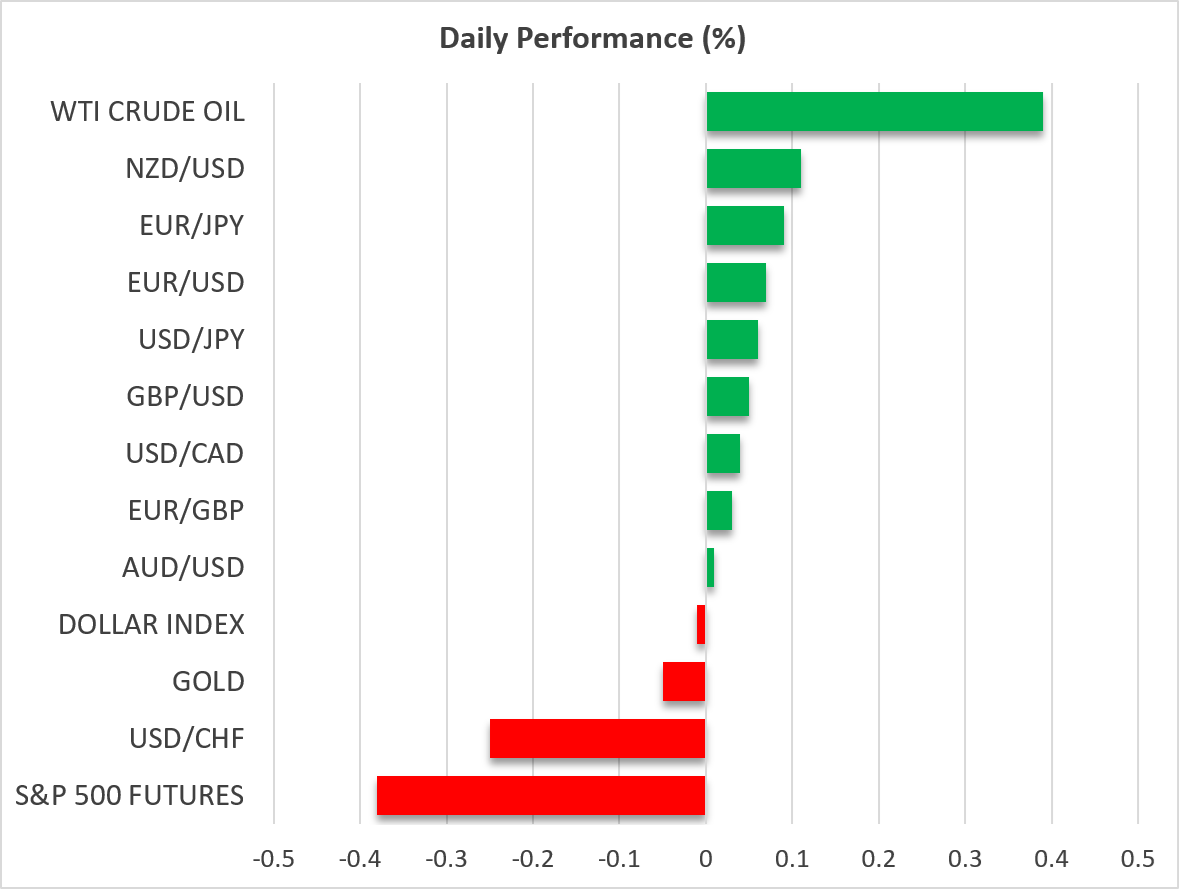
WTI and Brent crude futures turned positive, reversing a five-day slide, with the latter gaining almost 4%. WTI is back above $92 a barrel, while Brent is trading around $103.
However, hope is not completely lost as reports suggest Iran has proposed to Washington a roadmap for a 60-day regionwide ceasefire that includes the phased reopening of the Strait of Hormuz.
Bond selloff resumes as inflation risks spike
This may limit oil’s advance over the coming days, but the problem for investors is that high energy prices are not the only source of inflation, particularly in the United States. The Fed is increasingly concerned about strong domestic demand being a key driver of US price pressures.
Yesterday’s flash PMI releases by S&P Global underscored the resilience of the major economies in the face of another energy price shock. Notably, US PMIs were exceptionally strong in September, with input prices rising at the fastest pace in four years for both manufacturing and services.
In the meantime, the hawkish Fed commentary has kept running. Governor Michael Barr flagged the need for additional rate hikes to contain inflation, while Chicago Fed President Austan Goolsbee warned the Fed “better be careful” about what’s happening with oil.
More Fed speakers will take the podium today, including the Richmond Fed’s Barkin and Cleveland Fed’s Hammack.
The Fed’s unquestionably hawkish stance is potentially a bigger risk for the markets right now than the swings in oil prices. More importantly, bond markets are taking note and US Treasury yields are surging again.
The 10-year yield crossed the 5.10% threshold for the first time since 2007 on Wednesday, extending its gains to 5.14% today, while the 30-year Treasury yield just hit a 22-year peak. The bond selloff was broad-based, hitting Japanese government bonds the hardest, with the 10-year skyrocketing to a 30-year high.
Dollar causes fresh misery for yen, franc also sinks
Yet, the comparatively bigger jump in Japanese yields versus US yields didn’t manage to offer the yen much support. The US dollar climbed back above 158.00 yen yesterday, reaching three-week highs today. The closer the pair gets to the 160.00 mark, the greater the risk of another currency intervention on both sides of the Pacific.
Against a basket of currencies, the dollar is the strongest since late July. The euro and pound are licking their wounds below the key levels of $1.14 and $1.33 respectively. But as other majors find themselves on a steadier footing today, the Swiss franc continues to come under pressure.
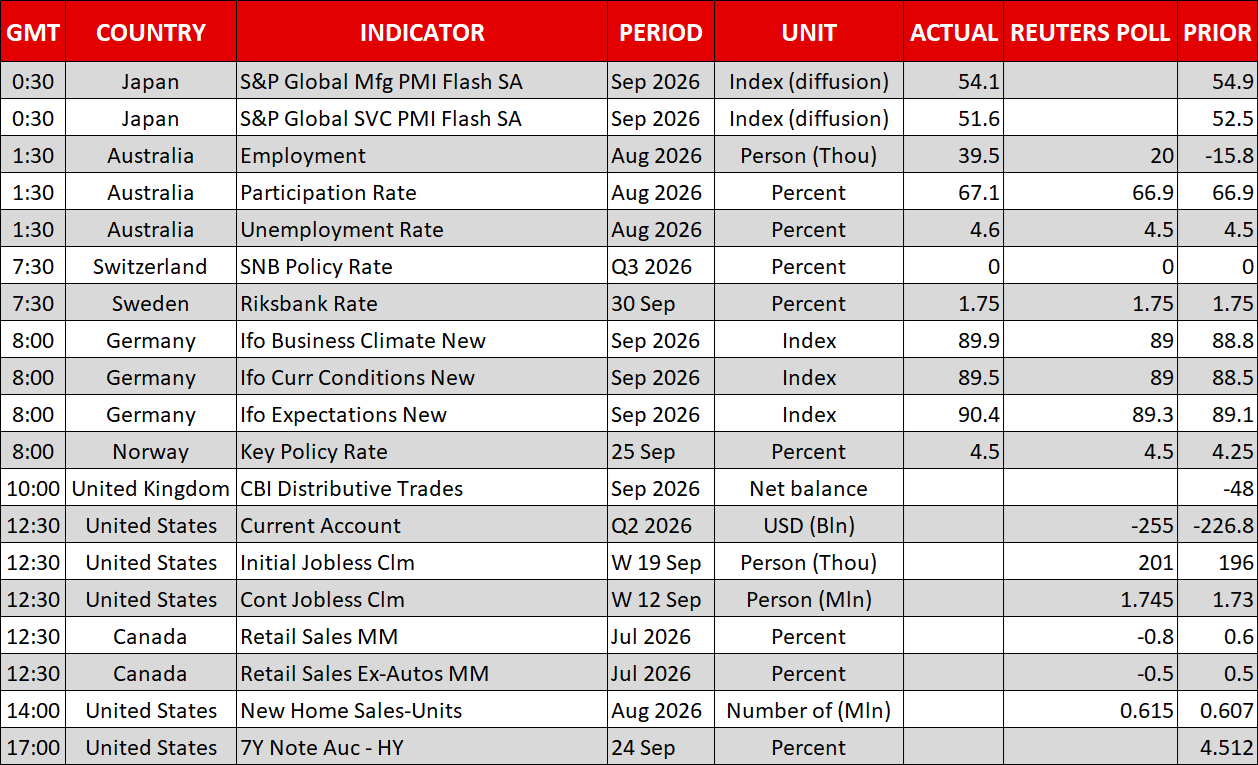
The Swiss National Bank left interest rates unchanged at 0% on Thursday, reinforcing the monetary policy divergence with other central banks. Despite raising its inflation forecasts and toning down its language to weaken the franc, the SNB is not expected to raise interest rates before next spring at the earliest, and this is weighing on the franc, which has fallen to a 16-month low of 0.8283 to the dollar.
Gold struggles but no panic on Wall Street
Unsurprisingly, gold has taken a dive amid the dollar’s bounce back. The precious metal has slipped below $4,300/oz, brushing a one-week low of $4,261.79.
Soaring bond yields are also a headache for equity markets and risk assets in general. Yet, the jump in the 10-year yield to above 5.0% didn’t spark the panic that one might have feared. The S&P 500 dipped 0.75% and the Nasdaq 100 lost 0.8% yesterday. Even the more rate-sensitive Dow Jones resisted bigger losses, closing just 0.7% lower.
Continued optimism about the AI trade is keeping stock markets supported even as borrowing costs around the world head higher. The strong earnings outlook appears to have raised the pain threshold for the 10-year Treasury yield.
Growing bets that the Fed might hike interest rates at both of its two remaining meetings of the year have not spooked too many investors, at least for now. Even cryptos are riding out the latest bond rout with relative calm. Bitcoin declined by almost 3.0% yesterday but is steadier today.
Trump-Xi meeting eyed
Aside from the positive economic and earnings outlooks, there is also relief that the US and China are keen to maintain the current status quo. Although there is some disappointment that today’s summit between President Trump and his Chinese counterpart, Xi Jinping, is not expected to produce any major breakthroughs on tariffs or business deals, investors are taking comfort in the fact that relations aren’t about to sour.
US Treasury Secretary Scott Bessent has announced the trade truce that was set to expire on November 10 has been extended by two months to allow negotiators more time to reach a broader deal, keeping hopes alive of a further de-escalation in trade tensions.


USDCAD extends rally towards June high

Gold Rebounds Slightly but Remains Under Pressure as Hawkish Fed Outlook Supports Dollar

Yen Recovery Builds as Intervention Risk Rises While Dollar Strength Pressures FX | 25th September, 2026

The Hidden Crypto Trap: Choosing the Wrong Blockchain Network

Nikkei225 Rallies Above 66,000 as Yen Weakness and Bank Stocks Support Momentum

America’s Diesel Boom Hits a Political Ceiling

Crypto Security Mistakes That Could Cost You Your Entire Account