





Dollar slips, stocks rebound after Fed’s Williams tempers rate hike bets

Williams pushes back on October hike
Government bond yields are trading lower on Wednesday as the combination of lower oil prices and dovish comments by New York Fed President John Williams brought about a recovery in risk appetite.
The 10-year Treasury yield fell to around 5.21%, down about eight basis points from Tuesday’s fresh 19-year highs, while the 30-year yield retreated from 5.62% - the highest since 2002 – to around 5.55%.
While a slight pullback in oil prices is helping to alleviate inflation fears somewhat, the main relief is Williams pushing back against a follow-up Fed rate hike as soon as October. Williams said “there is no need for urgency” to tighten policy again and the Fed can afford to take its time to “gather more information”.
Expectations of an October hike plunged to less than 45% from nearly 70% prior to his remarks. However, a 25-bps rate increase is still fully priced in for December, with Williams endorsing such a move.
Dollar softer, yen firmer ahead of PCE inflation
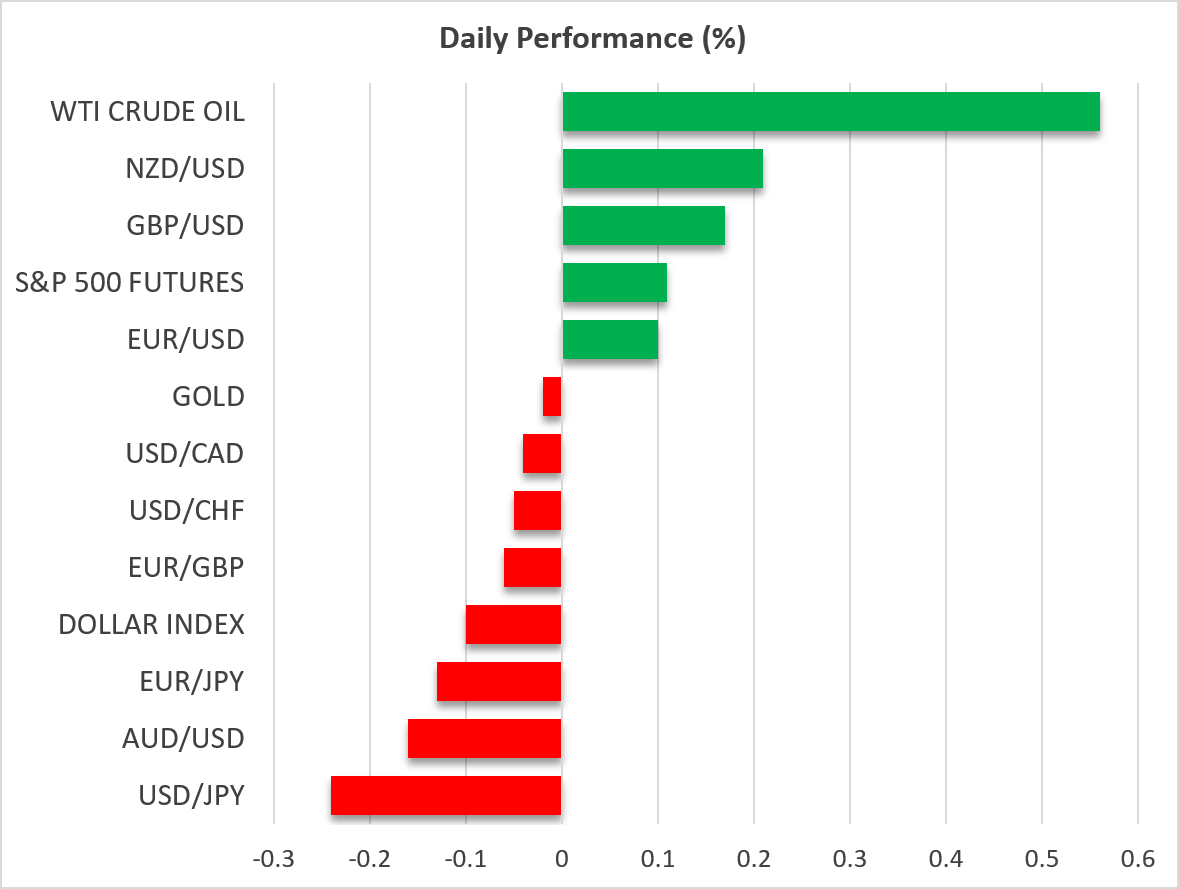
The US dollar eased back from two-month highs against a basket of currencies, as the Japanese yen continued to appreciate. Japanese officials have been reminding the markets this week that they remain in close contact with their US counterparts about the yen’s weakness. Finance Minister Katayama yesterday repeated the need to maintain “orderly conditions” in FX markets.
But although the recent developments appear to have put a floor below the yen’s slide, a meaningful rebound seems far off.
The biggest immediate risks for the yen are this week’s US data releases, namely, today’s ADP employment and PCE reports as well as Friday’s payrolls numbers. Both headline and core PCE are forecast to have stayed unchanged in August, but personal consumption is expected to have accelerated, underlining the strong US economy.
Any upside surprises, though, in the PCE price indices could revive bets for an October increase, bolstering the greenback.
Pound outperforms as euro and aussie lag
Meanwhile, the euro continues to underperform on concerns about the impact of prolonged energy disruptions on the Eurozone economy. But the pound is today’s top performer, edging up to $1.3255 after an upward revision to Q2 UK GDP data and as Prime Minister Andy Burnham lays out his vision for Britain at his first Labour party conference speech as leader.
There’s likely relief that most of Burnham’s policies will be funded by reallocating funds, such as scrapping the pension triple lock, rather than increasing spending. His desire for closer ties with the EU, with the possibility of rejoining the bloc after the next general election probably also pleased investors.
The Australian dollar, however, came under pressure after inflation in Australia rose less than expected in August and as investors were underwhelmed by China’s latest stimulus package.
The aussie dipped to a two-month low of $0.6956 before recovering slightly.
Oil pressured by rising Gulf exports, gold tests $4,200
Oil futures started the day on a negative footing before steadying somewhat despite the lack of progress in mediated talks between US and Iranian officials on Monday. Although hopes for diplomacy haven’t completely dissipated, the selling pressure on oil is mainly stemming from signs that oil shipments from the Gulf are rebounding.
Saudi Arabia has restored flows along its East-West pipeline to around half their levels and other Gulf nations have also been boosting their exports, with Goldman Sachs estimating that the oil market is ‘roughly balanced’ in September.
Rising exports may stave off another leg up in oil prices even as Washington and Tehran remain far off in finding common ground. But in the short term at least, this is supporting risk sentiment as well as gold.
The precious metal slumped 4% on Monday on intensifying rate hike bets. But the paring back of the more hawkish Fed expectations and oil’s stumbling rebound have lifted gold to just below $4,200 today.
Stocks perk up but will Micron spoil the mood?
Equities are also buoyed amid ongoing optimism about the AI trade. US futures are currently trading between 0.1% and 0.4% higher, while most indices in Europe and Asia are in the green.
With the Fed signalling to the markets that they’ve gotten slightly ahead of themselves by pricing in too many rate hikes, the mood has improved notably, though the week’s big tests have yet to come.
Aside from the US data, Wall Street will also be watching Micron’s quarterly earnings due after the market close. So far, AI stocks have mostly shrugged off all the doomsday warnings and calls for more regulation, but any disappointment from Micron’s earnings release could spark a fresh selloff.
Reports that OpenAI’s latest funding round values the company at $1.4 trillion are also boosting sentiment. 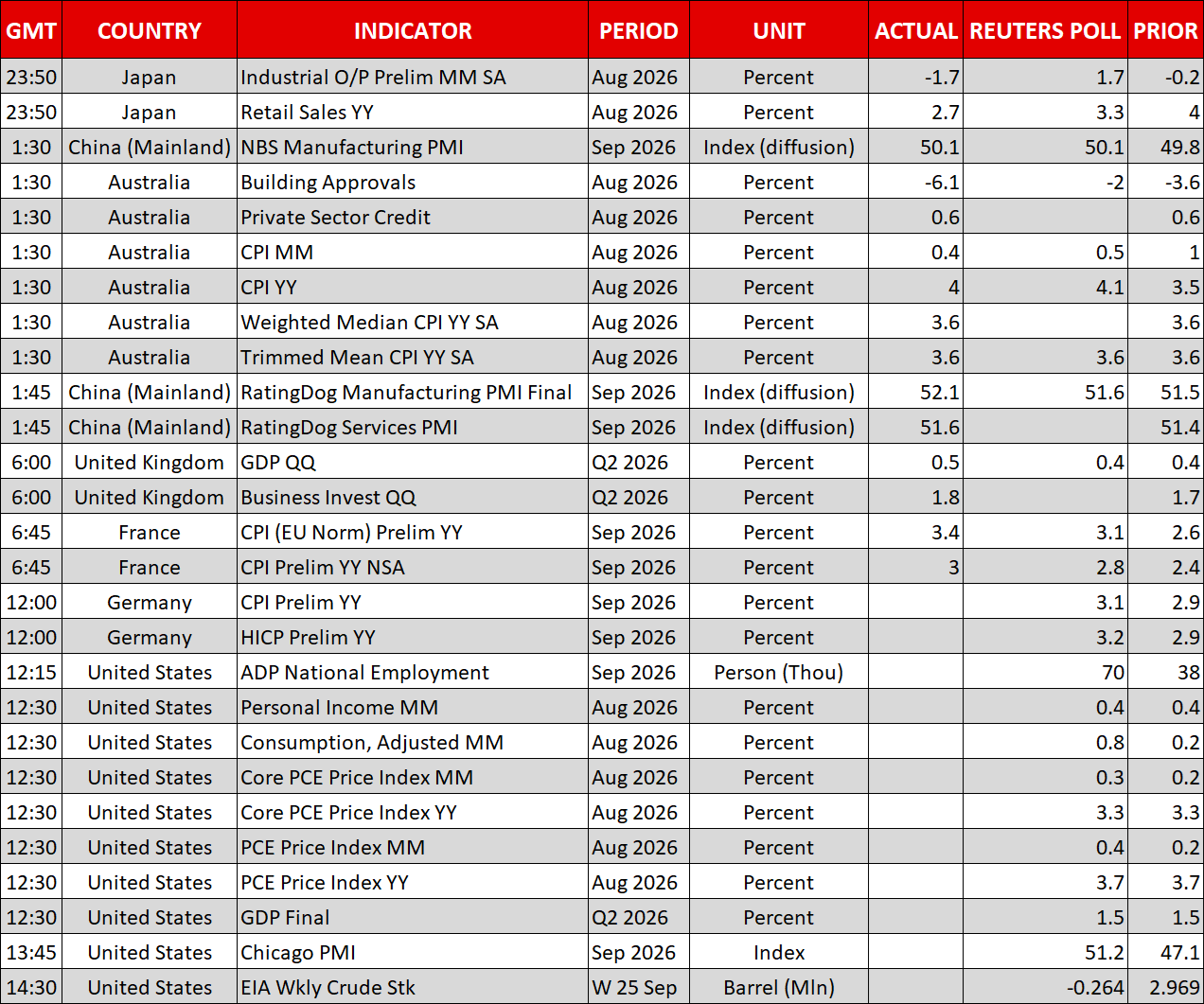


GBPUSD Edges Towards 1.3463 as Traders Brace for the Bank of England Decision

Weak NZ Jobs Data Keeps NZDUSD Under Pressure

Gold buying by central banks has hit its highest rate since 2024.

Daily Technical Analysis: Gold Reclaims $3,900 After Hitting Its Lowest Level Since October 2025

Daily Fundamental Analysis: Wall Street Starts November on a Cautious Note Ahead of US Midterm Elections

Bitcoin tests key support as election uncertainty and tech sell-off weigh

Will gold climb back above $4,000?