





Dollar stalls even as geopolitical risks and oil rise

US and Iran exchange new hostilities
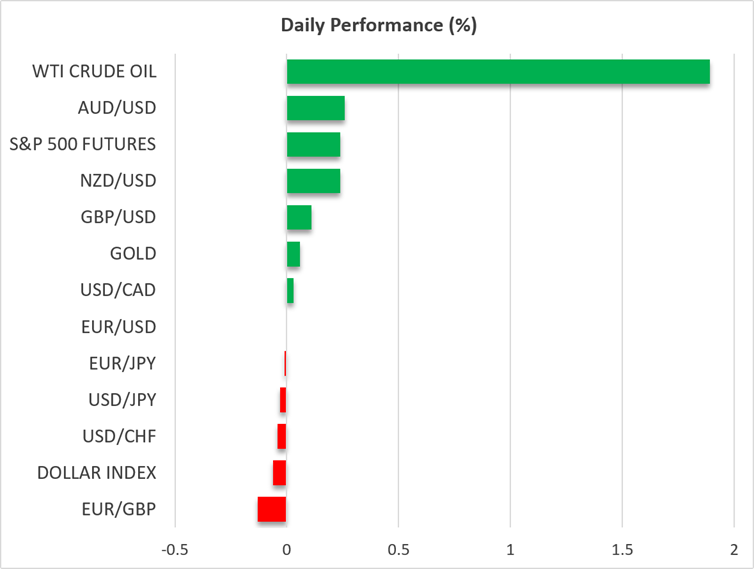
The US dollar traded mixed against the other major currencies on Friday, closing the day virtually unchanged against most, though it ended the week lower. Today, the greenback is trading unchanged or slightly lower despite oil prices opening with a positive gap amid further escalation in the Middle East.
Oil extended its rebound on Friday, with the bulls staying in the driver’s seat at the start of this week, as the US and Iran exchanged new hostilities over the weekend, with US Central Command saying that the new attacks came in response to Iran’s strikes that killed at least two US troops in Jordan and injured many others.
This seems to be the worst conflict between the two nations since just before the April ceasefire, perhaps leaving no room for a restart of truce negotiations.
US inflation data push Fed hike bets back
Yet, the greenback failed to capitalize, perhaps as traders continued to digest the slowdown revealed in the US inflation data for June. Even after Cleveland Fed President Hammack joined the camp of those favoring rate hikes to tame inflation, investors continued assigning a slender 15% chance of a rate hike at the upcoming gathering, while they are fully pricing in a quarter-point increase by October.
That said, bearing in mind that the inflation data refers to a period before the renewed tensions, when oil prices had been falling, traders should not let their guard down. Further hostilities could push oil prices even higher, fueling speculation that inflation could rebound in the coming months. This could bring the Fed hike timing forward again, thereby reigniting the dollar’s rally.
Pound cheers political stability, yen keeps flirting with intervention
Elsewhere, the British pound rebounded today as incoming Prime Minister Andy Burnham is expected to select centrist Shabana Mahmood as chancellor of the Exchequer, easing concerns about radical and reckless fiscal policies.
The yen continued to trade around 162.50 against its US counterpart today, with traders remaining wary about potential intervention by Japanese authorities. That said, even if intervention occurs at some point soon, traders may treat the slide in dollar/yen as renewed buying opportunity.
Although another 25bps rate hike by the BoJ remains largely fully priced in by year-end, Prime Minister Takaichi’s calls for lower interest rates, together with the prospect of her appointing dovish members to the BoJ's Policy Board, leave no room for the Bank to become more hawkish from here.
Wall Street turns cautious ahead of earrings, gold returns above $4,000
On Wall Street, all three indices closed lower, with the tech-heavy Nasdaq losing 1.40%, as investors remained cautious amid the US-Iran hostilities in the Middle East. A new spike in consumer prices could result in more hawkish responses from the major central banks, thereby weighing on valuations of high-growth firms. That said, stock futures are pointing to a small rebound today.
What’s more, market participants are also keeping their gaze locked on corporate earnings, with Tesla, Alphabet and Intel set to report their results this week.
Gold rebounded on Friday and, although it opened with a negative gap today, it is extending its recovery, despite the geopolitical tensions. Perhaps traders took advantage of the dollar’s inability to gain and the low probability of a rate hike at the next FOMC gathering.
It seems that the psychological round figure of $4,000 is a strong support zone. Despite Thursday’s breach, the price returned above it on Friday. That said, should tensions continue and oil prices extend their rally, it may be a matter of time before the precious metal loses that key territory.

Today Fundamental Analysis: Oil Breaks Above $102 as Middle East Tensions Continue to Escalate

Today Technical Analysis: Copper Approaches Record Highs on Surging Demand

Dollar struggles to gain ahead of US inflation data, yen extends rally
EBC Markets Briefing | Crude prices on solid footing amid deep supply concerns

The yen is strengthening before our very eyes

The Inflation Measure Keeping the Fed Cautious

US Yields Rise Despite Buybacks; Eyes on ECB Hike