





Risk appetite recovers but French risks remain elevated; AI earnings awaited

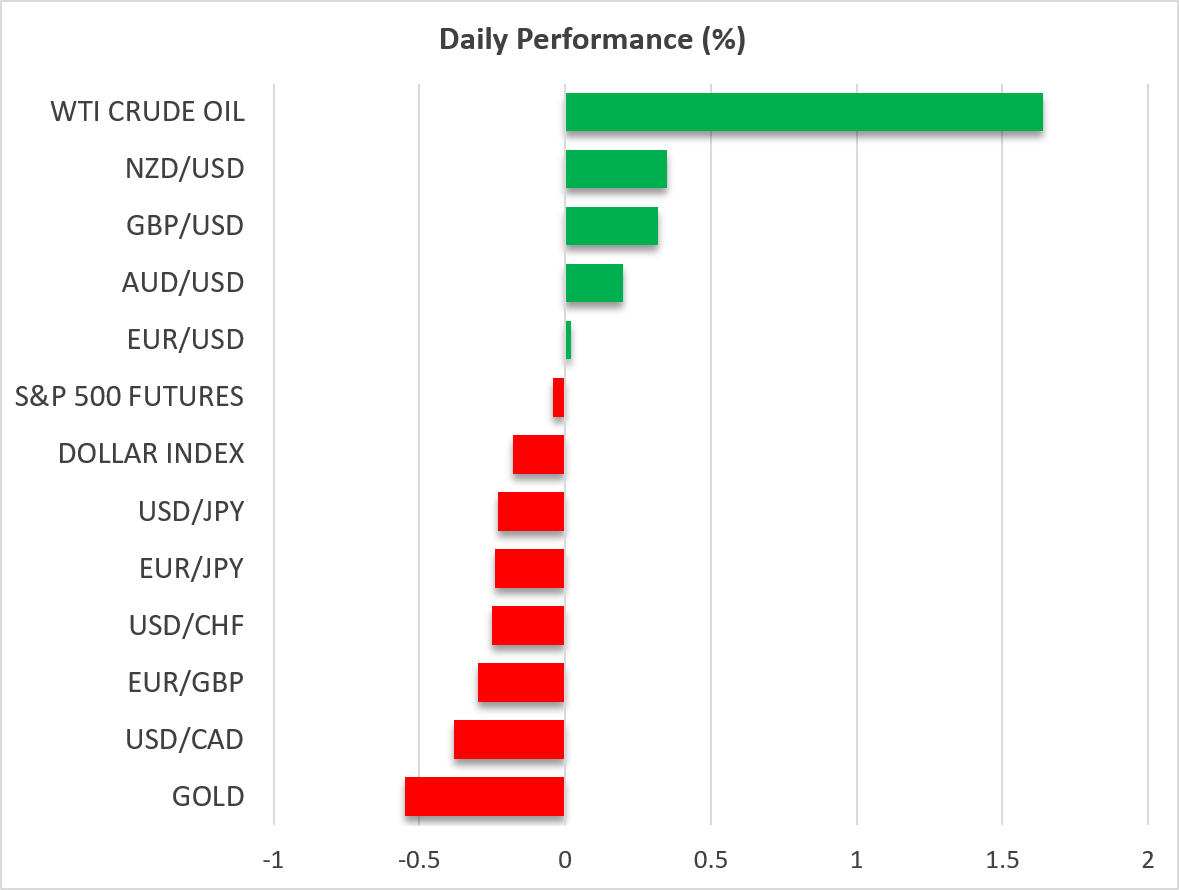
Risk sentiment shows signs of improvement
The US dollar traded mixed against its major peers yesterday, losing ground against the euro and the risk-linked aussie and kiwi, while gaining ground against the traditional safe-havens yen and franc. The greenback finished Monday virtually unchanged against the pound and the loonie.
This trading pattern in the FX sphere suggests an improvement in market appetite. The rebound on Wall Street and the euro’s recovery despite the unrest in France also support this view. The aussie and the kiwi may also have been receiving strong support from China’s better-than-expected GDP data for Q3, released on Monday. China is Australia’s and New Zealand’s main trading ally.
French politics remain a threat for the euro
Buyers of euro/dollar have repeatedly emerged in the 1.1100-1.1200 area, possibly reflecting technical positioning. In the bigger picture, this territory offered support in May 2025 and acted as resistance in August and September 2024. The euro buying could also suggest that markets are treating France’s developments as a local sovereign-risk problem, rather than the beginning of a systemic euro-area crisis. Indeed, Eurozone money markets are still pointing to 75bps worth of additional ECB rate hikes by the end of 2027.
That said, the French-German 10-year yield spread widened to around 148bps today and European stock bourses are trading in the red, which means that France remains a material downside risk. A failure by Prime Minister Sébastien Lecornu to pass a budget through a fragmented parliament, or evidence that stress is spreading to other Eurozone economies’ debt, could further anger euro bears, who may seek to extend the prevailing steep downtrend.
Yen traders remain alert to intervention risks
Elsewhere, the yen slipped yesterday, but it seems to be taking advantage of the dollar’s weakness today, entering a recovery mode after dollar/yen hit resistance at around 158.65.
It seems that traders remain concerned about the possibility of intervention by Japanese authorities around the 159-160 zone, as Prime Minister Takaichi warned for the umpteenth time last week that authorities would scrutinize exchange-rate moves and “respond appropriately”.
That said, even if intervention occurs in the weeks or months to come, dollar/yen traders may treat it as a renewed buying opportunity. Although BoJ Governor Ueda signaled lately the need for more rate hikes, the scenario where the Bank meets expectations of 85bps worth of additional rate increases by the end of 2027 appears to be unlikely.
Prime Minister Takaichi has repeatedly called on the BoJ to keep interest rates low. Although she cannot directly influence the Bank’s decisions, she can exert indirect influence through Board appointments. The two members who dissented from the latest rate hike were appointed by her, and she will have the opportunity to appoint more doves to the Board next summer. That’s why the yen may be destined to remain under pressure for a while longer, even if more intervention episodes take place in the foreseeable future.
Tech rebounds ahead of major earnings
On Wall Street, the Dow Jones closed Monday’s session unchanged, but both the S&P 500 and the Nasdaq eked out gains, with the latter gaining more than 1%. The gains were led by the technology sector, with Amazon jumping 5% after Morgan Stanley named it a top pick, while Nvidia and Tesla also rose. The Philadelphia Semiconductor Index ended an eight-session losing streak, which was its longest since 2008.
Anxiety and concerns about AI borrowing rose after CoreWeave’s shares fell around 15% on headlines that it has financed its data center expansion with tens of billions of dollars of debt. However, yesterday’s rebound suggests that investors remain willing to buy AI-related shares after sharp declines.
Focus today shifts to Netflix’s earnings results after the closing bell, while tomorrow, it will be the turn of Meta and Tesla to report. AI spending and the outlook will be central to investors’ assessment. Lam Research and Texas Instruments could also attract attention, as their earnings may provide signals on chip demand.


Weekly Market Recap and Forecast: AI Stocks Face Renewed Pressure as Oil Prices Surge, Gold Falls Below $4,100

EURUSD failed to break through the French barrier

Week Ahead – Central bank and earnings bonanza could roil markets

Tech selloff weighs on dollar as Treasury yields tumble

Bitcoin: all eyes on the next move

EBC Markets Briefing | Crude market on a roll as US prepares for new attacks

Brent Crude Climbs Above $114 as US–Iran Tensions Revive