-1162026812.png)
-1162026812.png)





A Gold Ounce Is Losing Weight in Barrels

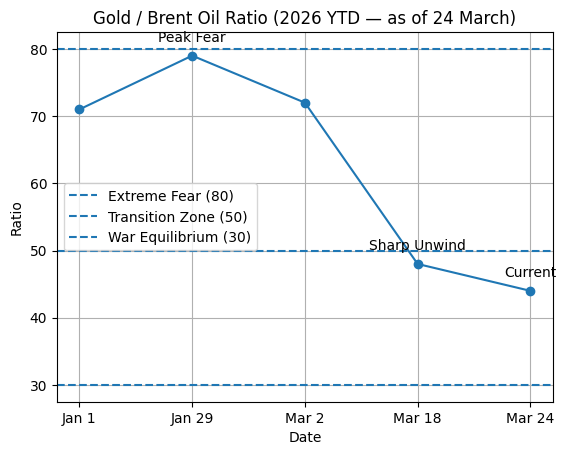
Global markets remain in a state of turbulence, most clearly reflected in the shifting dynamics of the “Gold-to-Oil” price ratio. Since the start of 2026, this indicator has shown a steady rise from 70.99 in early January toward peaking 79.24 on 29 January.
In itself, this increase was entirely logical. Since early 2025, gold has been consistently priced with a risk premium, as markets operated in a defensive posture. Meanwhile, oil remained under pressure due to demand expectations. In effect, this reflected a build-up of anxiety—capital seeking refuge in gold, while showing reluctance to commit to oil.
However, following the geopolitical shock in March, the risk premium started shifting. Oil recovered more swiftly, while gold ceased to be the sole beneficiary of market fear. Consequently, the move was not gradual but rather abrupt. On 2 March, the ratio stood at 72.43 and has since declined sharply. By 24 March, it had fallen to 44.41, effectively returning to levels of the summer 2025.
The current pattern closely mirrors the 2020 developments, when the ratio likewise fell rapidly within the pandemic environment. The steep decline in March 2026 can be attributed to the fact that, amid the current military conflict, energy prices have risen more quickly than gold, which had already been overheated by crisis-driven expectations.
This decline also reinforces the view that current levels in the 45–50 range remain unusually elevated for the global economy. Historical data suggests that, during periods of war or major crises, a more ‘fair’ level for this ratio lies closer to 30.
The conclusion is straightforward: when the ratio stood at 70–80, the market was operating under the weight of accumulated fear and costly protection. As it falls below 50, the market begins to unwind part of that anxiety, restoring oil’s role as a fundamental energy commodity rather than a source of distrust. What we are witnessing is a classic wartime dynamic, in which energy prices rise at a faster pace, effectively squeezing the speculative premium out of precious metals.
Should tensions in Iran persist, the ratio is likely to move towards 30, in line with long-term commodity market patterns. Trade smart with Headway

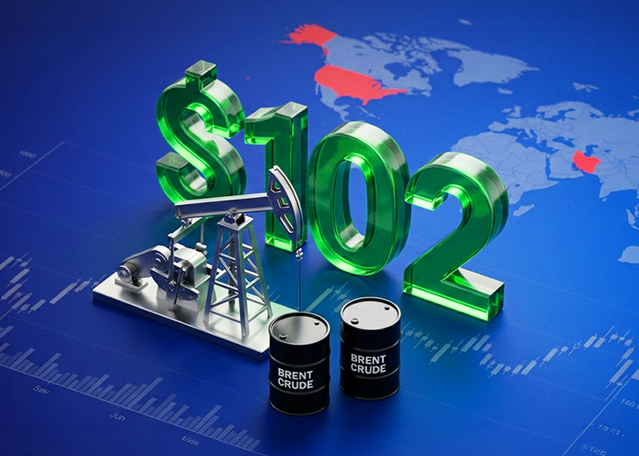
Today Fundamental Analysis: Oil Breaks Above $102 as Middle East Tensions Continue to Escalate
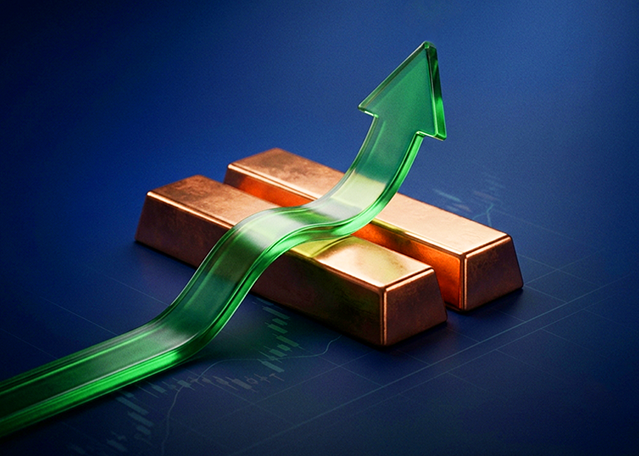
Today Technical Analysis: Copper Approaches Record Highs on Surging Demand

Dollar struggles to gain ahead of US inflation data, yen extends rally
EBC Markets Briefing | Crude prices on solid footing amid deep supply concerns

The yen is strengthening before our very eyes

The Inflation Measure Keeping the Fed Cautious

US Yields Rise Despite Buybacks; Eyes on ECB Hike