-1162026812.png)
-1162026812.png)





A £2 Trillion SpaceX: Extraordinary Vision… or Excessive Faith?

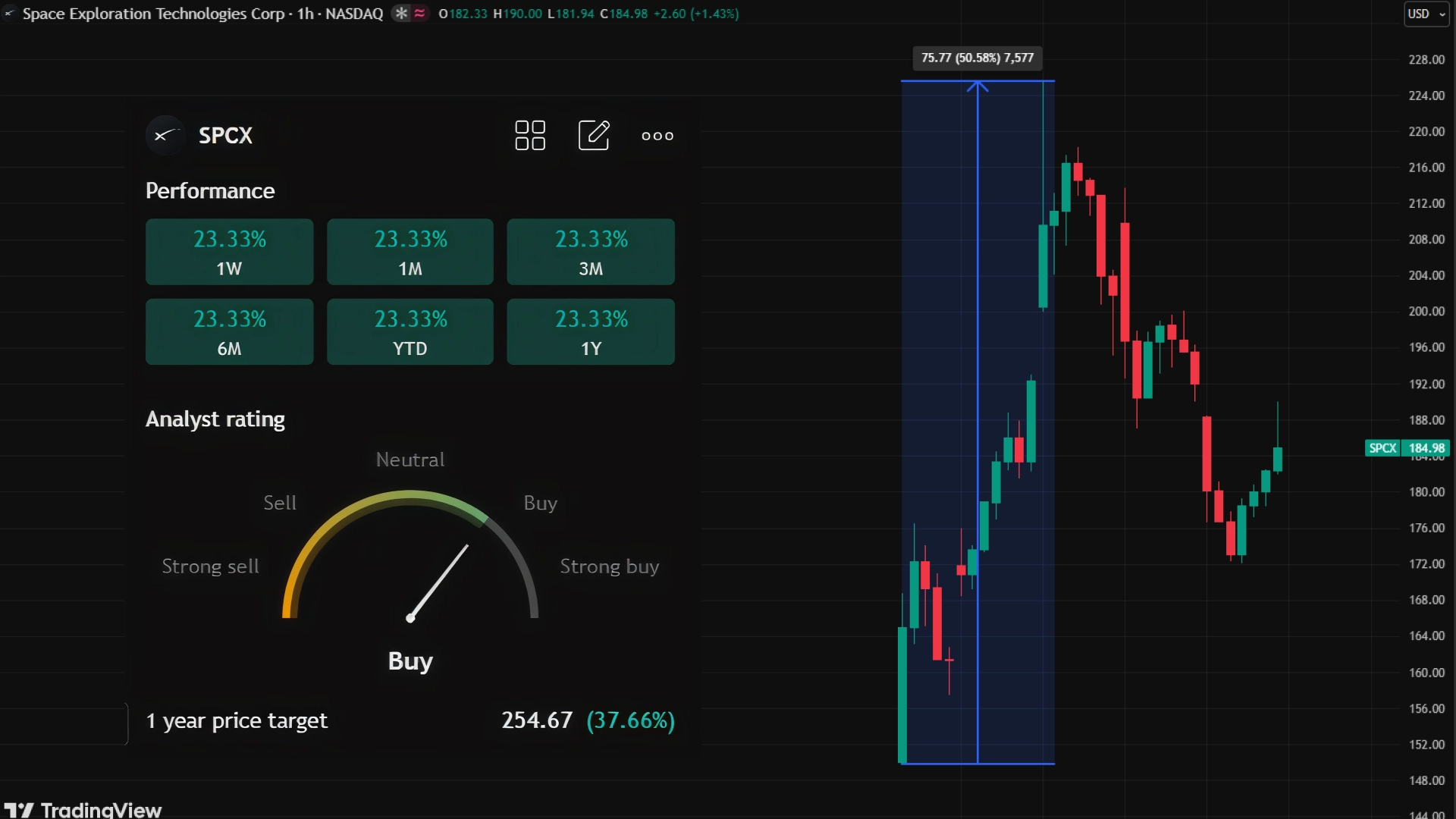
The SpaceX IPO has sparked no shortage of debate amongst investors, and quite understandably so. Viewed through the valuation, the sceptics make a rather persuasive case. Following its flotation, SpaceX found itself valued at more than $2 trillion, despite generating revenues of only $18.7 billion in 2025. Put differently, investors are currently paying in excess of one hundred times annual sales.
That sort of valuation is remarkable even by today's standards. At the height of the AI frenzy, NVIDIA traded on roughly 35 to 40 times revenues. PALANTIR commands something in the region of 50 to 60 times sales today, whilst most of the world's technology giants occupy a far more modest range of 10 to 25 times. By comparison, the premium being awarded to SpaceX appears almost extravagant.
Looking beneath the surface reveals something equally fascinating. Of the company's $18.7 billion in revenues, approximately $11.4 billion came from Starlink, representing around 61% of total turnover. Launch services contributed another $4.1 billion, whilst GROK generated around $3.2 billion. Curiously enough, SpaceX today derives the majority of its income not from space exploration, but from internet services. Yet management's own estimates paint a much grander picture. Starlink's addressable market stands at around $1.6 trillion, Starship and orbital infrastructure perhaps $370 billion, whilst AI is viewed as a potential $26.5 trillion opportunity. In other words, well over 90% of the investment story rests not on present-day earnings, but on expectations of markets that have yet to fully emerge.
So, what exactly are investors purchasing?
If one focuses purely on today's business, the valuation appears exceptionally demanding. For a market capitalization of $2 trillion to look remotely reasonable five years from now—even assuming a still-generous multiple of thirty times revenues—annual sales would need to rise towards $70 billion. That would require growth of roughly 30% per annum for five consecutive years. And should investors aspire to double their capital over that period, revenue growth would need to approach something closer to 50% annually.
What is striking is that the overwhelming majority of these opportunities belong to the future rather than the present.
Yet perhaps its greatest vulnerability lies in the fact that markets appear to have already priced in near-flawless execution across several monumental projects simultaneously. There seems precious little margin for disappointment. Can the company grow quickly enough to justify those ambitious expectations? That, surely, is the only question worth asking.
If once the valuations exceed $2 trillion, investors are no longer purchasing a business.
They are purchasing the conviction.
And conviction, as markets have repeatedly demonstrated, is often the most expensive asset of all.

Today Fundamental Analysis: Oil Breaks Above $102 as Middle East Tensions Continue to Escalate

Today Technical Analysis: Copper Approaches Record Highs on Surging Demand

Dollar struggles to gain ahead of US inflation data, yen extends rally

EBC Markets Briefing | Crude prices on solid footing amid deep supply concerns

The yen is strengthening before our very eyes

The Inflation Measure Keeping the Fed Cautious

US Yields Rise Despite Buybacks; Eyes on ECB Hike