2276-682026843.jpg)
2216-682026843.jpg)





After the ECB, Another Crucial Week for Monetary Policy

The European Central Bank set the tone yesterday by raising its three key interest rates, reinforcing its commitment to controlling inflation despite growing concerns about slowing economic activity. The decision highlighted a dilemma now facing policymakers worldwide: curbing inflationary pressures without further jeopardizing already vulnerable growth outlooks.
Next week will bring another wave of major monetary policy decisions.
The Swiss National Bank is widely expected to leave rates unchanged at 0.00%, although investors will be watching closely for any signals regarding potential currency market intervention. In Australia, the Reserve Bank of Australia is also expected to pause after raising rates aggressively since February, preferring to assess the impact of tighter financial conditions on a slowing economy. Meanwhile, the Bank of England faces a particularly difficult challenge as rising inflation expectations collide with evidence that the UK economy has already begun to contract.
While these meetings will attract attention, two central banks are likely to have the greatest influence on global markets: the Bank of Japan and the Federal Reserve. Japan appears ready to continue one of the most significant monetary policy transformations in decades, while the Federal Reserve faces its first meeting under new Chair Kevin Warsh amid rising inflation and ongoing geopolitical uncertainty.
The Bank of Japan Faces a Historic Decision
According to Reuters, policymakers are expected to raise interest rates from 0.75% to 1.00%, which would bring borrowing costs to their highest level since 1995. If confirmed, the move would represent another major step away from the ultra-loose monetary policies that dominated Japan’s economy for more than two decades.
The expected rate increase highlights how the inflation landscape has changed in Japan. For years, the country struggled with weak price growth and persistent deflation risks. Today, policymakers are increasingly concerned about inflation becoming more entrenched, particularly following the surge in global energy prices linked to the conflict involving Iran.
The meeting is made even more unusual by the absence of Governor Kazuo Ueda, who is undergoing medical treatment and will miss the decision. As a result, Deputy Governor Shinichi Uchida will become the main voice communicating policy guidance to markets.
While the rate hike itself appears largely priced in, investors will be far more interested in what comes next. Market participants increasingly believe that next week’s decision will not be the end of the tightening cycle. Reuters surveys suggest economists expect another increase toward 1.25% later this year, meaning investors will carefully analyse every word of the policy statement and press conference for clues about the pace of future tightening.
The challenge for the Bank of Japan is that inflation signals remain mixed. Consumer inflation remains relatively subdued, with economists expecting core CPI to remain around 1.4% in May, below the central bank’s 2% target. At the same time, wholesale prices have accelerated sharply, rising 6.3% year-over-year as companies continue to pass higher energy and import costs on to consumers. This divergence creates uncertainty about how aggressively policymakers should act.
For traders, the most immediate impact of a rate hike could be felt in currency markets. A more hawkish message from Uchida could strengthen the Japanese yen as investors anticipate further tightening. Conversely, any indication that policymakers intend to move cautiously could limit yen gains despite the expected rate increase.
The meeting also matters beyond Japan. For a long time, Japan’s near-zero interest rates fueled the global "carry trade," prompting international investors to borrow cheap yen and park that capital in higher-paying foreign assets. As rates rise in Japan, some of those capital flows could begin reversing, potentially affecting global bond and equity markets.
Kevin Warsh’s First Fed Meeting Comes Under Intense Scrutiny
Market participants expect the Fed to leave interest rates unchanged at 3.50%-3.75% when policymakers conclude their meeting on June 17. However, the decision itself is unlikely to be the most important event. Instead, investors will focus on how new Chair Kevin Warsh interprets the recent rise in inflation and whether he signals any change in the Fed’s future policy path.
The timing of Warsh’s first meeting could hardly be more complicated. Fresh inflation data showed consumer prices rising 0.5% during the month, pushing annual inflation to 4.2%, the highest level in three years. At first glance, such figures would normally strengthen the case for tighter monetary policy.
However, much of the increase was driven by energy prices, which surged nearly 4% during the month. On an annual basis, energy inflation has now exceeded 23%. Core inflation, which excludes more volatile food and energy prices, remained relatively contained, while core goods prices actually declined slightly.
This distinction is important because it aligns with Warsh’s previously stated view that policymakers should focus primarily on underlying inflation trends rather than temporary geopolitical shocks.
The ongoing conflict involving Iran has created a classic supply-side inflation shock. Rising oil prices increase transportation and production costs throughout the economy, pushing headline inflation higher. Yet central banks often hesitate to respond aggressively because higher interest rates cannot directly solve energy shortages or geopolitical disruptions.
Warsh has previously indicated that he prefers to "look through" temporary supply shocks and focus instead on whether inflation becomes broadly embedded across the economy. As that philosophy will likely guide next week’s meeting, investors are likely to be searching for answers to three critical questions.
First, does the Fed still view current inflation pressures as temporary, or is concern growing that energy-driven price increases could spread to other sectors?
Second, how much weight is the central bank placing on slowing economic growth relative to inflation risks?
Third, has the arrival of a new Fed Chair altered the future trajectory of monetary policy?
Political dynamics add another layer of complexity. President Donald Trump has recently adopted a noticeably less confrontational tone toward the Federal Reserve following Warsh’s appointment. Whereas former Chair Jerome Powell frequently faced criticism for not cutting rates aggressively enough, Trump appears more willing to accept a patient approach from the new leadership. That potentially gives Warsh greater flexibility to maintain current policy settings while assessing whether inflation pressures prove temporary or persistent.
For the markets, a balanced message could be welcomed. Investors generally favour a scenario in which the Fed remains cautious without signalling renewed rate hikes. Bond markets, meanwhile, will closely watch any revisions to policymakers’ economic projections and interest-rate forecasts.
The U.S. dollar may experience increased volatility as traders reassess expectations for future policy easing. Any indication that inflation risks are becoming more concerning could support the currency, while a more dovish tone could revive expectations for eventual rate cuts later this year.
Sources: Reuters, CNBC, BoJ, SNB, RBA, Fed, ECB, BoE
The information provided does not constitute investment research. The material has not been prepared in accordance with the legal requirements designed to promote the independence of investment research and as such is to be considered to be a marketing communication.
All information has been prepared by ActivTrades (“AT”). The information does not contain a record of AT’s prices, or an offer of or solicitation for a transaction in any financial instrument. No representation or warranty is given as to the accuracy or completeness of this information.
Any material provided does not have regard to the specific investment objective and financial situation of any person who may receive it. Past performance is not a reliable indicator of future performance. AT provides an execution-only service. Consequently, any person acting on the information provided does so at their own risk. Forecasts are not guarantees. Rates may change. Political risk is unpredictable. Central bank actions may vary. Platforms’ tools do not guarantee success

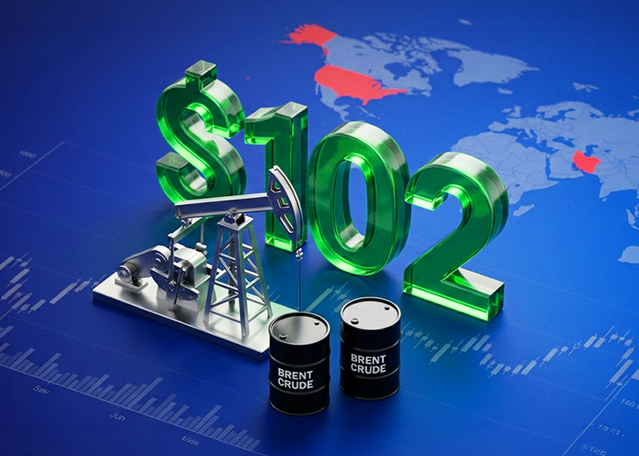
Today Fundamental Analysis: Oil Breaks Above $102 as Middle East Tensions Continue to Escalate
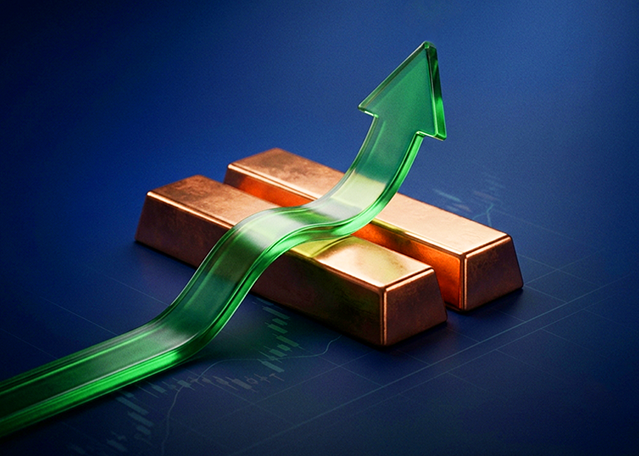
Today Technical Analysis: Copper Approaches Record Highs on Surging Demand

Dollar struggles to gain ahead of US inflation data, yen extends rally
EBC Markets Briefing | Crude prices on solid footing amid deep supply concerns

The yen is strengthening before our very eyes

The Inflation Measure Keeping the Fed Cautious

US Yields Rise Despite Buybacks; Eyes on ECB Hike