




Apple: Strong Cash Flow Supports the Trend, but Margins Must Deliver

Apple’s latest results support a constructive outlook, although headline earnings overstate the improvement in recurring profitability. Revenue grew 16.4%, while EPS rose 28.7%; excluding the disclosed tariff-refund benefit, EPS was approximately $1.91 rather than $2.02. The business remains strong, but investors should avoid assuming that the reported 50.1% gross margin is sustainable.
The more compelling strength is cash generation. Apple produced approximately $110.2 billion of free cash flow over nine months, comfortably covering buybacks and dividends. This gives it flexibility to fund innovation without relying heavily on external financing an advantage when markets are questioning debt-funded AI investment.
However, falling capex does not mean investment costs are disappearing. R&D increased approximately 33%, partly reflecting AI infrastructure and staffing. The next earnings catalyst is whether this spending supports stronger demand and Services growth while protecting margins.
| Scenario | Fundamental condition | Chart confirmation | Implication |
| Main: bullish continuation | Resilient demand and margins excluding refunds; productive R&D spending | Daily close above $350, followed by sustained acceptance | Strengthens the case for $360.89 |
| Alternative: earnings expectations weaken | Higher costs and R&D outpace sales growth | Daily close below $329.12 | Exposes $317.25 |
Apple’s cash flow supports resilience, but further upside requires evidence that earnings can grow after temporary benefits fade. Near $344–$350 resistance, traders should demand confirmation: financial strength can support a premium valuation, but it does not guarantee a successful breakout.
Apple Tests Resistance as China AI News Supports the Rally
Apple has several supportive catalysts, but expectations are already elevated.
China AI approval improves the upgrade story. Apple Intelligence reportedly received approval in China, with a test version expected later this month. However, the initial release excludes Siri AI. This reduces a competitive disadvantage in an important market, but approval must be translated into device purchases and customer engagement before materially improving earnings.
Today’s iPhone Duo preorders provide another demand test. Strong demand could improve the premium product mix, but delivery delays alone would not prove exceptional sales: limited initial supply can produce the same result.
The existing earnings base is strong, with an important adjustment. Fiscal third-quarter revenue rose 16% to $109.4 billion, while EPS increased 29% to $2.02. However, tariff refunds added approximately two percentage points to gross margin and $0.11 to EPS. Investors should assess the next results against underlying profitability rather than assume the entire reported margin improvement will recur.
The counterweight is uncertainty over hardware demand. Reports of reduced iPhone 18 Pro component orders challenge the upgrade narrative, although supply-chain reports do not establish final consumer sales. Meanwhile, renewed concerns about AI financing are weighing on technology shares broadly. Apple’s ability to hold near its highs is encouraging, but it remains exposed to sector selling and valuation pressure.
Technical Structure
Apple’s daily trend remains bullish, but the chart shows an unfinished breakout. Price near $341.88 has slipped beneath the $344.22 Fibonacci extension after testing $347–$348. The next meaningful signal is whether buyers can establish support above resistance or whether profit-taking extends toward $337–$329.
Price is consolidating near previous highs while remaining comfortably above the rising 200-day WMA at $307.32. That supports the primary uptrend.
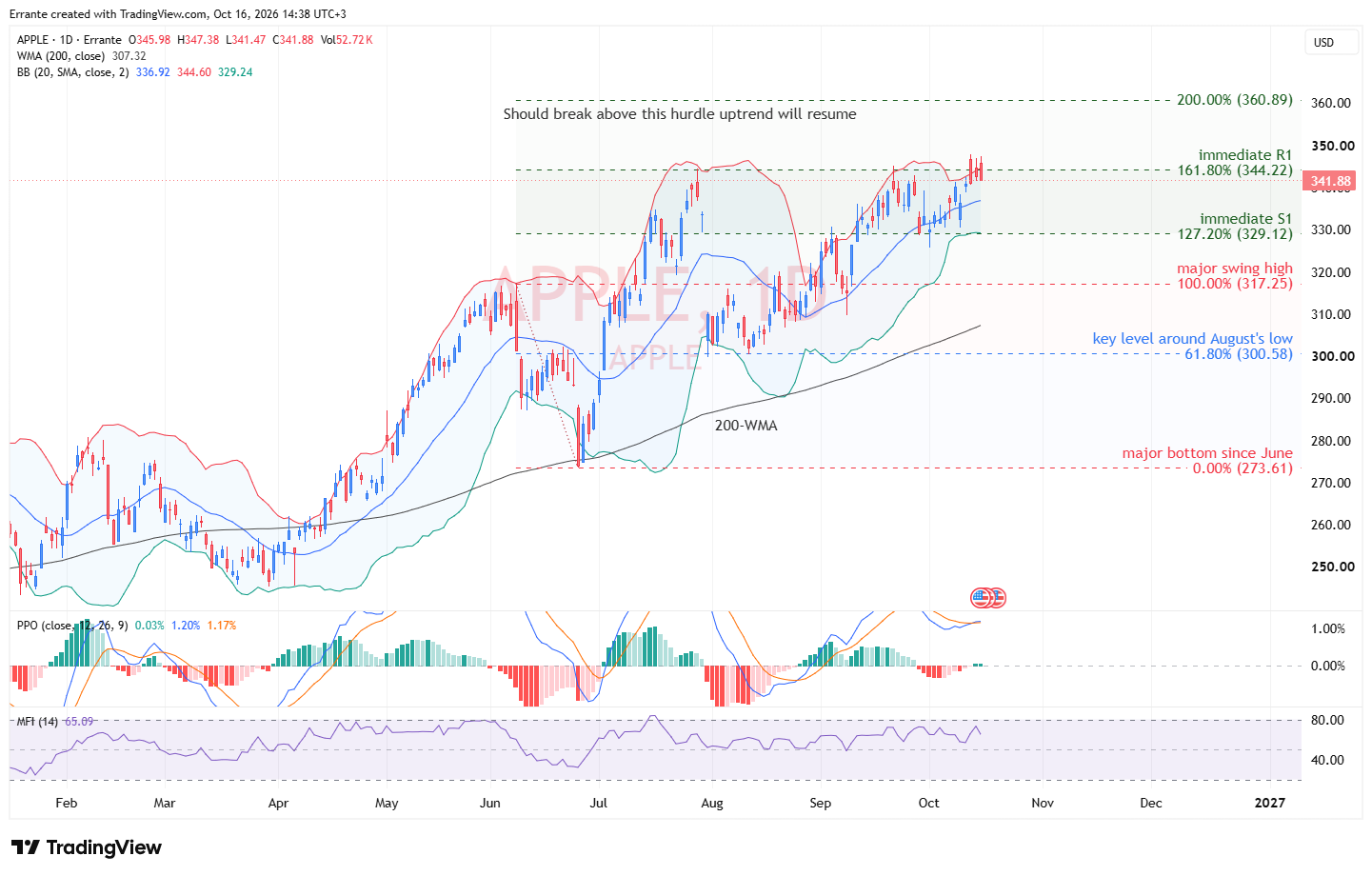
The visible Fibonacci grid uses $273.61–$317.25 as its reference swing.
Momentum supports continuation, but without strong acceleration. The PPO is marginally above its signal line, with a small positive histogram. The Money Flow Index near 65 indicates positive participation without reaching its conventional overbought threshold.
Price recently tested the upper Bollinger Band around $344.60, then moved back inside it. That signals resistance; it does not independently confirm a reversal. Volume on this broker feed should also be treated cautiously when assessing institutional participation.
Apple retains a constructive trend, but current resistance requires confirmation. A close above $350 would strengthen the continuation case; a break below $329 would shift attention toward a deeper correction.
Educational Point
Good company news supports further upside when it improves expectations beyond what the share price already reflects. Apple’s next test is whether product enthusiasm becomes stronger revenue and sustainable margins and whether price can hold the resulting breakout.

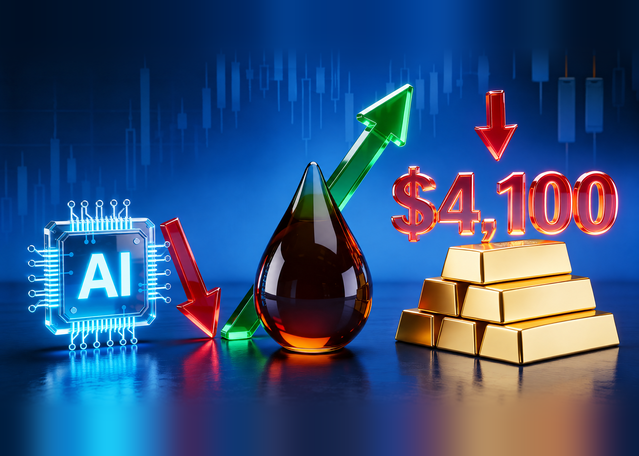
Weekly Market Recap and Forecast: AI Stocks Face Renewed Pressure as Oil Prices Surge, Gold Falls Below $4,100

EURUSD failed to break through the French barrier

Week Ahead – Central bank and earnings bonanza could roil markets

Tech selloff weighs on dollar as Treasury yields tumble

Bitcoin: all eyes on the next move

EBC Markets Briefing | Crude market on a roll as US prepares for new attacks

Brent Crude Climbs Above $114 as US–Iran Tensions Revive