-1162026812.png)
-1162026812.png)





Bitcoin Falls Behind as the S&P 500 Charges Towards New Records

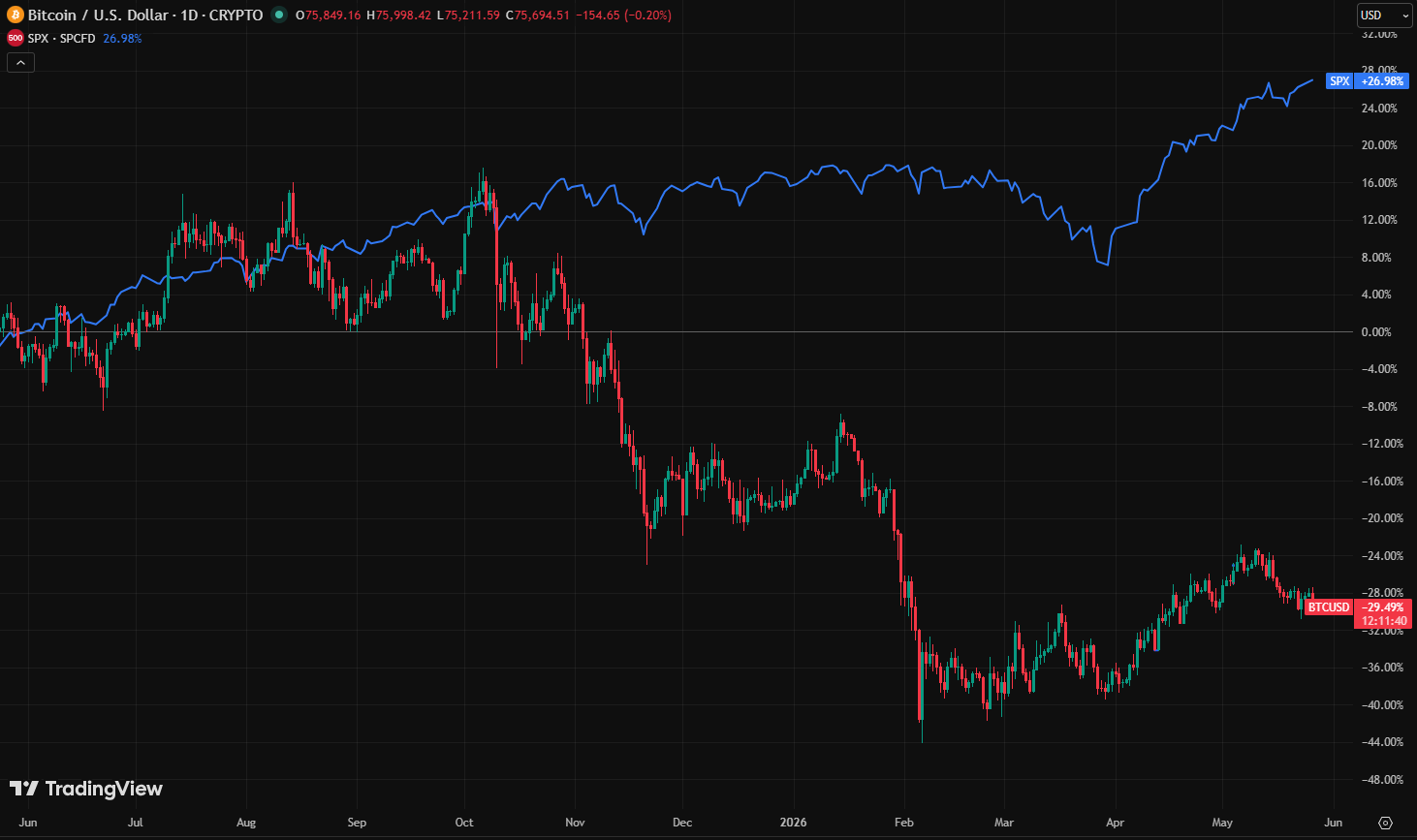
Since October 2025, Bitcoin has markedly underperformed the S&P 500, with the performance gap now exceeding 55%. At first glance, that appears rather counterintuitive: Bitcoin has long been regarded as a more aggressive risk asset, one that ought to outperform equities during periods of improving liquidity and stronger market sentiment. Yet the present market structure suggests quite the opposite. Capital continues flowing overwhelmingly into American equities — particularly large-cap technology and semiconductor shares, which are effectively pulling the indices higher almost single-handedly. The S&P 500 continues setting fresh record highs with astonishing regularity, creating the impression of an almost perpetual upward march driven by the AI boom, corporate earnings growth, and relentless institutional inflows.
The principal reason for this divergence lies in the fundamentally different nature of the current rally. The advance in the S&P 500 is being underpinned by exceptionally strong corporate earnings, aggressive share buybacks, upward revisions to EPS forecasts, and an enormous investment cycle surrounding artificial intelligence. Semiconductor firms in particular continue attracting extraordinary enthusiasm, as markets increasingly regard them as the foundation of future AI infrastructure. Bitcoin, meanwhile, is operating in a rather different environment: spot trading volumes have declined sharply, retail participation has weakened considerably, and the broader crypto market has become far more sensitive to movements in the dollar, bond yields, and geopolitical tensions. In essence, equities today are rising upon tangible profitability and cash flow, whereas digital assets remain heavily dependent upon liquidity conditions and broader risk appetite.
More importantly, Bitcoin has thus far proved incapable of sustaining the same “perpetual growth mechanism” currently visible within the US equity indices. The latter benefit from an immense concentration of institutional capital: vast sums continue flowing automatically into the largest companies through ETFs, passive investment vehicles, and index-tracking strategies. The crypto market functions rather differently — it remains considerably more emotional, more volatile, and far more sentiment-driven. Consequently, Bitcoin’s present underperformance does not necessarily signal the end of the longer-term bullish cycle, though it does clearly demonstrate that market leadership during this phase belongs firmly to American equities rather than digital currencies.


Today Fundamental Analysis: Oil Breaks Above $102 as Middle East Tensions Continue to Escalate

Today Technical Analysis: Copper Approaches Record Highs on Surging Demand

Dollar struggles to gain ahead of US inflation data, yen extends rally

EBC Markets Briefing | Crude prices on solid footing amid deep supply concerns

The yen is strengthening before our very eyes

The Inflation Measure Keeping the Fed Cautious

US Yields Rise Despite Buybacks; Eyes on ECB Hike