-1162026812.png)
-1162026812.png)





Capital Is Leaving Crypto for Artificial Intelligence

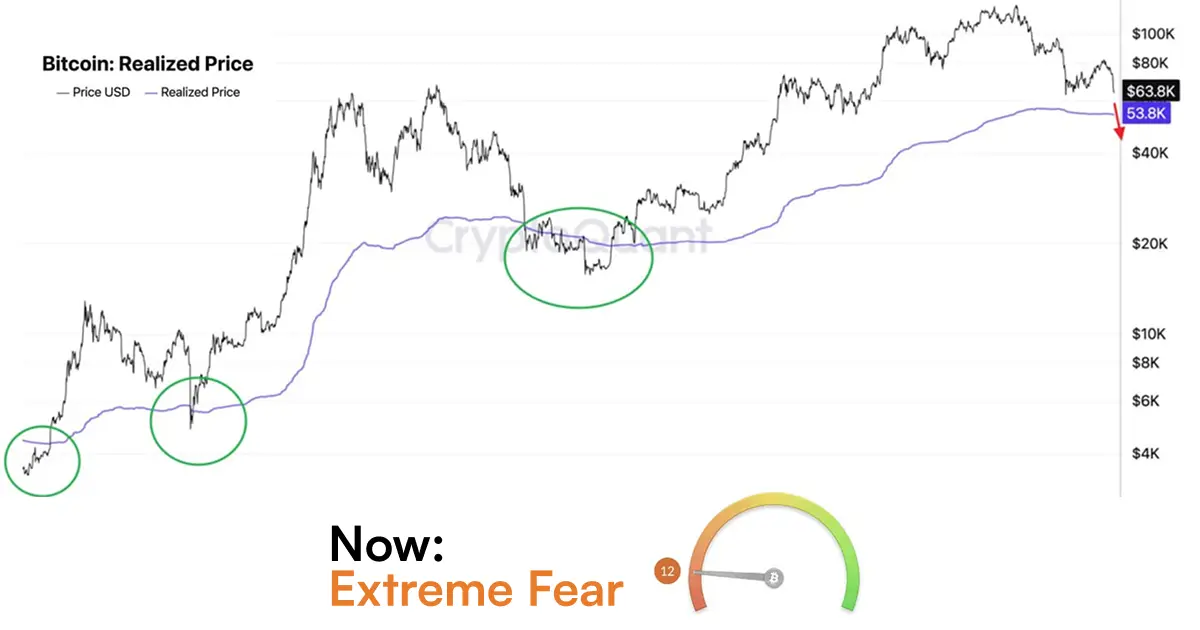
The aggregate average breakeven level for all categories of Bitcoin market participants currently stands at $53,800.
Historically, major market bottoms have tended to form only after the price has fallen below the aggregate breakeven level. This is typically the zone where widespread liquidations and forced selling occur, providing the sort of market cleansing that has historically been necessary before a genuine reversal can take hold. Only after such periods of capitulation has the market generally been capable of establishing a durable recovery.
Over the past few weeks, a portion of capital has been reallocated from Bitcoin and other digital assets into shares of companies operating within the artificial intelligence sector.
Bitcoin’s weakness stands in rather stark contrast to the recent strength of equity markets. The day before yesterday, on Tuesday, the NASDAQ-100 reached a fresh record high, underlining the widening divergence between Bitcoin and technology shares. Until fairly recently, many investors regarded Bitcoin as something of a proxy for the technology sector. However, that relationship has weakened considerably since the market correction that began in October of last year.
This rotation has gathered pace as capital continues flowing into companies associated with artificial intelligence. Over the past twelve months, the NASDAQ-100 has risen by 41.5%, whilst Bitcoin has declined by 37% and now trades 48% below last year's peak. On a shorter horizon, Bitcoin's performance is even more striking – with losses of 21.3% over the past month and 15.45% over the past week.
At present, AI appears to offer a more compelling risk-reward proposition than cryptocurrencies, prompting some investors to reconsider the balance of their portfolios.
Currently, cryptocurrencies are also suffering from a lack of any sufficiently powerful catalyst capable of materially altering the market narrative. Price action has become increasingly constrained by liquidity conditions and the broader economic backdrop. At the same time, several planned flotations involving cryptocurrency-related businesses have reportedly been postponed, whilst companies linked to artificial intelligence continue attracting substantial investment and sustaining market enthusiasm. In the current environment, cryptocurrencies appear to be losing the battle for liquidity to a series of highly anticipated AI-related initial public offerings.


THE US BOND YIELDS SURGE AS POLICY RISKS COLLIDE💥

Canadian Dollar Shrugs Off Tariff Shock as Markets Focus on Bigger Risks

Week Ahead: Gold, Jobs Data and Fed Policy Shape September Markets

Today Fundamental Analysis: Oil Extends Gains for a Second Day as US-Iran Tensions Escalate

S&P 500 Retreats as Oil Surge Revives Inflation Fears

Today Technical Analysis: Gold Slides Further on US Dollar Strength, While Silver Remains Resilient

Nikkei 225 Rebounds as Investors Weigh Policy Risks