





Dollar retreats as oil slump eases Fed hike bets

Bessent says Hormuz deal is on the cards
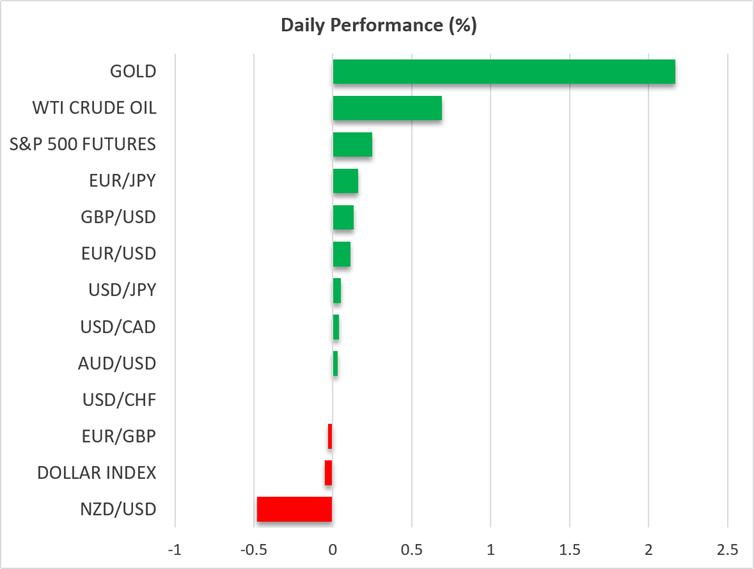
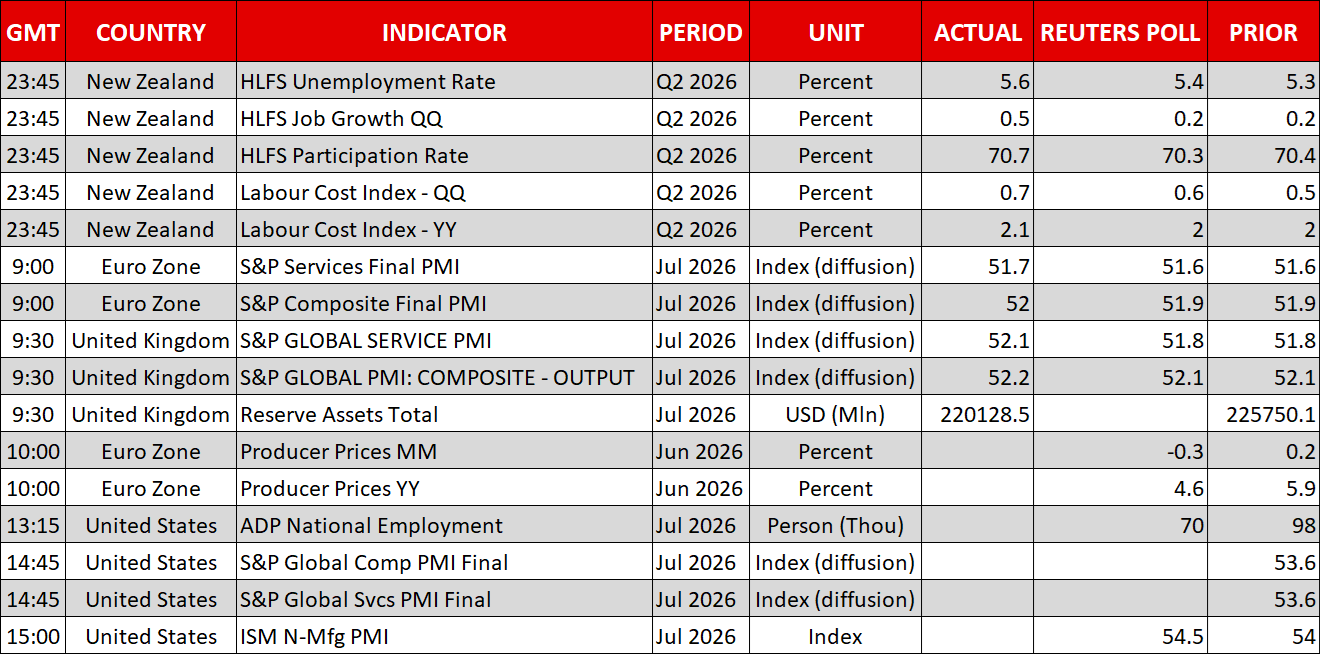
The US dollar lost ground against most of its major peers on Tuesday, staying in recovery mode only against the yen and the loonie. Today, the greenback is stabilizing somewhat, gaining significantly only against the kiwi, as overnight data showed that New Zealand’s unemployment rate unexpectedly rose in Q2.
The retreat in the US dollar was the result of another slump in oil prices amid optimistic remarks about the Middle East from US Secretary Scott Bessent. Talking to CNBC, Bessent said “there is a chance we may have a deal today or tomorrow” on Hormuz adding that talks about ending the conflict will follow. Oil prices dropped another 6% on hopes of an imminent reopening of the strait, further easing inflation fears and prompting investors to scale back their rate hike bets.
Fed hike bets ease; ADP and ISM services in focus
Indeed, according to Fed fund futures, the probability of a quarter-point hike by the Fed in September has dropped to 55% following the news, while an October move, from being fully priced in, now receives an 80% chance.
Today, the focus will fall on the ADP private employment report, which could serve as a gauge for Friday’s NFP, as well as on the ISM services PMI as non-manufacturing activity accounts for nearly 90% of US GDP. The prices subindex may attract special attention as a strong acceleration in prices may increase the probability of a September hike and thereby allow the US dollar to recover some ground.
Yen on the back foot again after intervention-related rally
The yen gave back a decent portion of the gains it posted on Thursday, Friday and Monday, after the coordinated intervention by Japan and the US, with dollar/yen rebounding around 1.6% from its Monday low.
That said, today, the pair is trading more cautiously as US Secretary Bessent said he believes Bank of Japan Governor Ueda will “do what is best” for the country’s economy, implying that higher interest rates are the wisest strategy as a declining yen increases inflation risks.
Combined with remarks by a former BoJ official that more intervention episodes could occur if the yen shows signs of weakness, Bessent’s remarks could limit further upside in the yen. However, with 85bps worth of BoJ increases being priced in by the end of 2027, it may be hard to envision the BoJ turning even more hawkish, especially with PM Takaichi opposing rate hikes and having the ability to tilt the scales to the dovish side through future appointments within the Board.
Wall Street at record highs; gold rebounds on easing Fed hike bets
On Wall Street, all three indices extended their gains, with the Nasdaq gaining the most once again, but the S&P 500 and Dow Jones reaching fresh record highs. The increasing optimism about the reopening of the Strait of Hormuz amid Bessent’s remarks, combined with strong earnings results by several chipmaking and AI firms, prompted investors to increase their risk exposure. It is worth noting that the Philadelphia Semiconductor Index rose around 6% yesterday.
Stock futures are also in the green today, but they point to a slowdown following yesterday’s rally. Perhaps this is due to aftermarket declines in SpaceX and AMD. Elon Musk’s rocket maker beat revenue and loss estimates, but pointed to higher AI-related spending, while AMD’s strength may have already been priced into the market.
Gold is rebounding strongly today amid the retreat in Fed hike bets, and thereby in Treasury yields and the US dollar. That said, the precious metal remains below the key resistance zone of $4,200, which marks the upper bound of the range that’s been intact since late June. Thus, for the outlook to start looking bullish a decisive break above that zone may be needed.


Today Fundamental Analysis: Oil Breaks Above $102 as Middle East Tensions Continue to Escalate

Today Technical Analysis: Copper Approaches Record Highs on Surging Demand

Dollar struggles to gain ahead of US inflation data, yen extends rally

EBC Markets Briefing | Crude prices on solid footing amid deep supply concerns

The yen is strengthening before our very eyes

The Inflation Measure Keeping the Fed Cautious

US Yields Rise Despite Buybacks; Eyes on ECB Hike