





Dollar slides on easing Fed hike bets, yen mixed after weak GDP

Dollar plunges to 10-week low
The US dollar started the new trading week on the backfoot, extending Friday’s slide following an unexpected drop in retail sales. American consumers cut back on retail spending for the first time in nine months, as sales declined by 0.6% month-on-month in July, missing forecasts of a 0.1% increase. The core control group measure that goes into GDP calculations contracted for the first time since September 2025, suggesting sticky inflation is finally taking a toll on consumption.
More importantly, the weak data comes on the back of the surprise drop in July payrolls and the soft CPI report, slashing the probability of the Fed hiking interest rates in September to just over 30%. The Fed is now seen raising interest rates just once over the next 12 months – a sharp scaling back of expectations from a few weeks ago.
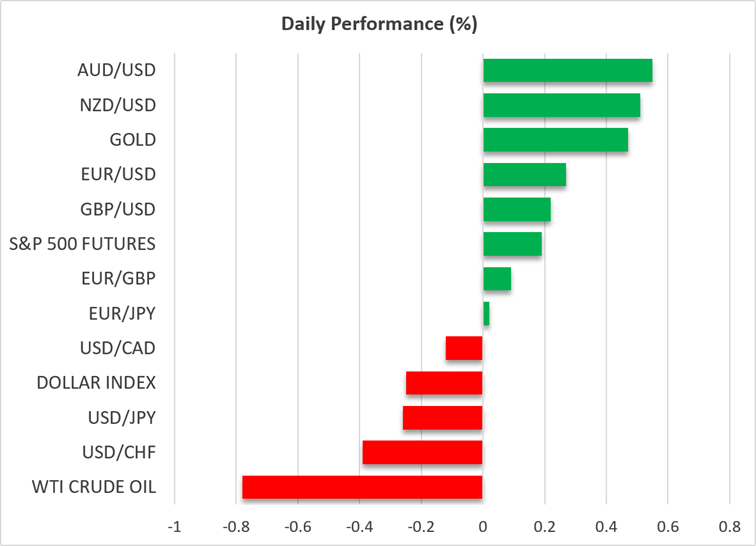
The dollar, which has been struggling since the July FOMC meeting, came under renewed selling pressure, plunging to more than 10-week lows against a basket of currencies.
Fresh concerns about the Fed’s independence, amid reports that Trump is in regular contact with Fed Chair Kevin Warsh and that the President is not letting go his attempt to fire Governor Lisa Cook, are also weighing on the greenback.
Furthermore, with the soaring budget deficit coming back to haunt Treasury markets, pushing up yields in the latest auctions for Treasury notes, the dollar seems to have lost its post-Iran war shine.
Yen breathes a sigh of relief
This can only be good news, however, for the beleaguered Japanese currency, as the yen is appreciating for a second day against the US dollar, even as expectations for a September rate hike by the Bank of Japan are also pared back today.
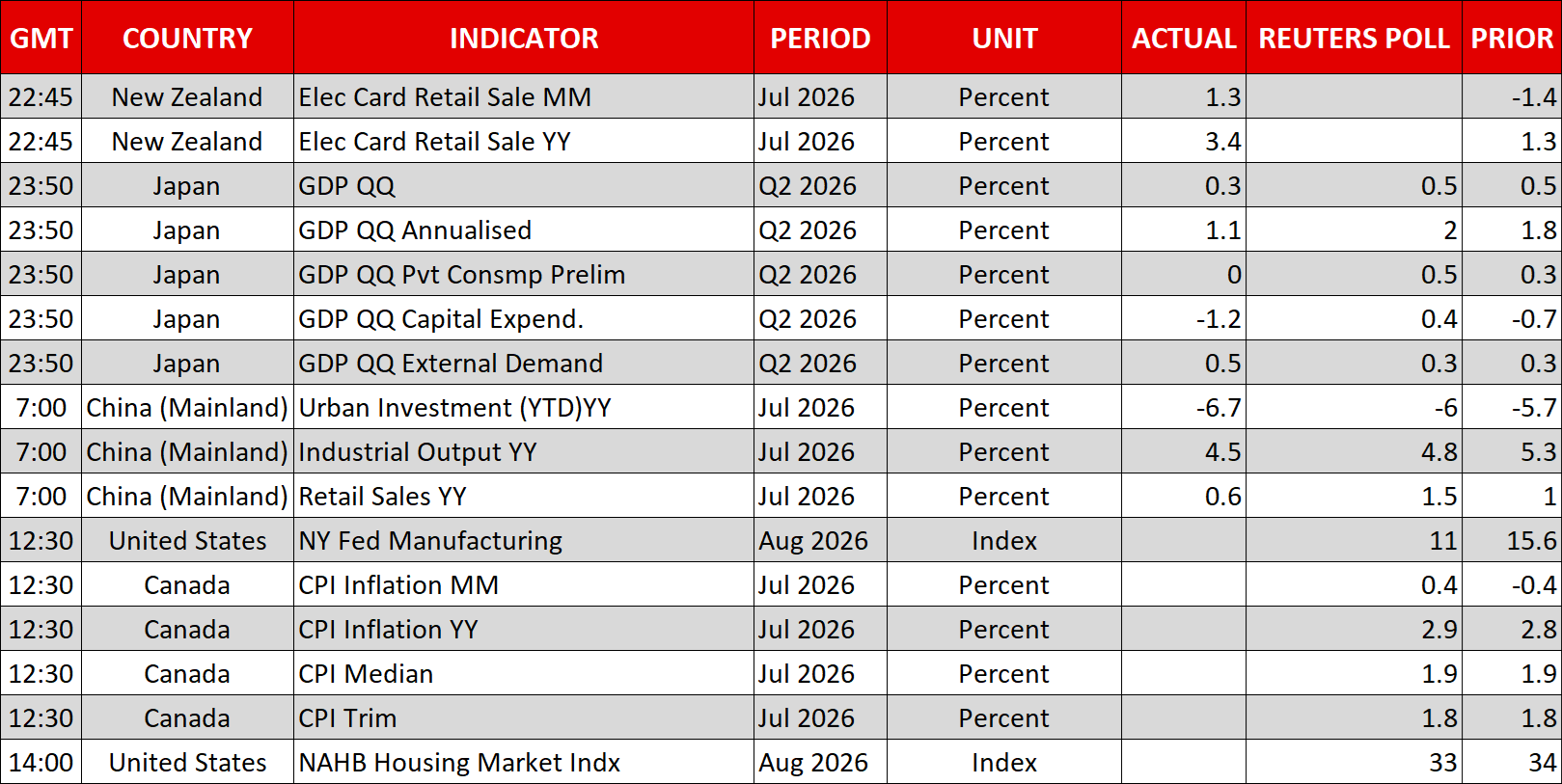
Japan’s economy grew by a less-than-expected 0.3% q/q in the second quarter, as private consumption failed to grow and capital expenditure declined for a second straight quarter.
September tightening bets fell back, but only slightly, with the BoJ still expected to lift interest rates by 100 basis points by the end of 2027.
Japan’s 10-year yield continued to rise on Monday, reaching a fresh 30-year high of 2.92%. In the meantime, US yields appear to have peaked and this is supporting the yen against the greenback, taking the pressure off intervention, at least in the immediate term.
The yen is testing the 159 per dollar level today, though it’s trading lower against other majors.
In other currencies, the Australian dollar rallied above $0.71 for the first time since early June, shrugging off disappointing data out of China.
Gold’s new lease of life
The weaker dollar is also boosting gold, which is back near the $4,400 mark today. Amid some signs of a return of the de-dollarization trade and Fed rate hike bets being trimmed, gold and other precious metals have made a comeback in August.
However, whether gold will be able to crack the next major resistance at $4,500 will likely depend on what happens next in the Middle East.
Trump ups ante on Iran as oil fluctuates
Oil prices are fluctuating between losses and gains today, with both WTI and Brent crude futures holding not too far from last week’s highs, as investors await updates on efforts to revive stalled talks between Tehran and Washington.
The lack of progress seems to be frustrating President Trump, who is pursuing new measures to increase Iran’s economic isolation as per comments by Treasury Secretary Scott Bessent.
Trump is also threatening to declare the Strait of Hormuz as “a territory of the United States”, as tensions flare between the two nations.
Meanwhile, fighting between Israeli and Hezbollah forces intensified in Lebanon over the weekend and tankers in the Hormuz Strait continued to come under attack.
Yet, oil prices are holding steady, failing to advance any higher, as the oil supply disruption is proving to be less severe. According to Bloomberg, producers in the region are shuttling as much as 9 million barrels of oil per day out of the strait – almost half the 20 million barrels a day that used to be exported prior to the conflict.
In the absence of any major developments, equities lacked direction at the start of the week, in what is shaping up to be a quiet few days amid the summer lull and light economic agenda in the US.


Brent has soared above $100. Is this just the beginning?
Today Fundamental Analysis: Brent Holds Around $100 Amid Fresh US-Iran Escalations

S&P 500 Stepped From Record Highs, but Market Breadth Is Flashing a Warning 💥

Bitcoin: the golden cross signals an uptrend, but not right away

US Inflation Data and Elevated Asset Valuations — Nasdaq, S&P 500 and Gold

China50 Tests 14,600 Resistance as Investors Await Inflation Data

Dollar slips, yen surges as Middle East tensions escalate