





Dollar slips, yen surges as Middle East tensions escalate

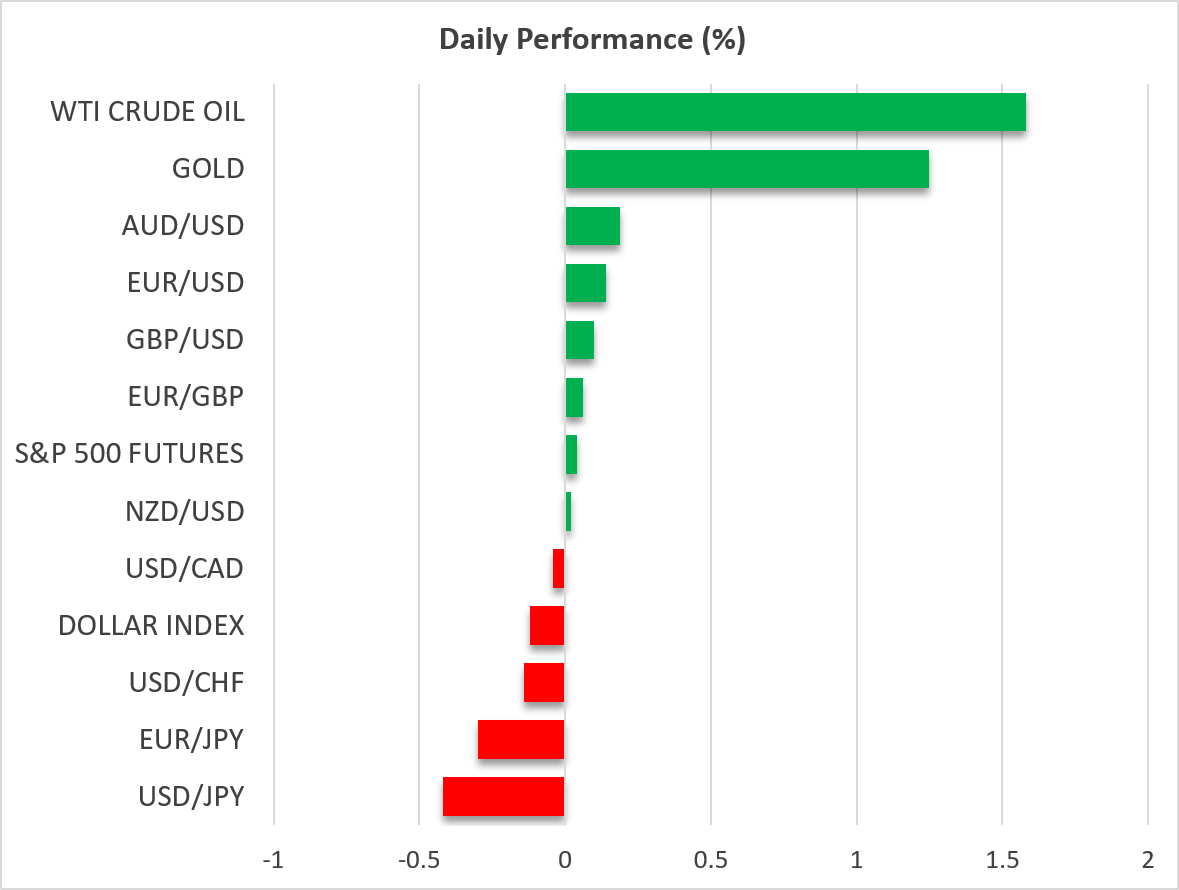
Oil rally persists
While investors are gearing up for Thursday’s and Friday's busy US schedule, with the CPI release standing out, the Middle East has returned to the forefront. Following the skirmishes between Saudi Arabia and Houthi rebels, which are affecting oil supply, Iran attacked overnight US military bases in the region and 18 vessels trying to cross the Strait of Hormuz, prompting a response from US forces. Iranian ships near Kharg island were targeted, confirming that there is very little appetite from both sides for an agreement.
WTI spot oil edged higher yesterday, reaching a fresh three-month high, but is trading sideways today. It is still hovering a tad below the $94.98-$95.51 region, which, if broken decisively, would pave the way for the first triple-digit price since May 22, maintaining the current short-term bullish trend in place since the early-July low.
Dollar under pressure
Interestingly, the US dollar has failed to capitalize on the Middle East developments, upsetting the traditional risk-off nature of the greenback. This is an extremely odd reaction, since higher oil prices could potentially make next week’s Fed meeting decision easier. A persistent rally in oil prices, coupled with the 10-year US Treasury yield rising above the current level of 4.8%, may decisively tip the balance in favour of a rate hike and a hawkish stance going forward.
Instead, euro/dollar is rising today, testing the resistance set by the 200-day simple moving average (SMA) and attempting to break the current range-trading. Similarly, dollar/yen has dropped towards 153, the lowest level since mid-February, without any indication, so far, of an intervention or rate-check from the BoJ and/or the Fed.
A possible explanation for this dollar underperformance could be placed in central bank rate expectations. Investors might feel that both the ECB and the BoJ have the capacity to be more hawkish, at this stage, compared to the Fed. And this argument has merit, especially in the case of the ECB. A hawkish hike is the minimum expectation for tomorrow’s meeting, thus increasing the possibility for disappointment should Lagarde fail to confirm these expectations, which could put the euro under pressure.
Yen move is becoming overstretched
Investors have been gradually becoming more hawkish about the BoJ, but, unlike the ECB, Governor Ueda and his colleagues have repeatedly failed to decisively tighten their monetary policy stance so far during 2026, with interest rates remaining at 1%, above only the SNB rate. The current yen gains appear to be stretched, mostly fueled by the unwinding of the carry trades.
US Treasury Secretary Bessent has been instrumental in the yen rally, which is welcomed by Japanese officials, but his comment that “he has information and good insight into what the BoJ and policymakers will do” is raising some critical questions. Has the BoJ informed the Fed and the US Treasury about its intention to hike next week? Since this is not the standard practice, has the Treasury demanded to be kept in the loop, essentially giving its approval for another rate hike?
Weak risk appetite
US equity indices continue to flounder, posting another red session on Tuesday. Geopolitics, split chances of a Fed rate hike, and the increased Treasury yields appear to be strong headwinds, currently overpowering the positive impact of AI and the prevailing US growth momentum.
Crucially, tariffs are also back in the spotlight as Trump seems to re-adopt his familiar rhetoric, which contributed to his 2024 election win, about addressing the significant trade deficits. Oddly, dollar/loonie is ignoring the latest announcements from the US administration about further Canadian goods facing the 50% tariff, reacting to Canada’s counter tariffs commenced today.
Finally, gold is edging higher today, bouncing overnight off the fresh floor at $4,400. The precious metal is taking advantage of the dollar’s weakness, but it needs a break above $4,536, the 200-day SMA, for the current range-trading to end. All eyes are on Thursday’s US Treasury buyback operation and the 30-year auction.

Today Fundamental Analysis: Oil Breaks Above $102 as Middle East Tensions Continue to Escalate

Today Technical Analysis: Copper Approaches Record Highs on Surging Demand

Dollar struggles to gain ahead of US inflation data, yen extends rally

EBC Markets Briefing | Crude prices on solid footing amid deep supply concerns

The yen is strengthening before our very eyes

The Inflation Measure Keeping the Fed Cautious

US Yields Rise Despite Buybacks; Eyes on ECB Hike