






Dollar strengthens despite fading Fed hike bets

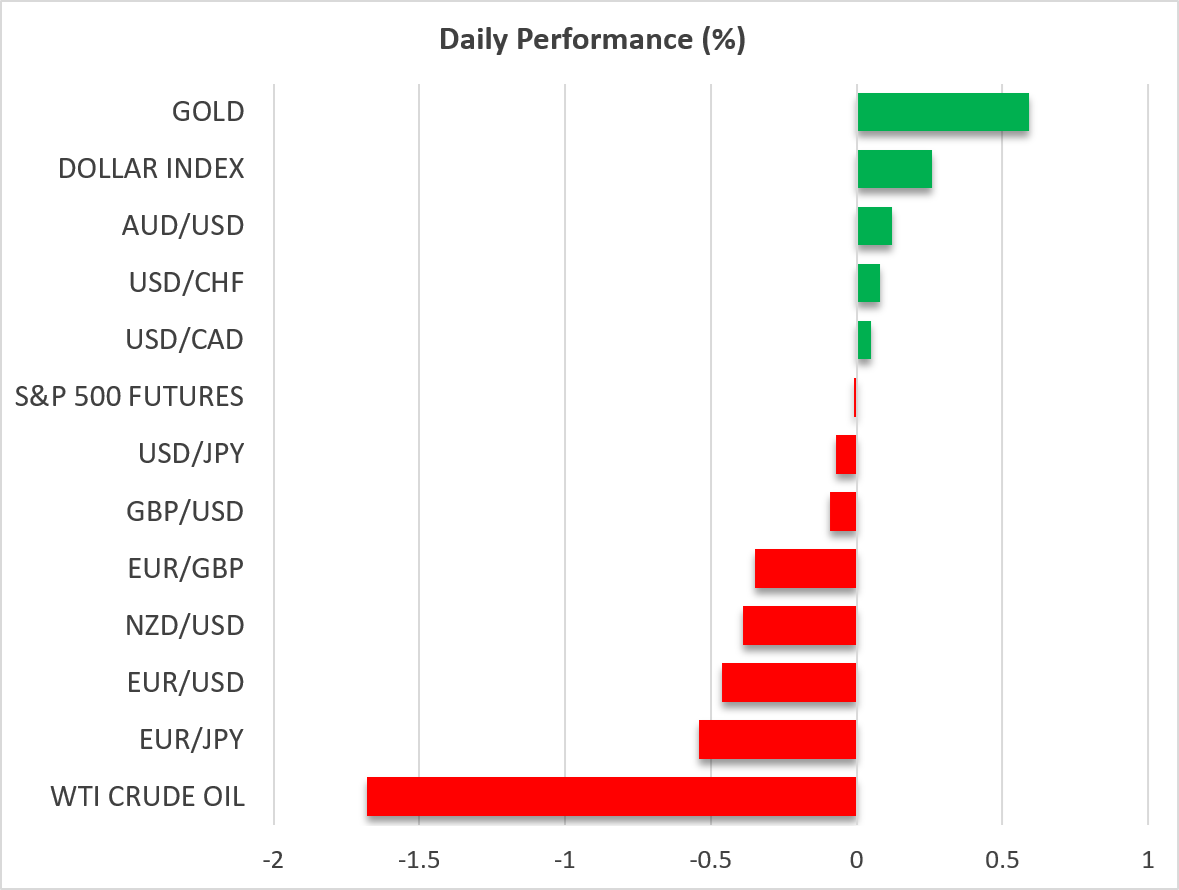
Equities are wobbly after Friday’s gains
Risk appetite appears to be slipping in the early part of today’s session following a solid end to last week. Most US equity markets have started October on the front foot, with the Nasdaq 100 index reaching a fresh all-time high on Friday, also dragging the S&P 500 index higher. On the other hand, the Dow Jones 30 index remains firmly in a short-term downward trend, clearly reflecting angst about the rising US sovereign yields.
The reason for the latest upleg in equities was Friday’s soft US labour market data, which appears to have pleased investors more than disappointed them. The September nonfarm payrolls report produced a significant downside surprise, the August number was revised lower by 29k, and the annual growth of average earnings dropped to the lowest rate since May 2021.
Essentially, equity investors reacted positively to the adjustment in the October Fed rate hike chances, as the jobs data were not soft enough to create concerns about the health of the US economy. The probability of a 25bps move in three weeks’ time has crashed from 70% on September 28 to just 20%, effectively shifting the focus to the December meeting for the next rate move. To be fair, a back-to-back rate hike would have needed specific conditions i.e. a persistent oil rally and Fed Chair Warsh’s determination to announce a hike just one week before the critical midterm elections.
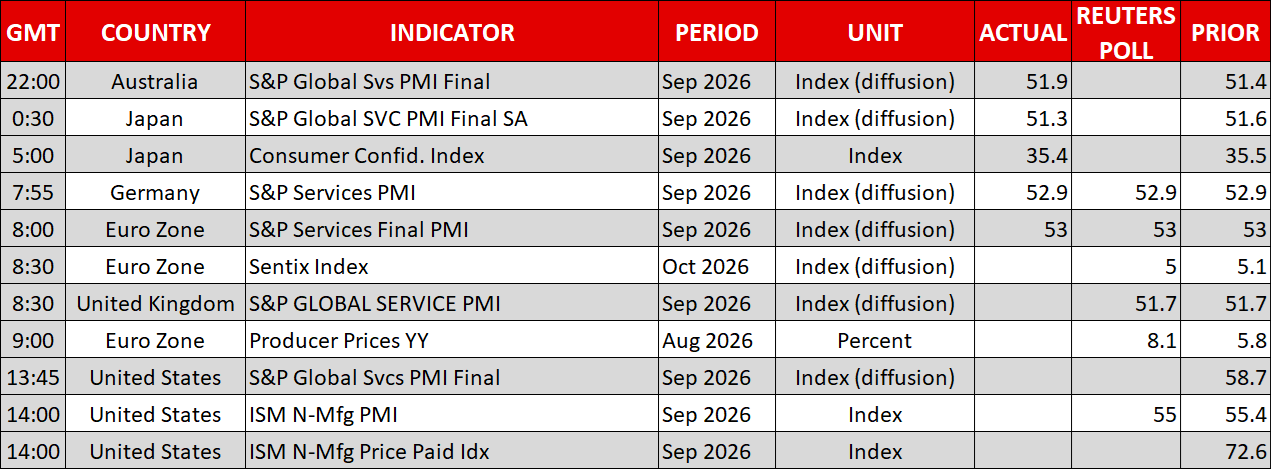
The focus today shifts to the heavyweight ISM non-manufacturing PMI survey, and particularly the usual prices paid and new orders subindices. The equivalent subindices in last week’s ISM manufacturing PMI increased. A similar print today, pushing the prices paid subindex near late-2022 highs, could marginally bring the October rate hike back into play.
Chicago Fed President Goolsbee was the first one to comment after the soft nonfarm payrolls report, opening the door to a pause, confirming the October market expectations, and further raising the importance of incoming data and the developments in the Middle East. Interestingly, Goolsbee is set to speak again later today, with a high chance of unscheduled Fedspeak, especially if the ISM non-manufacturing PMI posts a solid downside surprise.
Dollar rally persists
The reduced Fed hike expectations have not dented the US dollar’s appeal. Following a sizeable 2.5% gain against the euro in September, the greenback continues to strengthen. At the time of writing, euro/dollar is trading around $1.1190, near the lowest level since May 2025, with parity gradually returning to analysts’ minds, as both the eurozone political developments and elevated oil prices remain significant headwinds for the euro.
The release of 100 million barrels of oil and diesel over the next four months did little to improve sentiment, as the US and Iran remain at loggerheads over reopening the Strait of Hormuz, with President Trump repeating that he has to make a decision on Iran soon. At the same time, with German Chancellor Merz still under immense pressure as his CDU/CSU party is polling at just 20%, and the Spanish PM announcing a snap election in late-November, there is public unrest in France.
French PM Lecornu’s proposal for about €45bn in tax increases and spending cuts has fuelled demonstrations, with opposition parties clearly being against further austerity. French bond yields have taken notice though, with the 10-year yield trading well above Italy’s.
Gold and bitcoin seek stability
Gold and bitcoin’s gains upon the release of the soft nonfarm payrolls report proved very short-lived, with both assets sliding aggressively lower. The move was more impressive in gold’s case, as it quickly dropped to $4,125. The persistent strength in the dollar is keeping gold under pressure, despite repeated commentary from investment houses about the long-term attractiveness of the precious metal on de-dollarization and the ballooning US fiscal debt, both of which are not on investors’ minds at the moment.


GBPUSD Edges Towards 1.3463 as Traders Brace for the Bank of England Decision

Weak NZ Jobs Data Keeps NZDUSD Under Pressure

Gold buying by central banks has hit its highest rate since 2024.

Daily Technical Analysis: Gold Reclaims $3,900 After Hitting Its Lowest Level Since October 2025

Daily Fundamental Analysis: Wall Street Starts November on a Cautious Note Ahead of US Midterm Elections

Bitcoin tests key support as election uncertainty and tech sell-off weigh

Will gold climb back above $4,000?