





Dollar tumbles as US Treasury doubles bond buybacks

Dollar suffers as US Treasury announces buybacks
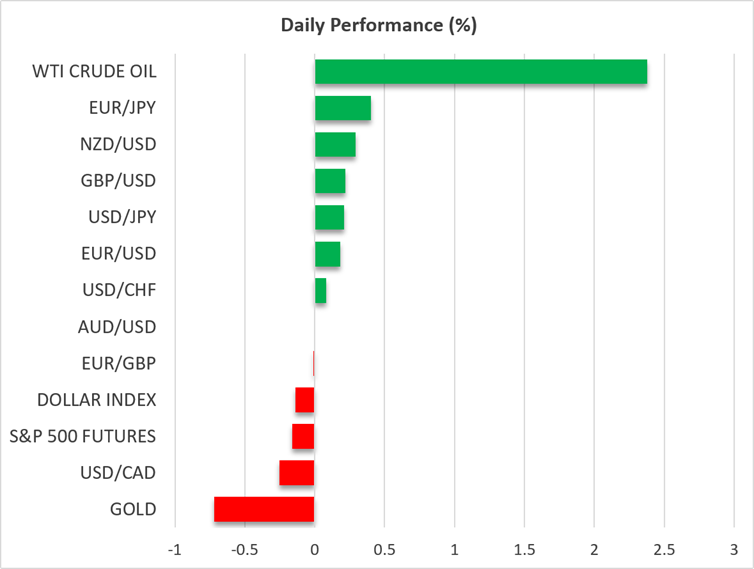
The US dollar fell sharply against all its major counterparts on Wednesday, losing the most ground against the Swiss franc. Today, the buck is stabilizing, gaining against some currencies, like the franc and the yen, but remaining on the back foot against the kiwi.
Following the latest streak of soft US data that prompted market participants to significantly scale back their Fed rate hike bets, what may have intensified the selling of the greenback was an announcement by the US Treasury on Wednesday that it will at least double the size of liquidity-support buyback operations for long-dated government bonds.
With investors abandoning bonds and inflicting upward pressure on yields perhaps due to the belief they deserve more compensation for fiscal, inflation and supply risks, the US Treasury may have stepped in to support the Treasury assets that were facing the greatest pressure.
Later in the day, the minutes of the latest FOMC decision showed that officials favored higher rates if inflation stayed elevated, but this did little to support the US dollar, as investors did not change their mind about the Fed’s future course of action. Perhaps because the hawkish view was expressed before the newer inflation and jobs data softened the outlook.
According to Fed funds futures, investors are still assigning only a 30% chance of a Fed rate hike in September, while they are factoring in only 35bps worth of rate increases by the end of 2027.
Gold extends rally amid reduced opportunity cost
Combined with the flattening of the implied Fed rate path, the further easing in financial conditions did not only push the dollar lower but also encouraged gold bulls to recharge.
The precious metal has seen a strong recovery from near the support zone of $4,000 lately, and Wednesday’s move took the price above the key zone of $4,435, which had been acting as a temporary ceiling since August 11. Gold closed Wednesday above the $4,500 zone, but today, it pulled back below it. Should the bulls decide to clear that hurdle, they may feel confident climbing towards the high of May 29, at around $4,600.
Middle East tensions linger
In the Middle East, negotiations between the US and Iran about reopening the Strait of Hormuz remained stalled. On Tuesday, US President Trump said that no talks were taking place after he threatened to strike Oman if the nation “gets in the way.” What’s more, the United Arab Emirates decided to halt economic and financial transactions with Iran, which further lessens the likelihood of a breakthrough.
The temporary ceasefire between the US and Iran expired on Monday, and although there have been military warnings since then, there were no reports of major hostilities. Maybe that’s why the market is not responding aggressively to Middle East headlines. As long as there is no actual military escalation, the tensions don’t seem to translate into fresh inflation fears and thereby renewed rate hike speculation.
Equity investors remain concerned about high valuations
Elevated Treasury yields and the uncertainty surrounding the Middle East had been weighing on Wall Street despite the downward recalibration of Fed rate hike bets. Rising yields are pushing up the discount rate applied to future cashflows of high-growth tech giants, thereby weighing on their present values (PV).
Although the Treasury’s decision to inject liquidity into the financial system encouraged some stock buying, stock futures are in the red today, with the Philadelphia Semiconductor Index turning lower again. It seems that investors remain concerned about AI valuations running too far ahead of expected profits, encouraging more profit-taking on big tech names and chipmakers.

Today Fundamental Analysis: Oil Breaks Above $102 as Middle East Tensions Continue to Escalate

Today Technical Analysis: Copper Approaches Record Highs on Surging Demand

Dollar struggles to gain ahead of US inflation data, yen extends rally
EBC Markets Briefing | Crude prices on solid footing amid deep supply concerns

The yen is strengthening before our very eyes

The Inflation Measure Keeping the Fed Cautious

US Yields Rise Despite Buybacks; Eyes on ECB Hike