-1162026812.png)
-1162026812.png)





Intel Broke a 26-Year Barrier as the Semiconductor Cycle Was On

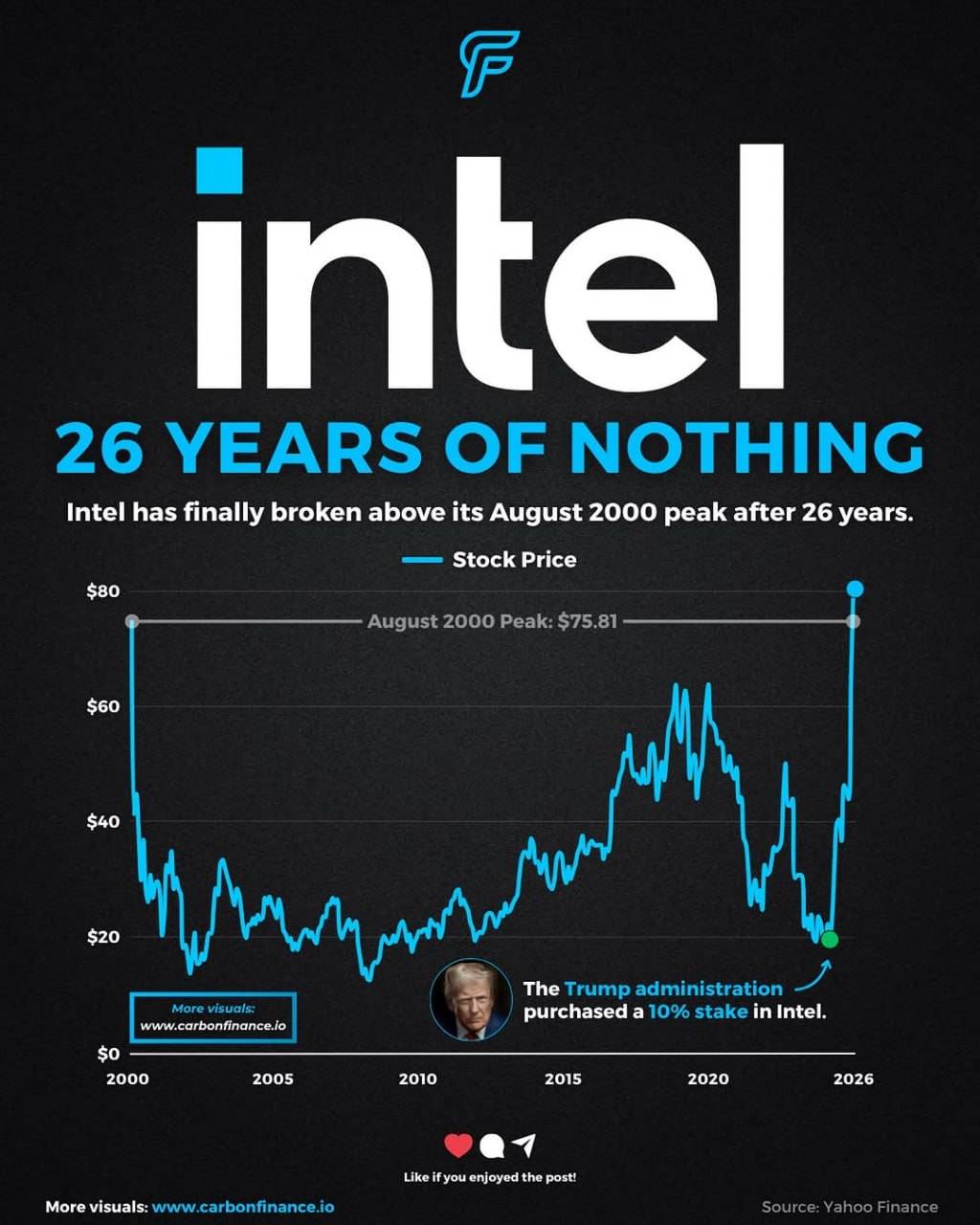
The +292% rise in shares of Intel over the past year, together with the break above its 2000 highs, is best understood as a long-overdue shift in market perception, rather than the result of a single catalyst. For over two decades, Intel had been viewed as something of a laggard, struggling to keep pace technologically and strategically. The breach of such a historic level suggests that investors are beginning to reassess the company — not as a legacy underperformer, but as a potential beneficiary of a new cycle.
The perceived involvement of Donald Trump may have provided an additional boost, as any suggestion of political backing for strategic industries — particularly semiconductors — tends to support sentiment. However, it is unlikely to account for the entirety of such a substantial move. Markets seldom re-rate companies by 200–300% on political developments alone; such moves are typically rooted in more fundamental, structural changes.
In this case, the key driver appears to be the emergence of a new semiconductor cycle. Demand from AI, data centers, defense, and broader digital infrastructure is reinforcing the view that the sector is entering a sustained period of growth. Against this backdrop, even previously underperforming firms are being revalued as leveraged plays on the industry. Should this narrative persist, further upside remains plausible — albeit with heightened volatility, as the market transitions from skepticism to more elevated expectations.


Today Fundamental Analysis: Oil Breaks Above $102 as Middle East Tensions Continue to Escalate

Today Technical Analysis: Copper Approaches Record Highs on Surging Demand

Dollar struggles to gain ahead of US inflation data, yen extends rally

EBC Markets Briefing | Crude prices on solid footing amid deep supply concerns

The yen is strengthening before our very eyes

The Inflation Measure Keeping the Fed Cautious

US Yields Rise Despite Buybacks; Eyes on ECB Hike