-1162026812.png)
-1162026812.png)





Iran Considers Conditional Access Through the Strait of Hormuz Amid Currency Shift Debate


According to many analysts, the pricing of oil in US dollars remains a cornerstone of the greenback’s role as the world’s primary reserve currency. The strength of the so-called “petrodollar” system rests squarely on oil being denominated in dollars. It is from this foundation that the United States—particularly under Donald Trump—has sought to secure influence over a substantial share of global oil flows.
Over the past seven years, countries across the Middle East have increasingly revisited the question of de-dollarisation. Saudi Arabia, for example, signalled its intention to “seriously reconsider” its longstanding support for the petrodollar framework and opened discussions with China regarding the possibility of pricing oil in yuan. Other nations in the region have likewise grown more vocal on the matter.
The result is a region under mounting strain. Venezuelan oil flows are already, to a large extent, under control; attention now appears to be shifting towards Iran.
At present, according to available reports, Iran is said to be seeking approximately $2 million per tanker for permission to transit the Strait of Hormuz.
What renders this development particularly noteworthy is not simply the logistical constraint, but the potential shift in pricing conventions. Should even a modest share of oil trade begin to settle in yuan, it would represent a gradual, yet meaningful, erosion of the dollar’s dominance in global energy markets. Such a transition would likely be uneven and protracted, but the direction itself is what carries significance.
From an investor’s standpoint, this introduces an additional layer of structural risk. Greater currency fragmentation in commodity trade could lead to heightened volatility in foreign exchange markets, increased transaction costs, and a reassessment of reserve allocation strategies among central banks. At the same time, energy-importing economies may seek to diversify settlement currencies as a hedge against geopolitical pressures.
In that sense, the issue extends well beyond the Strait of Hormuz. It speaks to the broader architecture of the global financial system—where energy, currency, and geopolitics remain closely and inextricably linked.
Iran may permit limited tanker passage through Hormuz, provided oil is traded in yuan—hinting at a potential shift away from the dollar-based system. This raises questions over the durability of the petrodollar, accelerating de-dollarisation trends, and adding fresh geopolitical pressure to global energy and currency markets.Trade smart with Headway

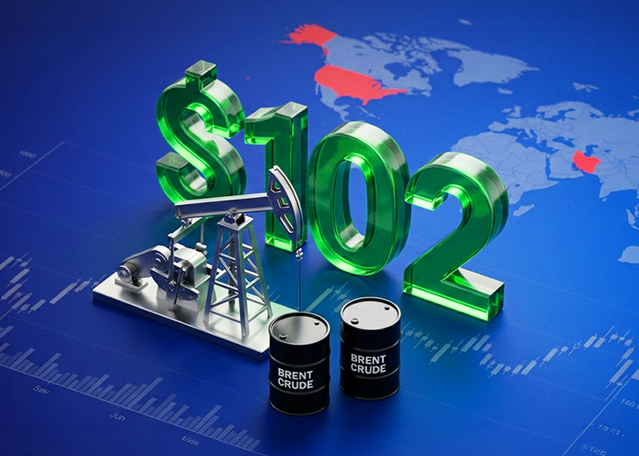
Today Fundamental Analysis: Oil Breaks Above $102 as Middle East Tensions Continue to Escalate

Today Technical Analysis: Copper Approaches Record Highs on Surging Demand

Dollar struggles to gain ahead of US inflation data, yen extends rally
EBC Markets Briefing | Crude prices on solid footing amid deep supply concerns

The yen is strengthening before our very eyes

The Inflation Measure Keeping the Fed Cautious

US Yields Rise Despite Buybacks; Eyes on ECB Hike