





Markets Split: Middle East De-escalation or Fed Hawkish Pause?

The financial markets this week are experiencing a unique dynamic: geopolitical relief is easing immediate fears, yet broader market positioning remains cautious. While short-term retail optimism rises on hopes of stability in the Middle East, larger market participants appear cautious about potential liquidity-driven reversals ahead.
As the Federal Reserve prepares for a highly anticipated policy decision, global markets are technically split:will the optimism from Middle East de-escalation drive a risk-on rally, or will the Fed’s liquidity constraints force a sharp reversal? This week, sentiment and fundamentals appear increasingly misaligned, creating conditions for elevated market uncertainty.
Global Macro Context: Geopolitical Relief vs. Monetary Reality
The global financial system enters the third week of June 2026 caught between two competing narratives:
On one hand, systemic tail risks appear to be moderating. Recent diplomatic progress in Switzerland has contributed to a rapid unwinding of the “war premium” that had been reflected in asset prices. Expectations of improved stability around key maritime routes, particularly the Strait of Hormuz, have provided a temporary psychological boost to equity markets while putting notable downward pressure on the energy complex.
However, this early optimism faces a major structural test mid-week: the Federal Reserve's monetary policy meeting. While declining oil prices may help lower headline inflation, recent economic data indicates that core inflation (Core PCE), which excludes volatile food and energy costs, remains stubbornly sticky.
The market generally expects the Fed to keep interest rates unchanged. However, the primary risk does not stem from the rate decision itself, but rather from the accompanying commentary, specifically the potential for a “Hawkish Pause.” If the updated Dot Plot indicates that policymakers intend to maintain elevated rates for longer and scale back expectations for cuts in 2026, the early-week relief rally could face a sharp reversal, impacting assets that are highly sensitive to global liquidity.
Multi-Asset Structural Perspectives
US Dollar (DXY): The DXY is undergoing a structural re-pricing. While a calmer international backdrop naturally reduces the safe-haven demand that supported the dollar in recent months, a persistent high interest rate environment in the US serves as a firm floor. A clear compression in major currency pairs suggests that market participants are awaiting a definitive policy signal before establishing a clearer direction. 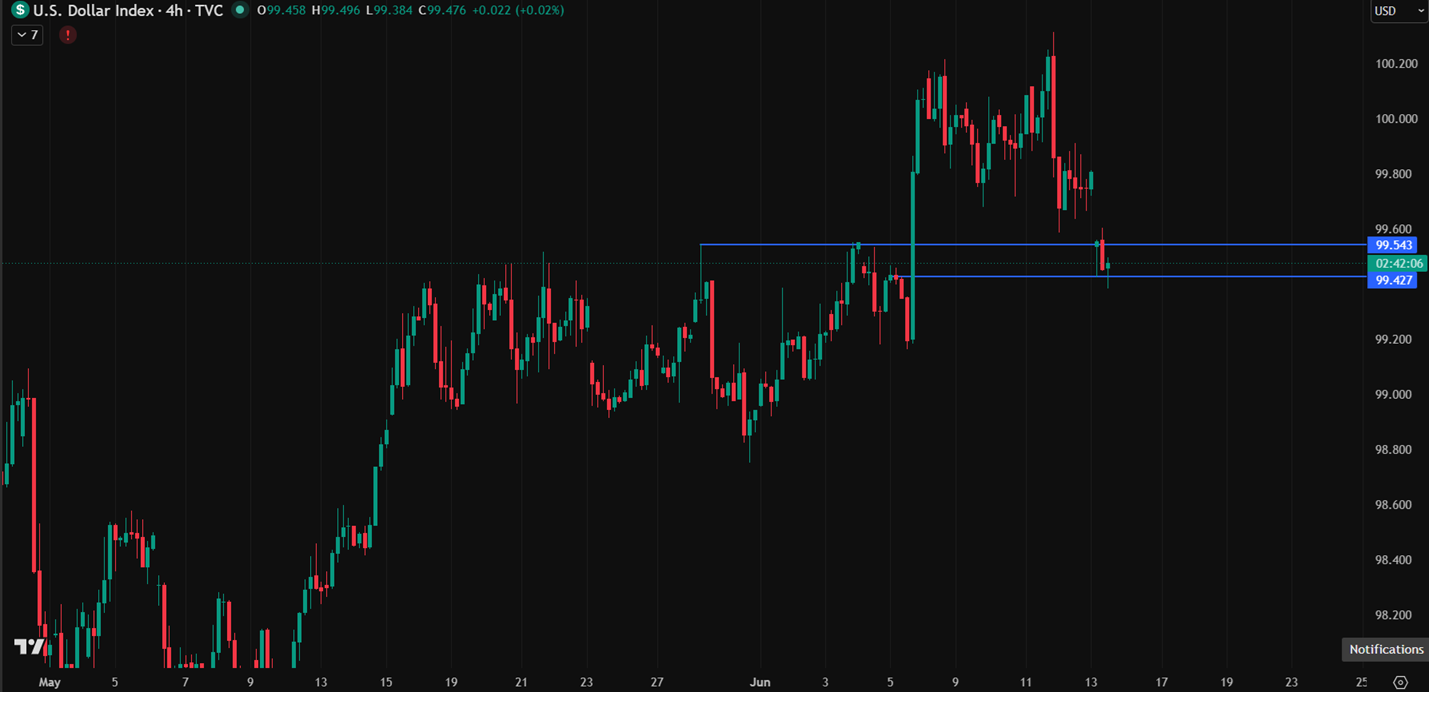
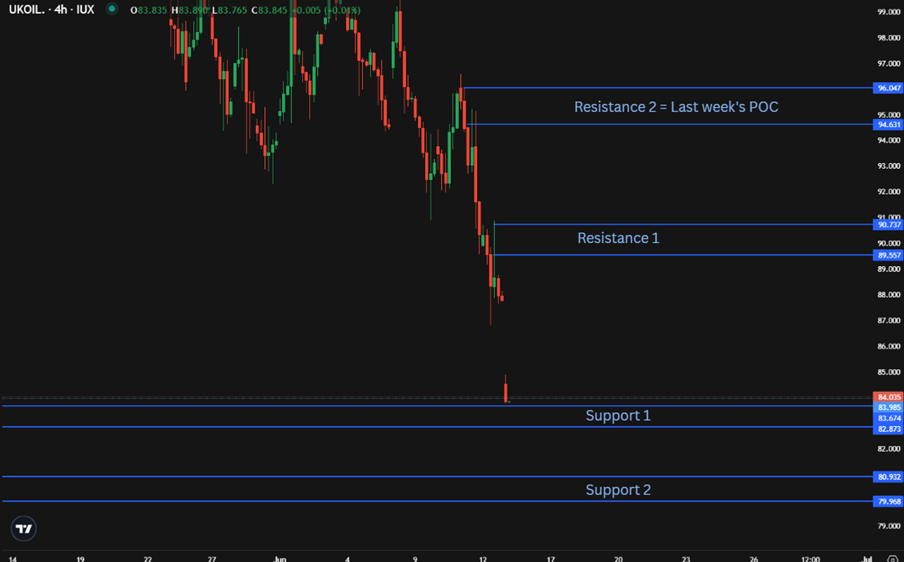
The Energy Complex (UKOIL): This sector feels the most immediate impact. As supply disruption anxieties and geopolitical risk premiums diminish, oil has experienced renewed downside pressure. The near-term trajectory of oil prices will likely depend on upcoming global industrial production data to confirm whether physical demand is sufficient to stabilize the market.
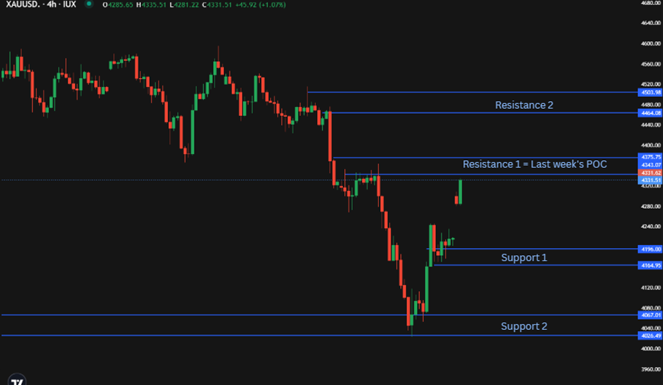
Precious Metals (XAUUSD): Gold has entered a corrective phase after a prolonged period of gains. As geopolitical tensions ease, prices appear to be reverting toward historical volume equilibrium zones. While gold remains a core long-term hedge, the absence of immediate geopolitical catalysts suggests the asset may require an extended consolidation period before institutional capital re-engages heavily.
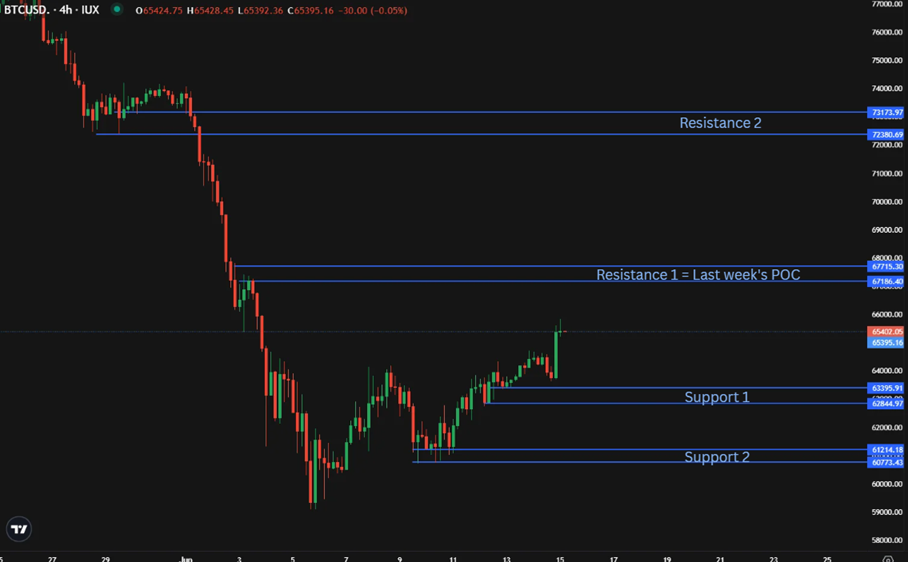
Digital Assets (BTCUSD): Bitcoin has shown a positive short-term recovery, temporarily acting as a leader in the broader risk-on sentiment. However, this upward momentum appears to be driven primarily by sentiment rather than structural liquidity. In the medium term, Bitcoin remains highly sensitive to global dollar liquidity. Its true test will come down to the ultimate market split: whether the geopolitical risk-on mood can survive a potentially restrictive Fed statement and high-tier economic data later in the week.
Key Takeaways for Traders and Investors
In a week defined by heavy data releases and shifting headlines, risk management remains particularly important given elevated uncertainty. Traders and investors may want to consider the following principles:
- Respect the Volatility Sequence: Consider the early part of the week as a phase for observation and positioning. Initial market reactions to geopolitical news can be short-lived and are often prone to reversals once central bank policy is clarified.
- Focus on the Core Data Cluster: Beyond the immediate central bank rhetoric, mid-week growth indicators (GDP) and core inflation metrics (PCE) will provide the actual fundamental parameters for the market. Relying on economic data rather than policy speeches generally offers a more reliable trend confirmation.
- Anticipate Potential Liquidity Traps: High-impact calendar weeks frequently exhibit volatile price movements that trigger stop-loss orders near major support and resistance boundaries. Waiting for additional confirmation rather than relying solely on intraday breakouts may help reduce exposure to false moves.


Fed Remarks Dampen Rate Hike Hopes Ahead of NFP Release

Gold’s Real Driver Is No Longer Fear, But Rate Expectations

Gold and Oil Rise as Central Bank Signals Drive Currency Markets | 3rd September, 2026

Gold Near $4,400 as NFP Data Tests Fed Rate Expectations

Gold Rallies Beyond Fed Expectations as Treasury Policy Shifts Market Focus

Gold Holds Above $4,300 as Yields Limit Upside Momentum

Global Markets Reprice Risk as Oil, Yields and Central Banks Collide | 2nd September, 2026