-482026738.png)
-482026738.png)





Oil Keeps Markets Alert as Supply Concerns and Fed Risk Collide

Oil prices eased modestly on Wednesday, but the broader market backdrop remains sensitive to both geopolitical developments and monetary policy expectations. WTI crude was trading near $93.83, down 1.398 points or 1.47%, while Brent crude slipped to $102.28 per barrel, offering temporary relief after a sharp rally driven by heightened tensions in the Middle East. Despite the pullback, the move appears to reflect a pause in momentum rather than a clear change in the underlying trend.
Supply-side risk remains a key pillar of support. The Strait of Hormuz, one of the world’s most important energy shipping routes, remains heavily constrained, while conflict in the Middle East continues to threaten oil infrastructure and regional export flows.
Escalating tensions remain a key support for oil prices, with Israel intensifying military activity and Iran renewing strikes on oil infrastructure in the United Arab Emirates. JPMorgan noted that current price stability may reflect short-term support from regional inventories and policy measures, but warned that any prolonged disruption to flows through the Strait of Hormuz could drive oil prices higher as supply conditions tighten.
Attention is also shifting to the Federal Reserve, which is widely expected to leave interest rates unchanged. Market participants are focused less on the rate decision itself and more on the Fed’s updated projections and policy guidance, particularly whether officials signal fewer or no rate cuts in the near term. The key issue is how policymakers interpret the latest oil shock.
If the Fed places greater emphasis on inflation risk rather than growth concerns, expectations could move in a more hawkish direction, potentially supporting the U.S. dollar and influencing commodity markets in the short term.
From a technical perspective, crude oil continues to trade within a broadly constructive structure despite the latest retracement. WTI remains near $93.83 after rallying sharply to a recent high of $119.43. Price is still holding above the 10-day moving average at $90.56, and well above the 20-day at $79.55 and 30-day at $74.23, suggesting that the broader uptrend remains intact.
Read more about how the Fed decision, the Strait of Hormuz, and key technical levels are shaping the outlook for oil in this article.

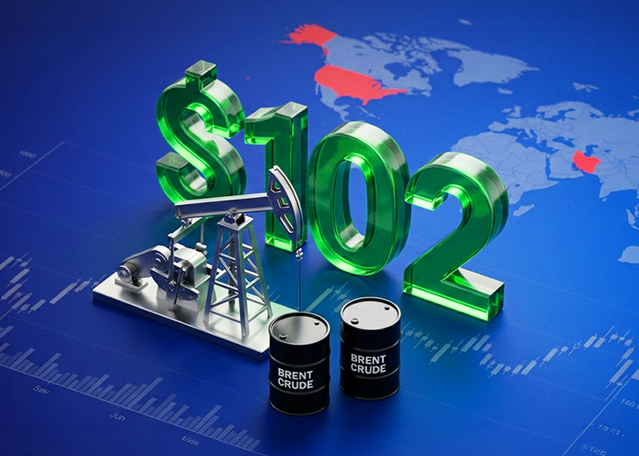
Today Fundamental Analysis: Oil Breaks Above $102 as Middle East Tensions Continue to Escalate

Today Technical Analysis: Copper Approaches Record Highs on Surging Demand

Dollar struggles to gain ahead of US inflation data, yen extends rally
EBC Markets Briefing | Crude prices on solid footing amid deep supply concerns

The yen is strengthening before our very eyes

The Inflation Measure Keeping the Fed Cautious

US Yields Rise Despite Buybacks; Eyes on ECB Hike