





Oil rebound unsettles markets as yields surge


Oil prices in the spotlight again
Oil prices have resumed their rally, throwing a spanner in the market exuberance seen late last week and particularly after the soft US nonfarm payrolls report. The main reason is that negotiations between Oman and Iran on reopening the Strait of Hormuz appear to have stalled after the Iranian leadership put additional demands on the table. US President Trump responded fiercely, evaporating last week’s optimism, and increasing the chances of fresh military operations.
Spot WTI oil has jumped above $82, around 10% above last week’s trough, when it failed to meaningfully drop below the 200-day simple moving average (SMA), but is still 13% below the July 23 peak. Worryingly though, the December 2026 WTI oil futures contract has climbed to $78.5, just $2 from its recent peak, suggesting stronger market angst about the medium-term outlook than depicted by spot prices.
Bond yields surge
The impact of this renewed oil price rally has been significant. Sovereign bond yields have been rising, with the US 10-year yield climbing above 4.7%, a level seen only three times since Trump’s win in November 2024. While higher yields will probably help this week’s 3-, 10- and 30-year Treasury notes and bond auctions, which have been less than impressive lately, the higher cost of borrowing for both the US government and US corporates, including AI firms which have to find trillions to fund their much-advertised investment plans, is upsetting risk appetite.
Following an impressive weekly performance, US equity indices have quickly lost their bullish momentum. Monday’s mixed performance could be down to profit-taking and preparation for Wednesday’s pivotal CPI report, which could dictate market movements until the late-August Jackson Hole Fed Symposium. However, a persistent rise in oil prices and bond yields is bound to support Fed rate hike expectations and/or fuel concerns about an economic slowdown.
September Fed rate hike bets also got a small boost, with the chances of a 25bps hike rising to 52.5%. However, this is still negligible compared to the pre-July 29 period when the September move was fully priced in. Notably, economists’ forecasts for another deceleration at Wednesday’s CPI report might be holding back rate hike expectations. This means that, in the low probability scenario of July inflation surprising on the upside, there could be a fierce adjustment in Fed hike bets, with a significant impact on the US dollar.
Interestingly, partly due to the oil price rollercoaster, the RBA remained hawkish at today’s rate-setting meeting. Governor Bullock highlighted that they “will raise rates again if needed” and that the committee “discussed raising rates” at today’s meeting since “inflation is still too high, and there are upside risks from the Middle East”. Aussie/dollar is little changed as Bullock reversed the initial aussie weakness.
Muted movements in the US dollar
So far, the oil price rally has not been extremely market-moving for the greenback. Following two abysmal weeks, the US dollar is on the front foot this week, but movements are extremely measured, partly because of the usual summer lull. Unsurprisingly, dollar/yen is posting the strongest rise of the week, as we are witnessing a repeat of the previous interventions when the engineered dollar/yen drop was followed by a consistent, and sometimes aggressive, rally.
With some investment houses highlighting that domestic accounts are still not interested in repatriating their funds, and thus remaining invested in the higher-yielding US Treasuries, the onus falls almost exclusively on the BoJ to help the yen. This has been the case over the past four years when yen weakness became a dominant market force. There are fresh articles about the BoJ being closer to hiking in September than previously expected, with market bets for a 25bps hike steadily rising from 28% on July 31 to the current 50% probability. However, is PM Takaichi really on board with a BoJ rate hike in September?
Gold on retreat
Finally, gold is suffering in the early part of today’s European session, falling like a stone in its first attempt to rise above the October 20, 2025 high of $4,381. This is the upper boundary of a range highlighted yesterday, which, since October 2025, has been dictating price action on five separate occasions, and coincides with the 100-day SMA. A potentially aggressive dollar rally could really test the viability of the current upside move in gold.


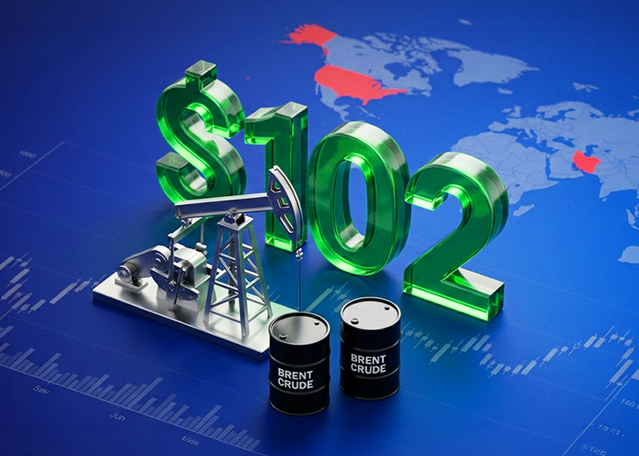
Today Fundamental Analysis: Oil Breaks Above $102 as Middle East Tensions Continue to Escalate

Today Technical Analysis: Copper Approaches Record Highs on Surging Demand

Dollar struggles to gain ahead of US inflation data, yen extends rally
EBC Markets Briefing | Crude prices on solid footing amid deep supply concerns

The yen is strengthening before our very eyes

The Inflation Measure Keeping the Fed Cautious

US Yields Rise Despite Buybacks; Eyes on ECB Hike