-1162026812.png)
-1162026812.png)





Oil Tightens as Hormuz Disruption Builds Pressure

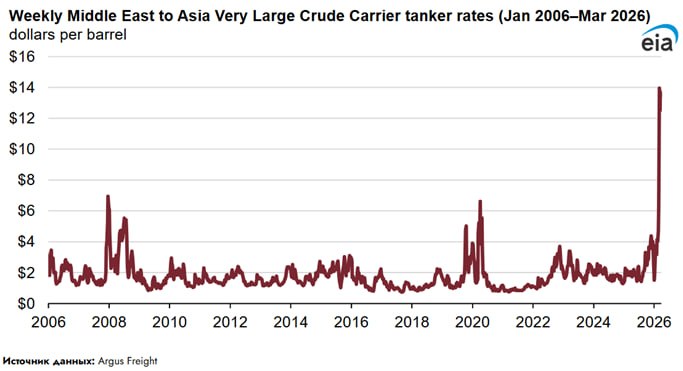
The ongoing disruption of the Strait of Hormuz is having a distinctly cumulative effect — and it’s something that requires close monitoring.
In March 2026, freight rates for supertankers (VLCCs) sailing from the Middle East to Asia reached their highest level since November 2005, when such data began to be recorded. Shipping costs rose to around $14 per barrel, compared with a long-term average of roughly $2.
Shortages of oil and fertilizers are likely to become more acutely felt by May.
Oil prices could rise considerably further if the current situation around Hormuz persists.
The recent surge is unlikely to be confined to March’s near 50% rally and may extend over the coming months. Amid escalating tensions in the Persian Gulf, prices could settle in the $120–130 range per barrel, with the possibility of spikes towards $200. Even if OPEC+ opts to increase production on 5 April, the impact is likely to be limited: disruptions to the Strait of Hormuz and attacks on energy infrastructure have already reduced cartel output by roughly 20% in March.
Meanwhile, Western markets are largely closed this weekend due to Catholic Easter, meaning activity will only properly resume by Monday evening.
At the same time, WTI futures have moved above Brent — a rare inversion, last seen (in reverse) in April 2020. This points to a degree of nervousness in the oil market, though such dislocations do occur from time to time.

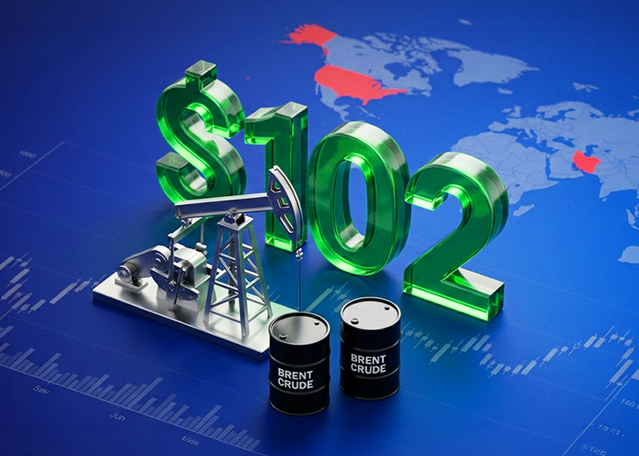
Today Fundamental Analysis: Oil Breaks Above $102 as Middle East Tensions Continue to Escalate

Today Technical Analysis: Copper Approaches Record Highs on Surging Demand

Dollar struggles to gain ahead of US inflation data, yen extends rally
EBC Markets Briefing | Crude prices on solid footing amid deep supply concerns

The yen is strengthening before our very eyes

The Inflation Measure Keeping the Fed Cautious

US Yields Rise Despite Buybacks; Eyes on ECB Hike