-1162026812.png)
-1162026812.png)





The Fed Has Changed the Rules of the Game

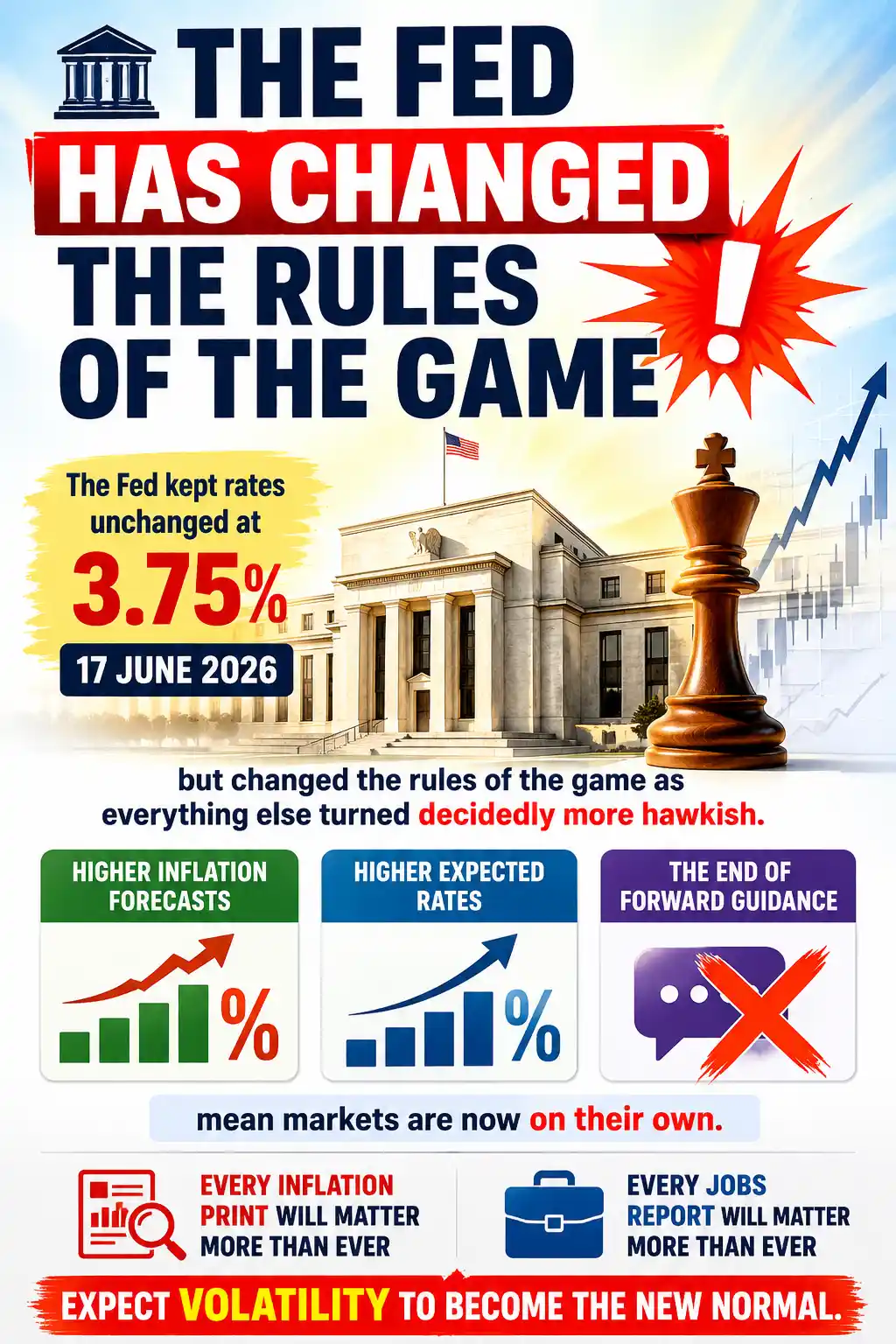
The Federal Reserve left interest rates unchanged at 3.50–3.75%, exactly as markets had anticipated.
However, policymakers revised their interest-rate projections notably higher, with the 2026 median forecast rising from 3.4% to 3.8%, whilst the 2027 projection increased from 3.1% to 3.6%.
Inflation expectations were also revised upwards across the board. The 2026 headline inflation forecast climbed from 2.7% to 3.6%, whilst core inflation was lifted from 2.7% to 3.3%. For 2027, the core inflation projection increased from 2.2% to 2.5%, reinforcing the view that price pressures are likely to remain persistent for considerably longer than previously expected.
Taken together, the updated projections imply that the majority of Federal Reserve officials now expect at least one further rate rise this year, with six members forecasting policy rates above 4% during 2026.
Financial markets have responded by almost fully pricing in one additional rate increase in 2026 and assigning roughly a 65% probability to a further hike in the spring of 2027.
Fed Chair Kevin Warsh was equally forthright:
"We recognize that inflation remains significantly above the Federal Reserve's long-standing 2% objective. This has persisted for more than five years, and elevated prices continue to place a substantial burden on the American people."
Perhaps the most significant announcement, however, was the Federal Reserve's decision to abandon its traditional forward guidance. Going forward, official statements will focus exclusively on current economic facts rather than signaling the likely direction of future policy. In other words, markets will be expected to interpret incoming data and assess risks independently, rather than relying on explicit guidance from the central bank.
The takeaway: whilst interest rates were left unchanged, the overall message was unmistakably hawkish. Higher inflation forecasts, higher expected policy rates and the removal of forward guidance collectively mark a significant shift in the Fed's communication strategy. From this point onwards, every inflation release, employment report and macroeconomic indicator is likely to carry greater weight, making monetary policy increasingly data-dependent and market volatility considerably more pronounced.


Today Fundamental Analysis: Oil Breaks Above $102 as Middle East Tensions Continue to Escalate

Today Technical Analysis: Copper Approaches Record Highs on Surging Demand

Dollar struggles to gain ahead of US inflation data, yen extends rally

EBC Markets Briefing | Crude prices on solid footing amid deep supply concerns

The yen is strengthening before our very eyes

The Inflation Measure Keeping the Fed Cautious

US Yields Rise Despite Buybacks; Eyes on ECB Hike