-1162026812.png)
-1162026812.png)





THE FED’S 1970s NIGHTMARE: COULD INFLATION COME ROARING BACK?

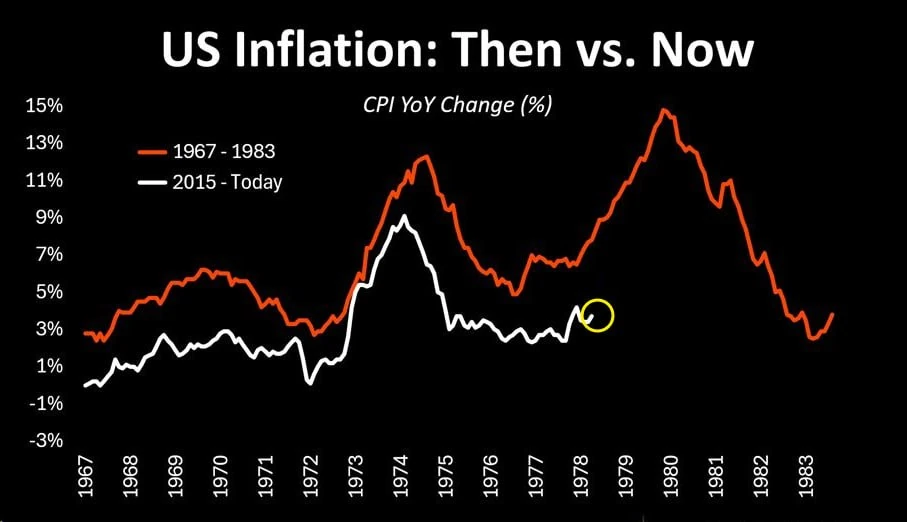 The biggest historical risk facing the Federal Reserve today is not simply high inflation, but a repeat of the 1970s, when the first victory over rising prices proved to be a false dawn. US inflation slowed sharply on several occasions during that decade, creating the impression that the problem was under control, only to accelerate again and eventually reach double-digit levels. That experience helps explain why the Fed remains so reluctant to ease policy prematurely: falling inflation does not necessarily mean inflation has been defeated.
There are clear parallels with the current environment. Following the inflation surge of 2021–22, price growth slowed substantially, but achieving a sustainable return to 2% has proved considerably harder than bringing inflation down from its peak. The final stage of disinflation is often the most difficult, with services, wages, housing and energy capable of keeping price pressures elevated for much longer than goods. For the Fed, a handful of encouraging CPI prints is therefore not enough — policymakers need convincing evidence that inflation is moving sustainably back towards target.
This is where Iran and the wider energy equation become particularly important. Tehran understands the sensitivity of the US economy and monetary policy to oil prices: a serious escalation in the Persian Gulf could drive energy costs higher, lift inflation expectations and make the Fed’s job considerably more difficult. Oil shocks were a major component of the inflationary spiral of the 1970s, which is why any sustained rise in crude today is viewed not merely as a geopolitical development, but as a potential macroeconomic shock.
For financial markets, this creates a critical chain reaction: oil → inflation → Fed policy → Treasury yields → the dollar and risk assets. If expensive oil begins pushing US inflation higher again, the scope for lower interest rates could narrow sharply, while a sufficiently strong inflationary impulse could force markets to price in a more restrictive policy path. That would support Treasury yields and the dollar while increasing pressure on equities and other assets sensitive to borrowing costs. Gold presents a more complicated picture: geopolitical demand is supportive, while elevated real yields remain a significant headwind.
A direct comparison between today and the 1970s would, however, be too simplistic. The Fed has a much stronger understanding of inflation expectations, monetary policy operates within a very different institutional framework, and the US economy is less energy-intensive than it was half a century ago. But that is precisely why the Fed is determined not to repeat the defining mistake of that era — declaring victory too soon. Until inflation is firmly anchored around target, while geopolitics retains the capacity to send energy prices sharply higher, the threat of a second inflation wave will remain a major influence on Fed policy and global markets.Trade smart with Headway


GBPUSD Edges Towards 1.3463 as Traders Brace for the Bank of England Decision

Weak NZ Jobs Data Keeps NZDUSD Under Pressure

Gold buying by central banks has hit its highest rate since 2024.

Daily Technical Analysis: Gold Reclaims $3,900 After Hitting Its Lowest Level Since October 2025

Daily Fundamental Analysis: Wall Street Starts November on a Cautious Note Ahead of US Midterm Elections

Bitcoin tests key support as election uncertainty and tech sell-off weigh

Will gold climb back above $4,000?