-1162026812.png)
-1162026812.png)





US TECH GIANTS’ HIDDEN DEBT SURGES TO $1.65 TRILLION

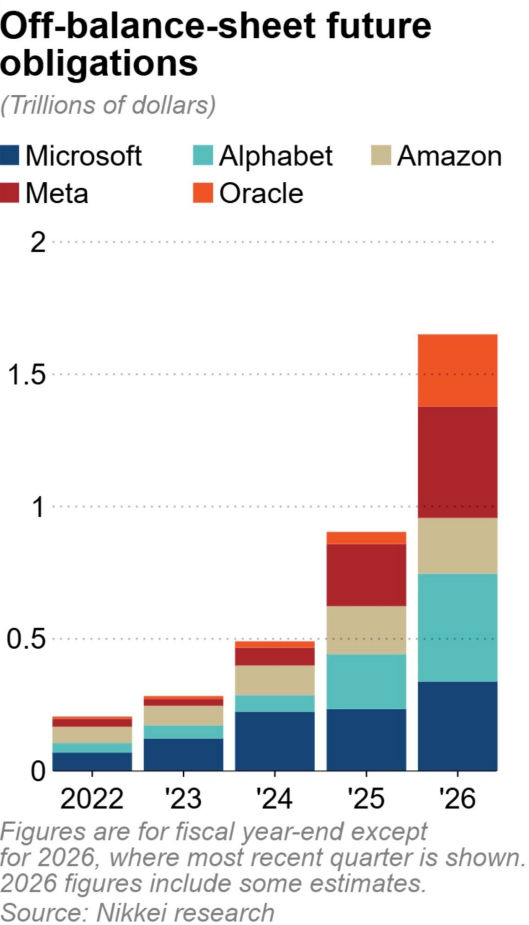
The hidden debt of US technology giants has increased eightfold in roughly four years, reaching an estimated $1.65 trillion. Today Alphabet (and three other major technology companies in the week to come) are due to report their Q2 earnings, meaning that figures could climb even further.
Why? According to an analysis by Nikkei, a review of the latest financial statements from Alphabet, Microsoft, Amazon, Meta and Oracle revealed a sharp surge in artificial intelligence investment commitments that now exceed their reported debt. As a result, investors are finding it increasingly difficult to assess the true level of financial risk.
The hidden liabilities of the five companies, which do not appear on their balance sheets, reached $1.65 trillion in the latest quarter, surpassing the $1.35 trillion of debt reported on their balance sheets.
The rapid growth in off-balance-sheet obligations reflects a new phase in the race to dominate artificial intelligence. Technology companies are increasingly committing to long-term agreements for data center construction, cloud computing capacity and specialized AI hardware, while much of these future obligations remain outside traditional debt metrics. As a result, balance sheets are becoming less representative of companies' actual long-term financial commitments.
For investors, this makes assessing the financial resilience of the technology sector considerably more challenging. Even companies with substantial cash reserves and robust profitability could become more vulnerable if AI investments fail to generate the expected returns. At the same time, weaker economic conditions or higher financing costs could place additional pressure on future cash flows.
The upcoming second-quarter earnings reports will provide an important test of whether these unprecedented investments in AI infrastructure are beginning to translate into meaningful financial returns. Markets are placing less emphasis on headline earnings and increasingly focusing on capital allocation, AI monetization and companies' ability to sustain growth without further expanding their off-balance-sheet obligations.


Today Fundamental Analysis: Oil Breaks Above $102 as Middle East Tensions Continue to Escalate

Today Technical Analysis: Copper Approaches Record Highs on Surging Demand

Dollar struggles to gain ahead of US inflation data, yen extends rally

EBC Markets Briefing | Crude prices on solid footing amid deep supply concerns

The yen is strengthening before our very eyes

The Inflation Measure Keeping the Fed Cautious

US Yields Rise Despite Buybacks; Eyes on ECB Hike