





Yen and oil advances keep risk appetite muted

Yen rally pauses
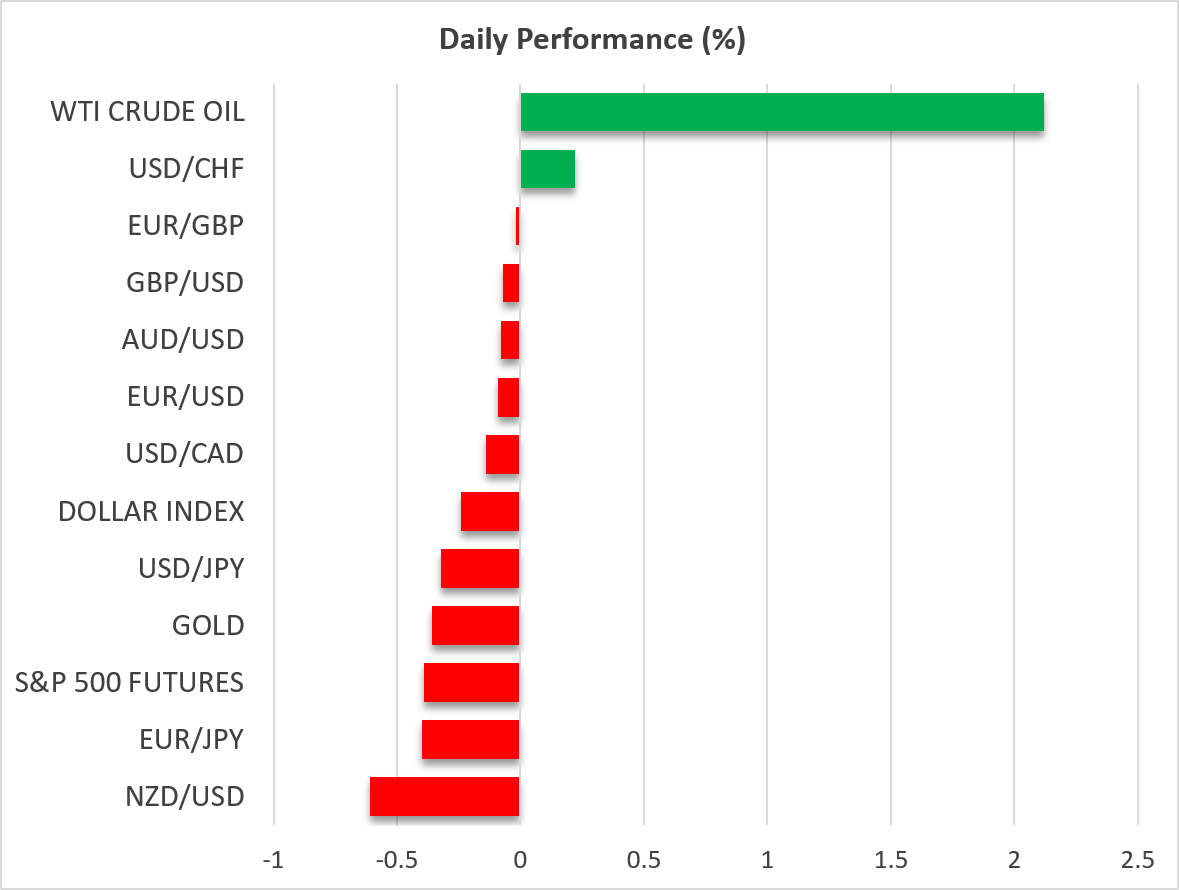
The quiet start to the week, mostly due to the US bank holiday, did not put a pause on the yen outperformance. Dollar/yen has dropped by 4.2% since September 1 to a seven-month low, with the respective euro/yen and pound/yen pairs posting similar declines, confirming that the moves are driven by the yen.
The obvious explanation is the ballooning BoJ rate hike expectations versus the more muted Fed rate hike bets. As already highlighted, markets assign an 80% chance of a BoJ move on September 18, and 111bps of total tightening until end-2027, compared to just 50bps of hikes over the next 16 months in the case of the Fed, with the chances of a rate hike next week being split.
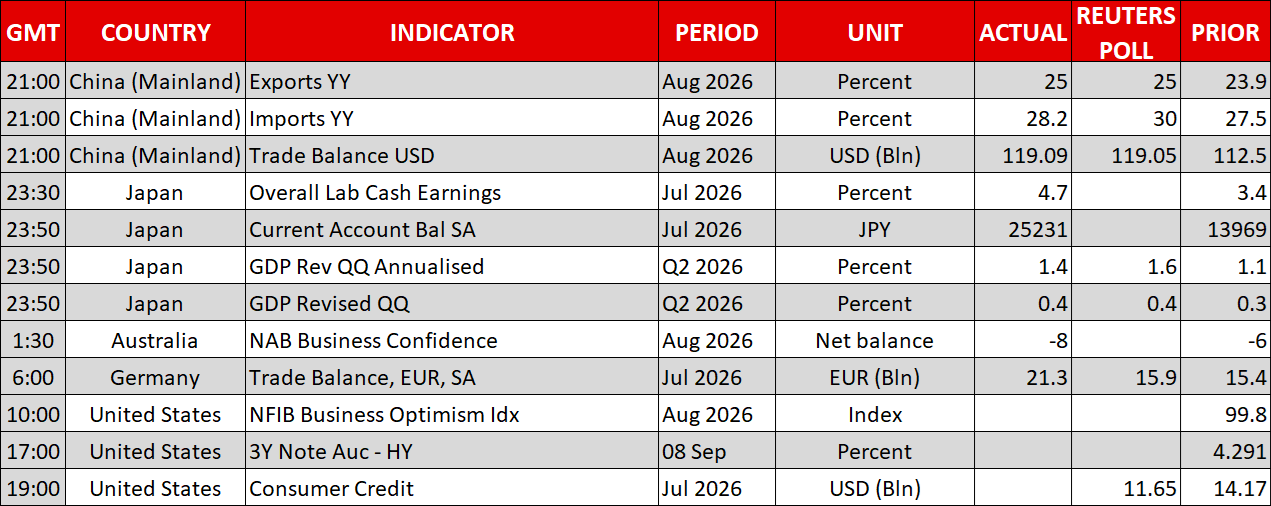
Today’s strong Japanese data – Q2 GDP was revised higher and headline earnings jumped by a multi-decade high of 4.7% – support the current divergence of central bank expectations, although that might change towards the end of the week. Upside surprises in the US PPI and CPI reports, on Thursday and Friday respectively, could reduce the tightening gap in favour of the Fed, and force dollar/yen higher.
Although the decline looks stretched, low liquidity and the unwinding of the famous carry trade – which involved selling dollars and buying yen – can be the technical reasons, extending the initial drop in dollar/yen, with yesterday's moves happening mostly during the Asian and European sessions. It remains unknown if an intervention or a simple rate check was the trigger for the first leg of the yen rally.
Oil rallies on Middle East newsflow
Meanwhile, Middle East developments are clouding the outlook again. Yemen forces took over from Iran, attacking Saudi Arabian oil facilities, confirming that, despite reports of an imminent agreement between Oman and Iran about the Strait of Hormuz, the termination of the seven-month-old regional conflict remains elusive. Expectations that the US President might try to sort out this conflict soon, so he can almost entirely focus on the critical November 3 midterm elections that could upset the current balance in the Senate, have yet to be confirmed.
With WTI spot oil posting a higher high, above the July 23 high of $94.48, and the December WTI oil futures contract reaching a fresh high of $87.30, most investment houses are reflagging the risk of a protracted rally resulting in a loss of growth momentum, especially in the eurozone, and forcing central banks to adopt an even more hawkish stance.
Should the rally persist going into Thursday, expectations for a hawkish hike by the ECB will be reinforced, thus opening the door to disappointment if Lagarde fails to satisfy these expectations. Euro/dollar remains stuck in the 1.1559-1.1629 region, with the 200-day simple moving average (SMA) capping the upside in the past few sessions.
Similarly, a climb above $100 for WTI spot oil might make next week’s Fed decision easier. Acting fast to squelch the chances of second-round effects could tip the balance in favour of a rate hike, regardless of Friday’s CPI report and despite some strong resistance from certain uber-doves.
Equities remain week, gold stabilizes and bitcoin drop persists
While US equities remain weak, with the S&P 500 index trading inside a muted downward trend channel, gold appears to stabilize at the $4,400 area. Investors await this week’s US data releases but also Thursday’s Treasury buyback operation. As a reminder, the Treasury announcement on August 19 about the increased purchase size of long-end operations caused a $200 rally in gold, contributing to the recent peak of $4,697, with the move mostly evaporating though.
Finally, bitcoin maintains its gains since August 19 but continues to struggle to remain above the $80k, potentially needing a marked improvement in risk appetite to decisively overcome this key resistance area.


Today Fundamental Analysis: Oil Breaks Above $102 as Middle East Tensions Continue to Escalate

Today Technical Analysis: Copper Approaches Record Highs on Surging Demand

Dollar struggles to gain ahead of US inflation data, yen extends rally

EBC Markets Briefing | Crude prices on solid footing amid deep supply concerns

The yen is strengthening before our very eyes

The Inflation Measure Keeping the Fed Cautious

US Yields Rise Despite Buybacks; Eyes on ECB Hike