





Yield Shock: The Invisible Wall Capping Gold, Bitcoin, and Oil

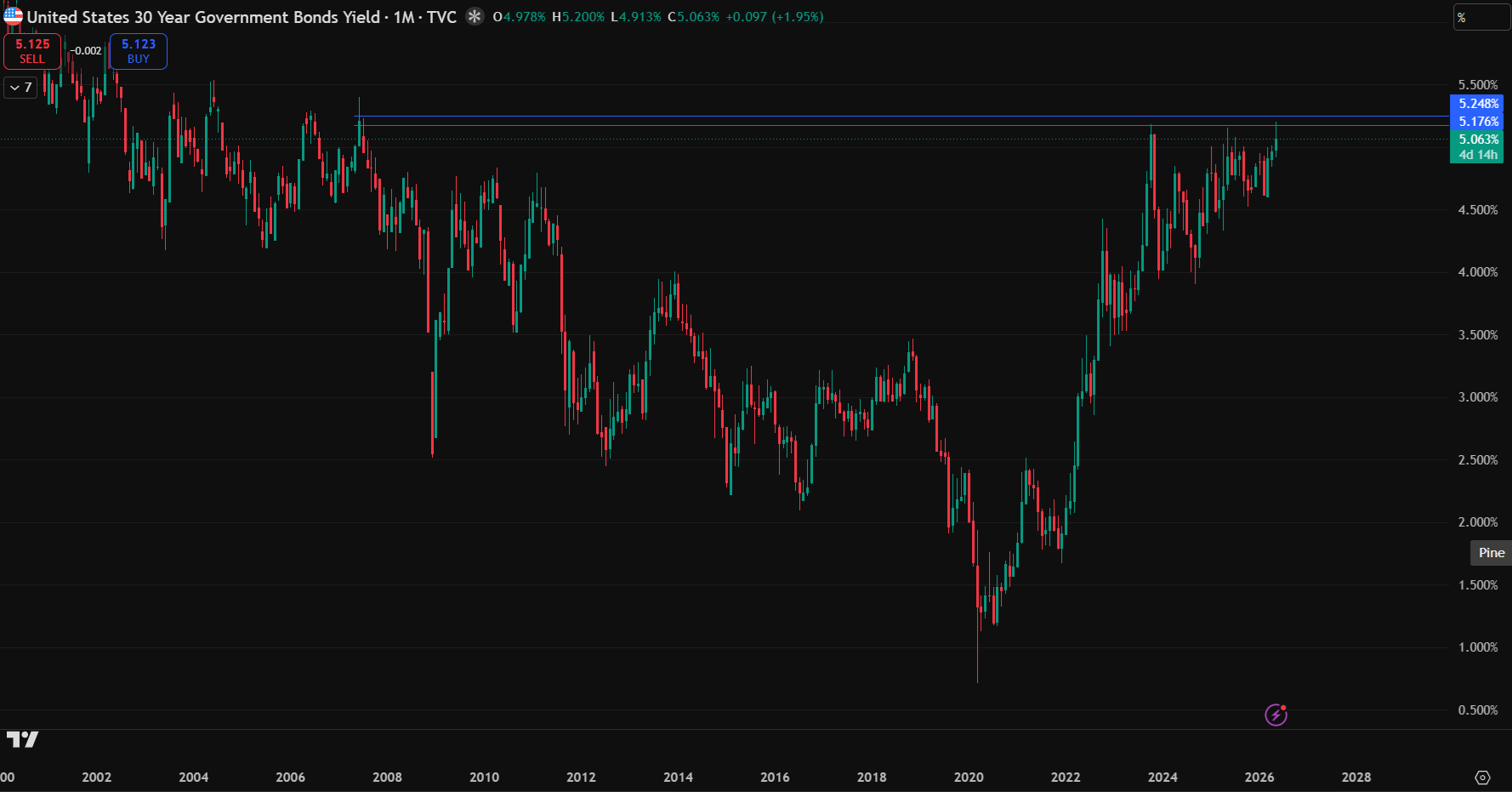
The ghosts of great inflation and structural monetary tightening have officially returned to the fixed-income markets. In a stunning technical breakout, the 30-year Treasury yield has pushed through the 5% psychological threshold, revisiting levels not seen in decades and testing a zone that historically only appears during periods of aggressive monetary dominance and liquidity contraction.
This is not simply a bond market breakout. It is a cross-asset repricing mechanism being reactivated.
The Intermarket Transmission Mechanism: Rising Opportunity Cost
When long-term risk-free yields hold above 5%, the opportunity cost of holding alternative assets increases. Institutional capital naturally weighs locking in higher sovereign yields against riskier asset allocations. This environment prompts multi-asset portfolio rebalancing, which rapidly leaves its footprints within value areas and volume profiles across non-yielding safe havens, digital assets, and commodities.
Cross-Asset Structural Analysis: How the Yield Shock Alters Key Ranges
When long-term yields sustain these levels, traditional asset correlations often diverge. Instead of a uniform market-wide sell-off, the current multi-decade bond high is leaving distinct structural footprints across different asset classes. While the macro driver is long-term, the structural rebalancing is showing up clearly as localized range shifts on the 4-hour charts.
Gold (XAUUSD): Technical Consolidation and Range Defense
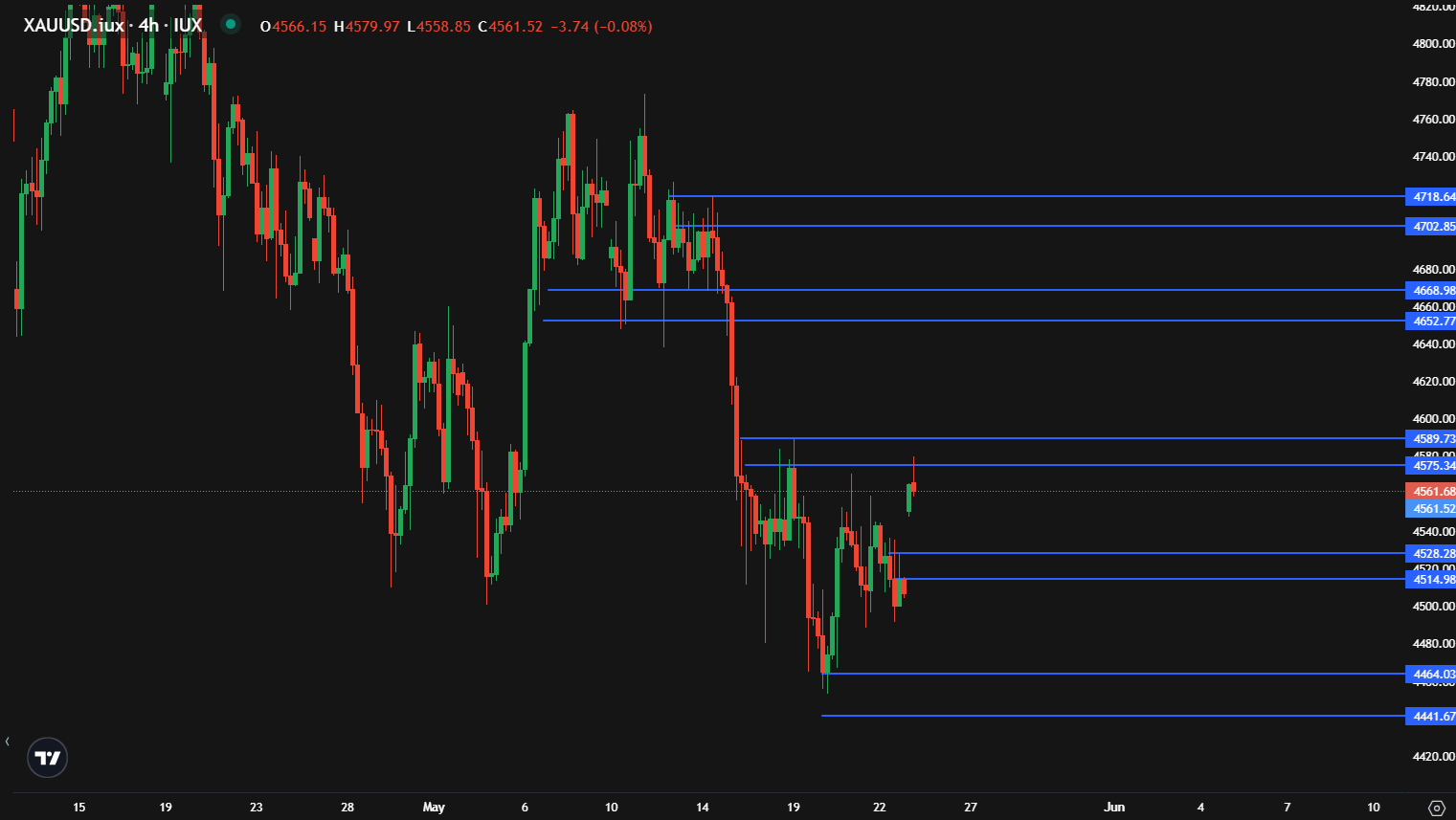
While rising yields typically pressure non-interest-bearing assets, Gold’s recent price behavior reflects a degree of underlying stability. Following a corrective phase, the metal has settled into a well-defined Balanced Range on the 4H timeframe.
Gold is currently holding a critical base support between $4,464 and $4,589. Rather than experiencing immediate capital flight due to higher bond yields, the market appears to be utilizing this consolidation area to price in Gold as a potential hedge against a highly extended fixed-income market. As long as this lower boundary remains intact, the broader technical structure points to ongoing rotations within the range.
Bitcoin (BTCUSD): Consolidation Phase Under a Liquidity Vacuum
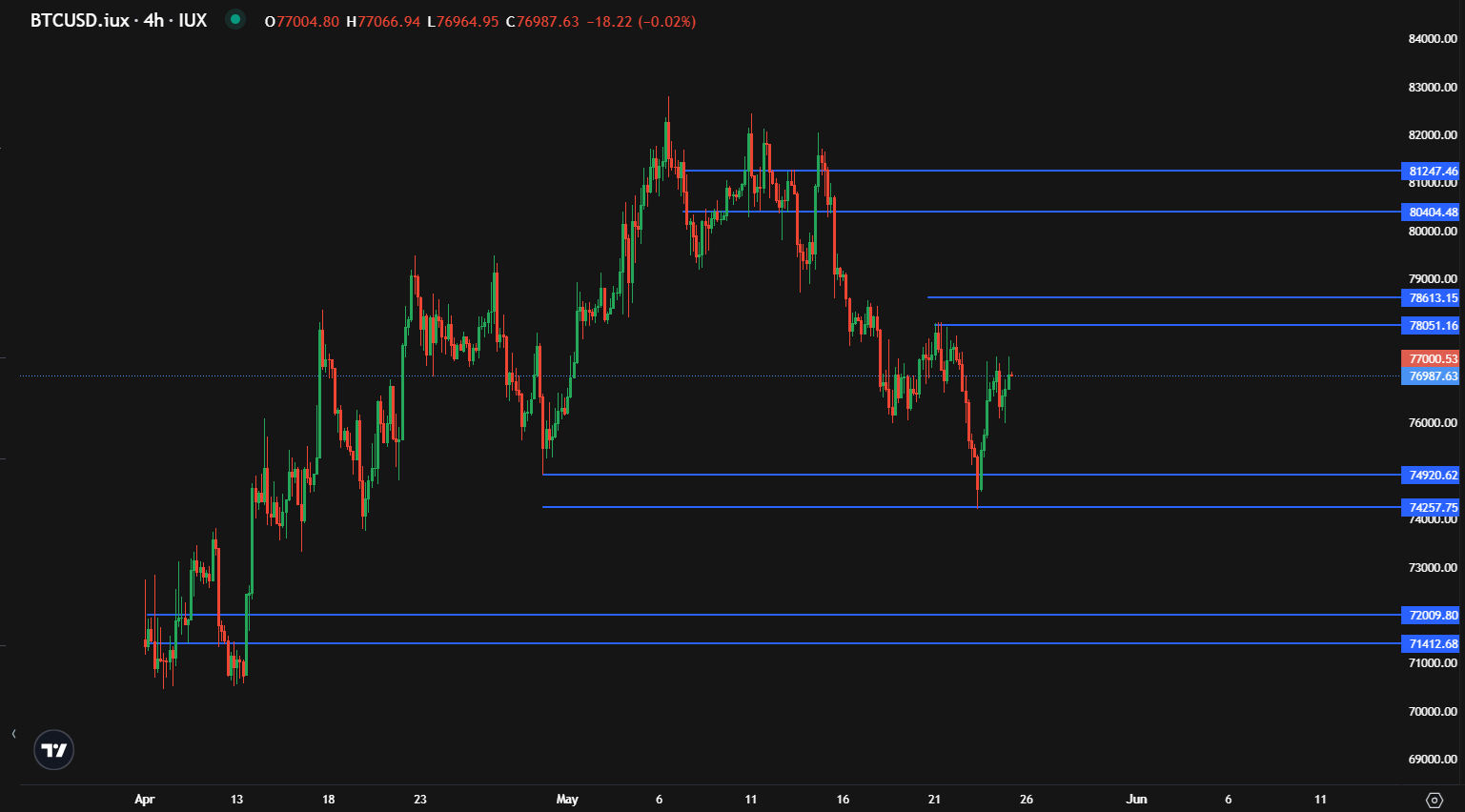
Bitcoin appears to be reacting more directly to the restrictive liquidity conditions imposed by high risk-free returns. On the 4H frame, the digital asset remains locked in a tight, range-bound accumulation process.
With sovereign bonds offering competitive yields, speculative risk capital has naturally become more conservative, leaving Bitcoin in a passive, compressed state. Immediate upside momentum faces a clear technical resistance zone at $78,051 - $78,613. From a structural perspective, until long-term yields show signs of stabilization, Bitcoin seems positioned to continue churning within these local boundaries, as a broader expansion requires a shift in macroeconomic liquidity.
Brent Crude Oil (UKOIL): Macro Headwinds and Downside Expansion
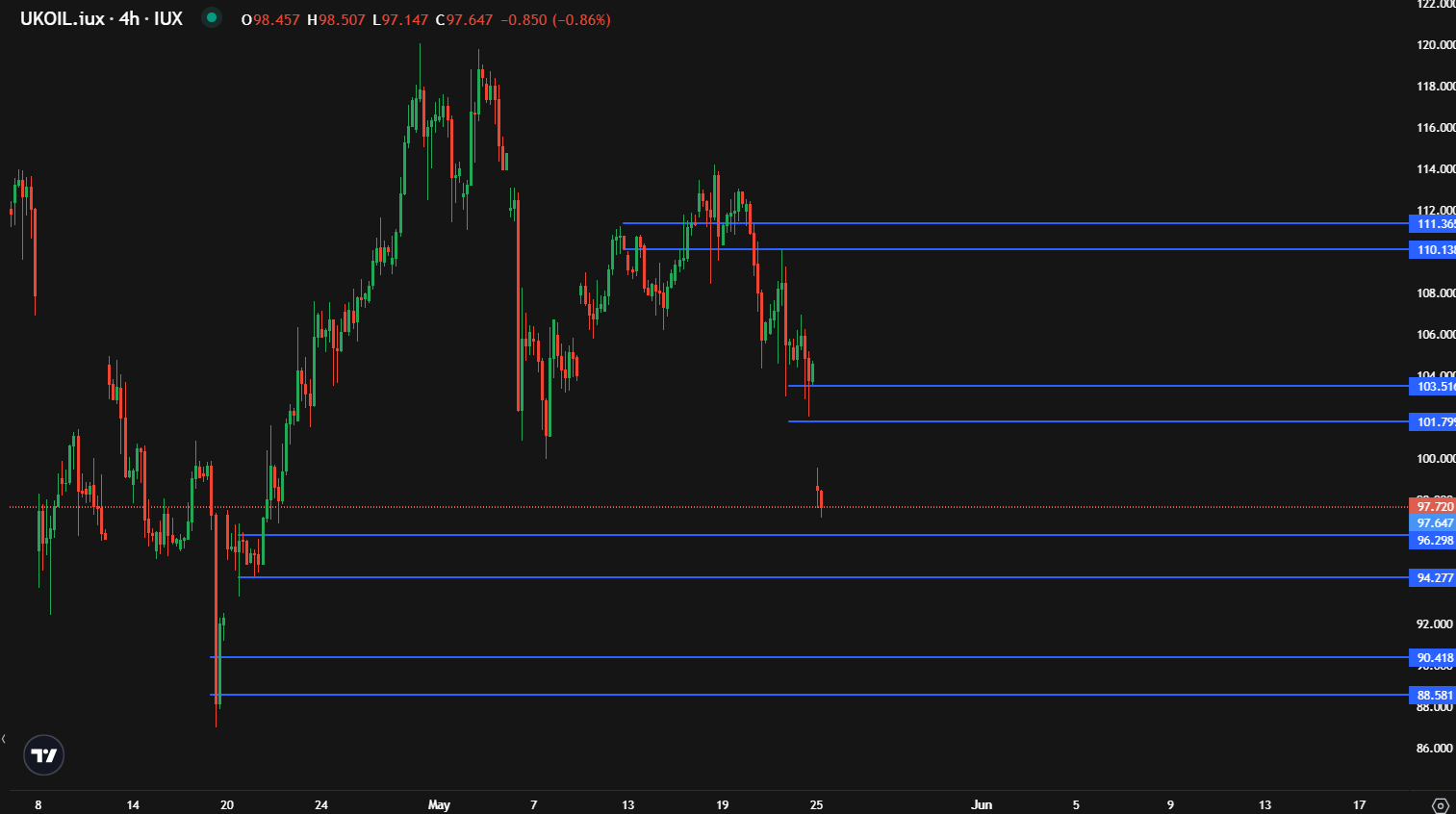
While Gold maintains its range and Bitcoin consolidates, Crude Oil serves as a direct reflection of how rising yields impact global growth expectations. Brent remains locked in a strong downtrend, marked by steady downward price expansion.
The technical structure indicates that a surging 30-year yield is being interpreted by the market as a harbinger of tighter corporate credit and a long-term economic deceleration. The charts illustrate this shift clearly: prices have broken decisively below the major intermediate price pivot at $101, shifting that previous support area into a structural resistance zone. Brent is now approaching a key multi-month structural swing low zone at $89 - $96, which stands as a critical benchmark for energy demand sentiment this week.
Key Takeaways for Traders and Investors
Focus on Macro Structural Boundaries: In a high-yield regime, price action within intermediate volume nodes tends to contain significant noise. Historical observation suggests that major capital reallocation typically occurs when prices test primary structural boundaries rather than mid-range zones.
Anticipate Volatility from Upcoming Data: Macro indicators remain highly sensitive ahead of upcoming growth and inflation data. Technical levels are prone to rapid retests, making patient observation at key structural boundaries a useful framework for assessing market commitment.
Energy Trends Remain Asymmetric: The downward momentum in UKOIL reflects broader concerns over long-term borrowing costs and industrial demand. Because the overriding macro bias is heavy, relief rallies in the energy complex face established technical hurdles at major broken volume nodes.


US Yields Rise Despite Buybacks; Eyes on ECB Hike

Yen Hits 6-Month High, Volatility Returns After North American Holiday.

Gold Slides Below $4,500 as Strong NFP Revives Fed Hike Bets

US Payrolls Hit 5-Month High as Markets Await CPI This Week.

The dollar is in no hurry to gain ground

Dollar Strength Meets Geopolitical Risk | 7th September, 2026

Week Ahead: US Jobs Strengthen Fed Hike Bets as CPI Looms