





Iran deal hopes lift sentiment, oil and dollar slip, yen rebounds

US and Iran explore new ceasefire deal
The United States is considering a new seven-day roadmap proposal by Iran that would see the phased reopening of the Strait of Hormuz. The deal would end Washington’s blockade of Iranian ports while Tehran would reopen the Strait. But it would also mean both sides giving up their main leverage in the negotiations, suggesting compromise will be difficult.
Further casting doubt on the prospect for a deal is the lack of urgency by President Trump in pushing for a quick resolution. The White House seems confident that the combined naval blockade and economic sanctions are successful in crippling Iran’s economy.
This worsening economic pain is likely why Tehran is more eager at this stage to seek a deal and why Trump feels he can wait until after the November midterms before making a decision, especially as the Iranians are maintaining their long list of demands.
According to reports, the only area Iran has displayed flexibility on is to drop its demand to charge transit fees on ships using the Hormuz Strait, which may not be enough to satisfy US negotiators.
Some relief as oil and bond yields fall back
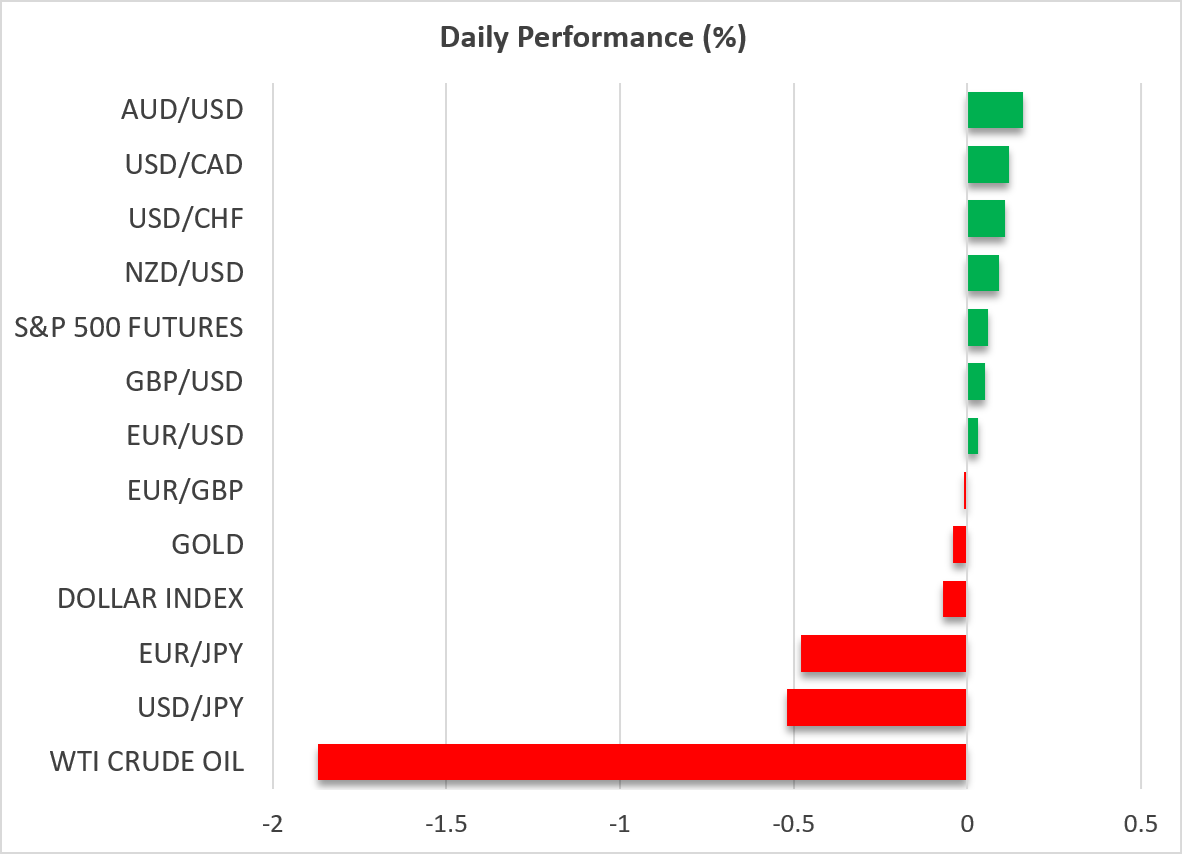
This explains why oil prices have only modestly pulled back today. WTI futures are currently trading around $93.50 a barrel, down from a high of $96.78 yesterday. Brent crude futures are down about $2 from yesterday’s highs and were last quoted at $106.16.
Nevertheless, the decline has helped to ease pressure on government debt, with global sovereign bond yields retreating from their fresh multi-year highs.
Yet, without an actual deal that normalizes energy flows from the Middle East, not just from the Gulf but also from the Red Sea where Houthi rebels continue to attack Saudi energy facilities, any relief for the bond selloff is likely to be temporary.
Moreover, higher oil and gas prices aren’t the only source of inflation in the United States. A hot economy amid strong domestic demand is also generating price pressures and is why Treasury yields have been climbing so relentlessly. The US 10-year yield spiked above 5.20% yesterday for the first time since 2007, as investors priced in a 70% probability of a back-to-back Fed rate hike in October.
Wall Street holds onto weekly gains
However, rising interest rates against a backdrop of strong growth aren’t necessarily the worst thing for stock markets, and with the exception of the Dow Jones, US indices are headed for decent weekly gains, while futures have rebounded today.
It remains to be seen how high Treasury yields can go before inflicting more serious damage on Wall Street but for now, optimism around the AI trade and an upbeat earnings outlook more broadly are keeping the S&P 500 and Nasdaq near their record highs.
Oddly, a bigger disappointment this week for US investors has been the absence of any breakthroughs in talks between Trump and China’s President Xi during the state visit in Washington. Although some progress on tariffs is possible in the coming weeks following the two-month extension to the current trade truce, it doesn’t appear that Trump’s prized personal relationship with Xi has earned him many concessions.
Yen bounces back as dollar slips, gold stays subdued
In FX markets, the improved mood on Friday is weighing on the US dollar. The Japanese yen is the best performer, strengthening against all its peers. Whilst the yen was due a technical rebound, the main reason for the sudden reversal is the disclosure by Japanese Finance Minister Katayama that Prime Minister Takaichi discussed the weak yen with President Trump in New York this week.
Katayama said Trump “expressed concern” about the yen’s woes while stressing the continued coordination with Treasury Secretary Scott Bessent.
Intervention risks had already risen after the dollar crossed above 159 yen yesterday, so this reminder that neither Japanese nor US officials want to see the yen slide any further couldn’t have come at a better time. The dollar is currently trading just below 158 yen, while the euro has just breached the 180-yen level.
Gold is also rebounding but seems to be lacking the momentum to reclaim the $4,300 level.


Gold buying by central banks has hit its highest rate since 2024.

Daily Technical Analysis: Gold Reclaims $3,900 After Hitting Its Lowest Level Since October 2025

Daily Fundamental Analysis: Wall Street Starts November on a Cautious Note Ahead of US Midterm Elections

Bitcoin tests key support as election uncertainty and tech sell-off weigh

Will gold climb back above $4,000?

Crypto turns gloomy

US midterm elections in the spotlight as stock market rout persists