





Dollar advances as oil prices remain in the driver’s seat

Oil reacts to negative newsflow
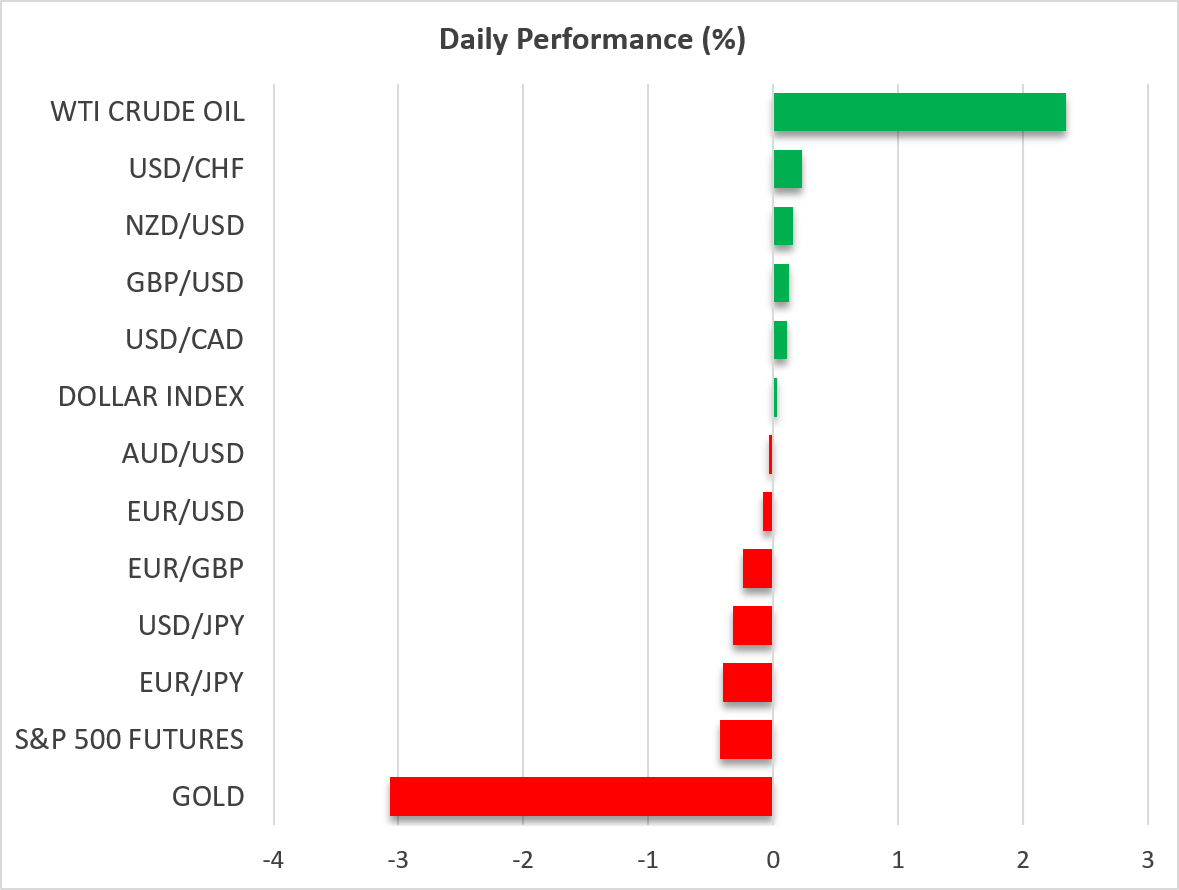
Investors remain focused on the fluctuating oil price action. Repeated Iranian attacks on ships crossing the Strait of Hormuz and fresh attacks by Houthi rebels on Saudi Arabian targets have pushed WTI oil spot prices higher by around 5% from last week’s trough. But the biggest factor has been US President Trump’s mixed rhetoric.
Another set of proposals to reopen the Hormuz Strait, put forward by Iran has been rejected by Trump, who instead announced further talks this week. With the Iranians being crystal clear about the conditions that need to be met to finally allow safe passage through Hormuz, it is unclear what these talks could achieve. Even more interestingly, should articles about Trump informing his aides that military operations will resume after the midterm elections prove accurate, then any talks are bound to fail, thus keeping oil prices elevated and the rest of the world scrambling for oil and gas.
Unsurprisingly, bond yields continue their journey higher. Specifically, 10- and 30-year US Treasury yields are climbing due to the increased inflation premium, a situation that the Fed can do little about. A persistent tightening stance could send a message that the Fed is determined to keep inflation under control, but that is a tall order given its abysmal record since 2021.
Dollar in the spotlight after solid weekly gains
Following another week of posting significant gains across the board, with September shaping up to be the best month for the dollar since March when the US-Iran conflict broke out, the greenback has started the week on a positive note.
Euro/dollar has dropped to a two-month low, with the June 26 low being around the corner. Meanwhile, the newsflow from the eurozone remains negative, with the German Chancellor still on thin ice, and the chances of his departure depending on whether the CDU/CSU party manages to find a suitable replacement that will not endanger the governing coalition.
The oil price movements have been overshadowing the positive newsflow from the Trump-Xi meeting. A Trade Council has been set up to facilitate talks, with an agricultural working group also formed, although the Council’s first target is most likely to avoid trade escalations whenever the two sides disagree.
Consequently, risk assets are retreating during the early European trading session. Most stock indices managed to finish last week in the green, but overall sentiment remains very challenging, with September confirming, so far, its reputation as a tough month for stocks. Only the Nasdaq 100 index has been diverging and posting small gains, obviously on the back of AI developments.
Quiet calendar but look out for Fedspeak
It is a quiet start to the week in terms of data releases and Fedspeak. That said, investors should watch out for unannounced Fed speakers, particularly from the dovish camp. Following last week's commentary from New York and Philadelphia Fed Presidents Williams and Paulson respectively, it would be a surprise if any of the arch-doves tried to send a message in favour of stable Fed rates.
Markets have grown confident that a late-October rate hike could be on the cards, despite Treasury Secretary Bessent’s renewed pressure for stable rates. A total of 38bps of tightening is priced in by year-end, a number that could marginally increase if this week’s busy data calendar, starting with the key CB Consumer Confidence Index tomorrow, surprises to the upside.
Gold and bitcoin retreat
Gold and bitcoin are on the back foot today, but they are not in the same boat at this stage. Bitcoin is trying to find a new balance area, with the bulls hoping this is another accumulation phase, after reaching its highest level since January, while gold is feeling the heat from rising real yields and persistent dollar gains. It is trading below $4,200 for the first time since early August, dropping around 11% from the recent peak of $4,696, despite lingering demand from central banks and SWFs, and entering the June-August accumulation period.



Gold buying by central banks has hit its highest rate since 2024.

Daily Technical Analysis: Gold Reclaims $3,900 After Hitting Its Lowest Level Since October 2025

Daily Fundamental Analysis: Wall Street Starts November on a Cautious Note Ahead of US Midterm Elections

Bitcoin tests key support as election uncertainty and tech sell-off weigh

Will gold climb back above $4,000?

Crypto turns gloomy

US midterm elections in the spotlight as stock market rout persists