




Easing AI selloff lifts stocks but dollar sags as Warsh stays mum

Fed in no hurry to hike rates
Fed Chair Kevin Warsh offered no clues about the path of interest rates when he spoke earlier on Friday, increasing the sense of uncertainty as the Fed enters its blackout period ahead of the October 27-28 policy meeting. Yet, markets took his silence as a sign that a rate hike is not on the table this month, pushing the odds of a 25-bps increase down to 15%.
But whilst the bar for a back-to-back hike was always going to be very high, not least because of the US midterm elections just a week later, it’s surprising that investors haven’t priced in additional tightening for 2027 following this week’s very strong CPI and PPI reports.
Yesterday’s jump in September producer prices to the highest since late 2022 should be ringing alarm bells at the Fed. But most policymakers seem content with one hike in December while there’s a shortage of views regarding what 2027 holds.
The surge in PPI came hot on the heels of Wednesday’s stronger-than-expected CPI numbers, and retail sales also surprised to the upside. But Warsh stuck to his “I don’t prejudge meetings” line and focused his comments at the IMF event in Bangkok, Thailand, on the impact of AI on the US economy.
Fed caps dollar bulls as yields decline
Even the knee-jerk reaction by markets to the awful PPI numbers was subdued, highlighting the strength of Fed policymakers’ pushback against faster rate increases in recent days. Still, the near-term inflation risks are clearly tilted to the upside given the ongoing impasse in the Middle East and there’s been a significant distortion in bond and FX markets by what’s been going on in equity markets this week.
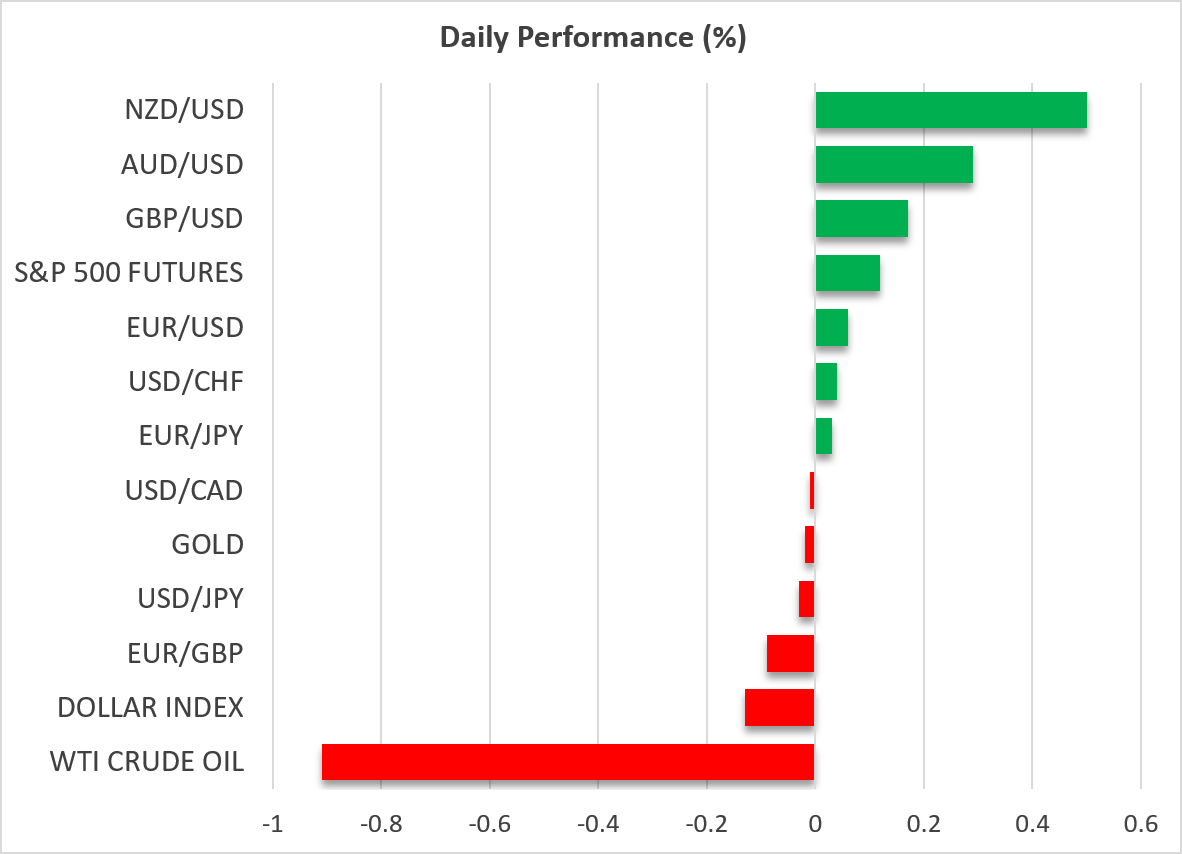
With AI jitters reviving sovereign bonds’ safe-haven attributes, the 10-year US Treasury yield looks set to end the week about 15 bps lower, pulling the US dollar down with it.
The greenback has slid to two-week lows against a basket of currencies, giving its peers some much-needed reprieve following a month-long rally.
Euro and pound recover with budgets in focus
The yen has firmed to below 158.00 per dollar, while the euro and pound have bounced back above the key levels of $1.12 and $1.33, respectively.
The rally in government bonds has taken the pressure off French yields, at least for the time being, as the French government tries to push its proposed 2027 budget containing steep spending cuts through the National Assembly, and this has alleviated the selloff in the euro.
There is somewhat more confidence that the UK government has a better grip on its finances, as the leaks have already started for the Autumn Budget on October 28, while there is also growing optimism about the UK economic outlook.
The pound is the second best performing major currency this week behind the kiwi.
Oil off highs but risks abound, gold edges up
The pullback in bond yields is even more surprising considering that oil prices have been trending higher for most of the week. Even though all the indications are that oil exports from the Gulf have recovered to around 75% of pre-war levels, the threat of fresh disruptions is extremely high as Iranian and Houthi forces continue to target vessels and energy infrastructure in the region.
WTI futures rallied 3% yesterday after data showed US crude and distillate inventories declined by much more than expected last week, although gasoline stocks unexpectedly rose.
Oil prices are down on Friday as there’s been some relief after the IEA pledged to accelerate the release of 100 million barrels of oil reserves, while also deciding to release 20 million barrels of diesel to tackle the shortages.
Moreover, the Trump administration is seeking ways to ease sanctions on shadow fleet vessels amid soaring shipping costs, but it’s uncertain how effective this would be.
In the meantime, President Trump told Newsmax on Thursday that he has not ruled out striking Pickaxe Mountain in Iran after the midterms, raising the risk of a major escalation.
All this makes it very difficult for gold to stage a meaningful rebound even as the drop in yields has spurred a decent rebound. The precious metal gained 1.6% on Thursday after a three-day slide. It’s extending those gains today, climbing to around $4,187.
Chip selloff eases after torrid week
Equities are mostly in the green today, attempting to end a bruising week on a positive note. However, the selloff has mostly been confined to AI-related stocks, mainly in the US and Asia, as European markets had a good week, likely benefiting from the rotation away from tech and AI.
The Dow Jones is also a winner, rising about 1% so far this week, even as the S&P 500 and Nasdaq 100 shed 0.9% and 3.1%, respectively.
Despite the Q3 earnings season getting off to a strong start for the semiconductor sector, the latest surge in long-term borrowing costs combined with headlines of rising debt by some AI firms, as well as growing competition from China, have triggered a sharp selloff in chip stocks, with broader tech stocks coming under pressure too.
At the centre of the latest storm is cloud company, CoreWeave, whose debt premium shot up after it was revealed that its total debt exceeds $50 billion, as it expands its AI infrastructure.
This week’s selloff would probably have been much steeper had it not been for the dovish Fed comments and the rush to government bonds that brought yields sharply lower.


Gold Edges Higher as Dollar Weakens Ahead of US Midterm Results

Gold/Silver & Gold/Platinum Ratios: Deconstructing the Metals Sell-Off Divergence

GBPUSD Edges Towards 1.3463 as Traders Brace for the Bank of England Decision

Weak NZ Jobs Data Keeps NZDUSD Under Pressure

Gold buying by central banks has hit its highest rate since 2024.
Daily Technical Analysis: Gold Reclaims $3,900 After Hitting Its Lowest Level Since October 2025

Daily Fundamental Analysis: Wall Street Starts November on a Cautious Note Ahead of US Midterm Elections